The Murals Hunger by Nilay Kumar Sarker
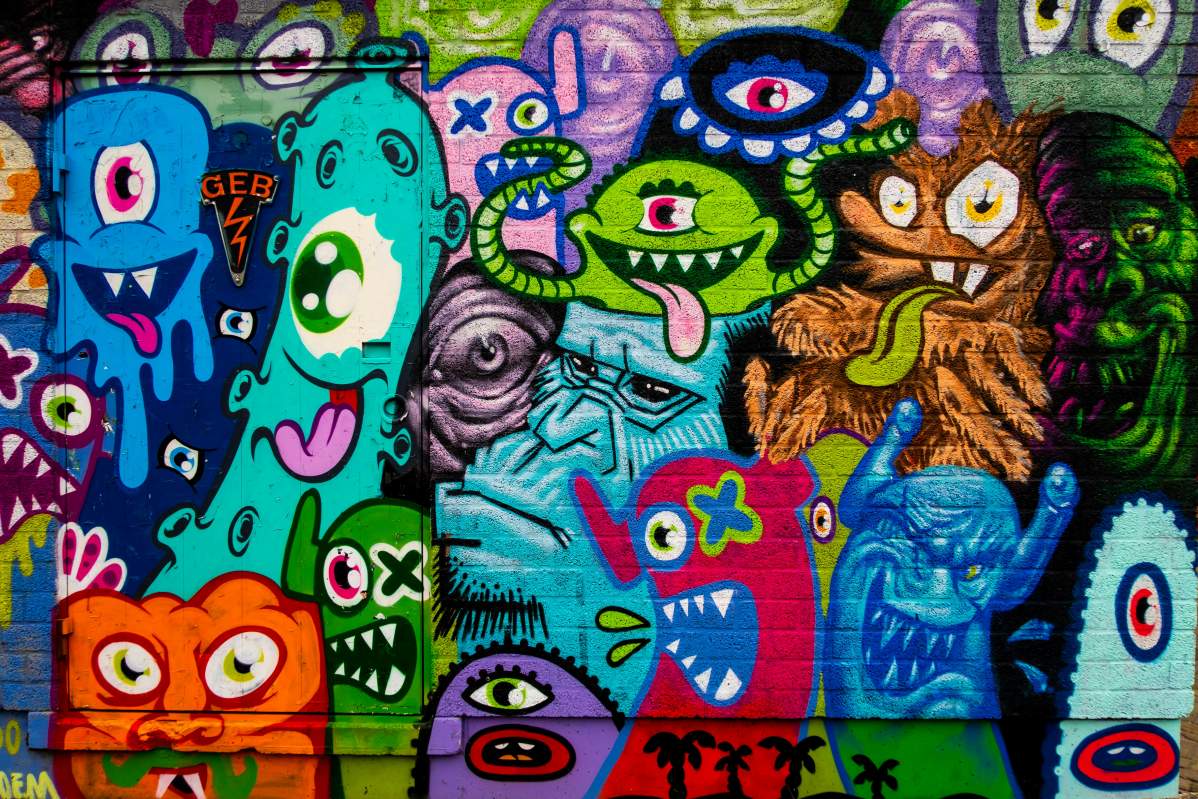
Editor’s Note: Allegory, as this one signifies, is commonly experienced but rarely understood. A very unique story of conflict in society caused by no external forces other than what’s inside each one of us. There be no Gods as powerful as that we believe, no devil as wicked as that we deny.—Ujjwal Dey
The Murals Hunger by Nilay Kumar Sarker
Part One: The Edge Of Mercy
The rain had stopped three weeks ago and hadn’t come back.
Dare could see it in the way the city held its breath—gutters choked with dust instead of water, laundry lines sagging with clothes that wouldn’t dry right, just baked stiff in air that tasted like rust and exhaust. The canal behind the old market district had shrunk to a brown trickle that stank of chemicals and rot. Even the stray dogs moved slower, tongues lolling, searching for shade that didn’t exist.
He sat on the steps of his building, watching the evening settle like sediment. Four floors up, in a room barely big enough to turn around in, but it was his. Paid for with dock work, fish market runs, and the occasional under-table job that didn’t ask questions.
Mrs. Rahim shuffled past with her shopping bags, nodding at him. “Assalamu alaikum, Dare bhai.”
“Walaikum assalam, Auntie.”
She paused, squinting at him. “You look thin. You eating?”
“Every day.”
“Liar.” But she smiled, the kind of smile that said she’d known him since he was small enough to hide behind his mother’s sari. Before the fever took her. Before the streets raised him instead.
Across the road, old Karim was setting up his tea stall, the portable burner hissing to life. The smell of ginger and cardamom cut through the heat. Three kids played cricket with a taped-up ball and a plank of wood, their shouts echoing off brick and broken shutters.
This was his corner. His few blocks of the city where people knew his face, where he could walk without checking over his shoulder every ten steps.
Used to be, anyway.
Malik had been expanding for months now. Everyone saw it coming—the new faces with dead eyes, the businesses that suddenly changed hands, the quiet disappearances of people who’d pushed back too hard. Protection rackets dressed up as “community organization.” Territory lines redrawn in blood and burned-out storefronts.
Last week, Malik’s boys had come to Karim’s stall. Told him he needed to pay for “security.” Karim was seventy-three years old and had been serving tea on that corner for forty years. His hands shook when he poured now, but he still showed up every evening, rain or heat or heartbreak.
They’d smashed his burner. Told him next time they’d smash his hands.
Karim had looked at Dare with eyes that carried too much weight. “You’re young. You still have fight in you. I’m just trying to get to the grave in one piece.”
Dare had helped him sweep up the glass and twisted metal. Hadn’t said anything. What was there to say?
But that night he’d lain awake in his room, staring at cracks in the ceiling that looked like rivers on a map to nowhere, and something had hardened in his chest.
The city was full of people like Karim. Like Mrs. Rahim. Like the cricket kids who should grow up thinking their street belonged to them, not to whoever had the heaviest fist.
Someone had to stand.
Stupid thought. Brave or stupid—sometimes the line got thin.
Dare stood from the steps, bones creaking from a long day hauling crates at the fish market. The sun was bleeding out over the skyline, painting the smog orange and purple. Beautiful and poisonous, like most things here.
He’d heard Malik was using the old laundry building as a meeting spot. Neutral ground, or what passed for it. Maybe if Dare went there, showed his face, talked like a reasonable person, Malik would listen. Maybe they could work something out. Keep the neighborhood out of it. Draw a line.
Maybe.
Karim’s words echoed: You still have fight in you.
Dare pulled on his jacket—thin denim, worn soft with age—and started walking.
The streets shifted around him. Familiar corners and bent lampposts, graffiti he’d seen for years. A mural of a tiger on the pharmacy wall, eyes following passersby. Another of a woman with flowers in her hair on the side of the old cinema—closed ten years now, windows boarded up, but the paint stayed bright.
Street art had always been part of the neighborhood. Kids with spray cans, activists with messages, artists turning decay into something that didn’t hurt to look at. Dare had grown up with these walls screaming color into the gray.
But lately, he’d noticed something different.
The murals moved.
Not much. Not obviously. Just—sometimes when he walked past at night, a painted eye would seem to track him. A hand would shift position from one day to the next. Petals on flowers would bloom or wilt faster than paint should age.
He’d mentioned it once to a friend, who’d laughed and said, “You drinking the canal water? That shit’s toxic.”
So Dare stopped mentioning it.
But he kept noticing.
He passed the pharmacy tiger now. Its stripes seemed to shimmer in the dying light, like muscles moving under skin.
Dare’s pace slowed.
The tiger’s mouth was open—had it always been open? He couldn’t remember. The teeth looked too sharp, too real. Paint shouldn’t have depth like that.
Heat shimmer. Exhaustion. Nerves about confronting Malik.
He forced himself to look away and kept walking.
The old laundry building sat three blocks deeper into Malik’s expanding territory. Dare’s stomach tightened with each step. This was stupid. This was brave. This was necessary.
The street narrowed into an alley. Brick walls pressed close, covered in layers of old posters, torn advertisements, and more murals—saints with halos cracked like broken plates, dragons coiling around drainpipes, names of the dead spray-painted in memorial.
The air felt different here. Thicker. Like walking through water.
His footsteps echoed wrong—too loud, or not loud enough, like the alley was swallowing sound.
Turn back, something whispered. Not a voice. Just instinct.
Dare ignored it.
The laundry building appeared ahead—squat, concrete, windows dark. No steam rising. No sound of water or washing or the aunties who usually worked night shifts.
Just silence.
Dare stopped at the entrance. Metal door, rusted hinges. Unlocked.
His hand touched the handle.
Cold. Too cold for this heat.
He pushed it open.
Inside, shadows and empty space. The washing machines stood like sentinels, unplugged, quiet. The floor was wet—recent, still glistening.
Not water.
Dare’s throat closed.
“Knew you’d come,” said a voice from the darkness.
Malik stepped into a shaft of dim light from a high window. Casual stance, hands in pockets. Three young faces behind him—boys, really, maybe nineteen or twenty. Eyes too eager. Knuckles wrapped in tape.
Dare’s pulse kicked.
“Just wanted to talk,” he said, keeping his voice steady.
Malik smiled. No warmth in it. “Sure you did.”
“Karim’s an old man. He’s not a threat to anyone.”
“Everyone’s a threat if they don’t pay attention.” Malik took a step closer. “That’s the problem with people like you, Dare. You think respect means something. It doesn’t. Fear does. Control does.”
“This is our neighborhood. These are our people.”
“Your people?” Malik’s eyebrows raised. “You think you own something here? You rent space, brother. Same as everyone. And the rent just went up.”
Dare’s fists clenched. “It doesn’t have to be like this.”
“But it is.” Malik’s smile vanished. “Should’ve stayed in your corner.”
A signal—just a shift of Malik’s eyes.
The three boys moved.
Dare had time for one clear thought: This is how it ends.
Then fists came, and thinking stopped.
Part Two: Blood And Brick
The first punch caught him in the ribs—solid, professional. Dare gasped, air punched out of his lungs. He swung back wild, connected with something soft. A grunt.
But there were three of them.
A fist to his jaw. Stars exploded. His knees buckled.
They drove him backward, out through a side door he hadn’t seen, into the alley beyond. The metal door clanged shut like a cell.
Blood slicked his mouth. The taste of copper, of mistakes, of pride getting beaten out of him one hit at a time.
“Still got teeth,” Malik said from somewhere above. “Shame.”
A boot pressed into Dare’s ribs. He curled instinctively, trying to protect organs, face, anything vital.
Brick scraped his spine. The alley floor was cold despite the heat. Wet. Something sticky—old motor oil, spoiled food, worse.
Another kick.
Something cracked.
Pain flared white-hot, clean as lightning. Dare couldn’t tell if it was bone or cartilage or just the sound of his body giving up.
He spat blood. It hit someone’s shoe.
Malik crouched down, face swimming into focus. Almost gentle, almost sad.
“You know what your problem is? You think the world cares about who’s right. It doesn’t. It cares about who’s standing.”
Dare tried to speak. Managed only a wet choke.
“Should’ve stayed quiet,” Malik continued. “Could’ve had a place in the new order. Could’ve been useful. But you had to be a hero.”
He stood. Nodded once.
One of the boys stepped forward with a length of rebar. The metal caught the faint streetlight bleeding into the alley—dull gleam, rust at the edges, heavy enough to break bone.
Dare braced. This was it. The moment where the body decided if it had more fight or just surrender.
Then—something shifted.
Not in the alley. Deeper. Beneath.
A pulse slid through the concrete, through brick, through the blood pooling under Dare’s cheek. Not sound. Not movement. Just—pressure. Like the city itself took a breath.
Stand.
Not a voice. More like memory of a voice. Like the street was remembering something and whispering it into his bones.
The rebar swung.
Dare rolled.
Not fast—he wasn’t fast, he was broken—but he moved. The metal struck concrete where his head had been, sparks flying.
Shock rippled through the boys. They’d expected a corpse. Got a body still crawling.
Dare’s hands found gravel, wet and sharp. He grabbed, threw it wild and desperate. No aim. Just panic and fury mixed together.
A grain found an eye.
A scream.
The boy with the rebar stumbled back, clawing at his face.
Dare used the moment. Pushed himself up, legs shaking like a newborn calf. The world spun. His ribs shrieked. But he found vertical.
Stand.
“Persistent,” Malik sighed. Not angry. Just… tired. Like this was an inconvenience.
Another swing. Dare ducked, lunged, grabbed the boy’s arm. They grappled—brief, graceless. Dare headbutted him, felt the crunch of nose cartilage, felt blood that wasn’t his for once.
The boy went down.
Two left. Plus Malik.
Bad odds.
Dare didn’t wait. He bolted.
Stumbling, limping, but moving. The alley stretched before him like a throat. Walls loomed on either side, close enough to touch, covered in graffiti that seemed to pulse in his failing vision.
Dragons. Saints. Names of the dead.
The paint looked wet.
Too wet.
Shining like someone had just laid it down, dripping slightly in the heat.
Dare’s shoulder hit a wall. Pain exploded. But the paint smeared under his touch—warm, living, wrong.
A mural of a woman with a cracked halo and knives for fingers stared at him. Her eyes moved. Just slightly. Just enough.
Following him.
Dare blinked hard. Blood loss. Concussion. Hallucination.
Except the paint was too thick. Too real.
The woman’s mouth curved. Not a smile. A promise.
Hunger.
“Not feeding you,” Dare muttered, pushing off the wall.
Behind him, footsteps. Malik’s voice, casual as ever: “Run then. Bleed out somewhere romantic.”
Dare hit the alley mouth and kept going. The streets opened up—marginally. Enough to run. Enough to lose himself in the maze of side alleys and back routes he’d known since childhood.
His feet knew the way even when his brain was fogging. Left here, right there, through the gap between buildings where the fence had rusted through.
Blood trailed behind him. He could feel it—a breadcrumb path for anyone with eyes and patience.
The pulse in the concrete followed too.
Stand. Stand. Stand.
“Trying,” he gasped.
Three blocks. Four. The sounds of pursuit faded, or maybe his hearing was going. Everything narrowed to the next step, the next breath, the next heartbeat.
A shuttered storefront appeared—old fabric shop, closed years ago. The metal shutters were covered in rust and more murals. Faces, flowers, abstract swirls that hurt to look at too long.
Dare collapsed against it, sliding down until he was sitting, legs splayed, breath coming in ragged gasps.
A cat watched from across the street. Scarred ear, patches of missing fur. It sat perfectly still, tail curled, eyes reflecting streetlight like coins.
The night pressed down. Heat that should’ve eased with sunset stayed thick, humid, clinging to skin.
Dare closed his eyes.
Just for a moment. Just to catch breath.
The concrete trembled.
Not from footsteps.
From pulse.
The same one he’d felt in the alley. Deeper now. Stronger. Like the city was waking up, stretching, yawning wide.
Stand.
“I’m sitting,” Dare muttered. “Fuck off.”
The pulse receded. Not gone. Just patient.
Time slipped. Seconds or minutes, he couldn’t tell. Pain made everything liquid, flowing without shape.
Footsteps.
Real ones. Soft, measured, careful.
Dare’s eyes cracked open. Too tired to fight. Too broken to run. If this was it, fine. At least he’d stood once.
A figure emerged from shadow.
Hood up. Boots unlaced. Hands bare.
Female, he thought. Young. Maybe his age, maybe older. Hard to tell in the dark.
She looked at him the way someone might look at roadkill—assessing if it’s worth the effort to move or just leave for the crows.
“You should’ve played quiet,” she said.
Her voice carried no sympathy. Just fact.
Dare managed a wet laugh. “Tried.”
“No,” she said. “You ran loud.”
Fair point.
She crouched, head tilting. In the streetlight, he caught a better look—brown skin, sharp features, eyes that held the kind of knowledge that came from surviving things others didn’t. Scars on her knuckles. Paint under her nails.
Paint.
He remembered then. Weeks ago, maybe a month. He’d been walking home from a night shift, dawn just breaking, and he’d seen her painting a mural on the side of an old apartment building. A tree with roots that looked like hands, reaching, grasping.
He’d stopped to watch. She’d glanced at him once—just once—and said: “City’s waking up. You should pay attention.”
He’d thought she meant gentrification.
Now, staring at her while his blood soaked into concrete, he knew better.
“Kaya,” he rasped. “You’re the painter.”
Her eyebrows raised slightly. “You remember.”
“Hard to forget.”
She pulled a small satchel from her shoulder, rummaging inside. “I’m going to touch your wounds now. Flinch if you want, but don’t hit me. I heal slow.”
“Why would you—”
“Because you’re stupid enough to be interesting.” She produced gauze and tape. Medical supplies, street-grade but clean. “And because if you bleed out here, you’ll feed something worse than Malik.”
Dare’s brow furrowed. “What?”
“Later.” She pressed gauze against his shoulder wound.
Pain lanced through him, sharp and immediate. He hissed through clenched teeth.
“That’s the cleaned wound talking,” Kaya said, voice steady. “You feel the other pain? The one under your ribs? The one that feels like static?”
Now that she mentioned it—yes. A different kind of hurt. Not injury. More like… pressure. Like something pressing against the inside of his skin, trying to get out or get in.
“What is that?” he asked.
“City’s attention.” She wrapped tape, efficient movements. “You bled enough to get noticed. Fought enough to make an impression. Now it’s deciding what you are.”
“I don’t understand.”
“You will.” She sat back, eyeing her work. “That’ll hold for now. Real hospital would be better, but I’m guessing you don’t want records.”
“Can’t afford records.”
“Most of us can’t.” She stood, offering a hand.
Dare stared at it. “Why are you helping me?”
“Because I stood once too.” Her eyes held something ancient despite her young face. “And nobody helped. So I’m breaking the cycle. You coming or bleeding out?”
He took her hand.
She pulled—stronger than she looked. Dare got to his feet, world spinning, but vertical. Barely.
“Where are we going?” he asked.
“Somewhere the walls aren’t hungry.” She started walking. “Keep up.”
Dare followed, each step a negotiation with his body. The cat across the street watched them go, unblinking.
Behind them, the mural on the shuttered shop glistened. A face among the flowers seemed to turn, just slightly, tracking their movement.
The city breathed.
And the walls remembered.
Part Three: The Spaces Between
Kaya led him through a maze of backstreets that Dare thought he knew but didn’t, not really. She moved like water through stone—finding paths that shouldn’t exist, gaps between buildings barely wide enough for shoulders, courtyards hidden behind rusted gates that swung open at her touch.
The city at night was a different creature. Alive in ways daylight suppressed.
Neon from distant shops bled colors into steam rising from grates. Air conditioners dripped onto pavement, making puddles that reflected fractured light. Somewhere close, a radio played old songs—Runa Laila, maybe, or Sabina Yasmin—voices of the past bleeding into the present.
Dare’s feet dragged. Each step sent pain lancing up his legs, through his ribs, into his skull. His vision kept fuzzing at the edges.
“Don’t pass out,” Kaya said without looking back. “I’m not carrying you.”
“Wasn’t planning on it.”
“Everyone plans on staying conscious. Most fail.”
They turned down a narrow passage between two buildings—so close the walls almost touched. Dare’s shoulders scraped both sides. Claustrophobia tried to climb his throat.
Above, clotheslines stretched between windows. Fabric hung limp in the dead air—saris, lungis, children’s shirts. No breeze to move them.
But as Dare passed beneath, one of the shirts twisted.
Just slightly.
Like invisible hands wringing it out.
He stopped, staring.
“Don’t look too long,” Kaya said. “Makes them curious.”
“Them?”
“Keep walking.”
He did, but his skin crawled. The static feeling under his ribs intensified—like proximity to something he couldn’t see but his body knew was there.
They emerged into a small courtyard. A well in the center, old brick, probably dried up decades ago. Buildings pressed on all sides, windows dark or flickering with television light.
Kaya led him to a door—metal, unmarked, locked with three different chains.
She pulled keys from her pocket, worked each lock with practiced speed.
“You live here?” Dare asked.
“Sometimes. When I need to.”
The door swung open. No creak. Well-oiled hinges.
Inside was dark until Kaya found a lantern, struck a match. Warm light bloomed, pushing back shadow.
The space was small—one room, maybe twelve by twelve feet. Concrete floor swept clean. A mat in one corner for sleeping. Shelves lined with supplies—food, water, medical kits, tools Dare couldn’t identify. And everywhere—everywhere—sketches.
Taped to walls. Pinned to boards. Scattered on a small table. Charcoal and pencil drawings of the city—but not quite right. Buildings tilted at wrong angles. Streets that curved into themselves. Figures with too many limbs or faces that split down the middle.
And murals. Studies of murals. The same ones Dare had seen on his walk. The tiger. The woman with knives. The tree with hand-roots.
“You drew all these?” he asked.
“Some I copied. Some I dreamed.” Kaya gestured to the mat. “Sit before you fall.”
Dare lowered himself carefully, each movement a small agony. The mat was thin but clean.
Kaya crouched by her supplies, pulling out a bottle of water and a small packet of biscuits.
“Eat. Drink. Slowly.”
Dare’s hands shook taking the bottle. Water hit his throat like mercy. He hadn’t realized how thirsty he was until the first swallow.
“Not too fast,” Kaya warned. “You’ll throw up.”
He forced himself to slow, taking small sips. The biscuits were plain, industrial, tasteless. Beautiful.
Kaya watched him, patient. When he’d finished half the water and three biscuits, she spoke.
“You want the truth or comfort?”
“Truth.”
“Good. Comfort’s expensive these days.” She sat cross-legged across from him, lantern between them. “The city is old. Older than the buildings. Older than the streets. It’s layered—generation after generation building on top of what came before. Most places, the past gets buried, forgotten.”
She paused, choosing words.
“Here, it doesn’t forget. It accumulates. All that history, all that pain and joy and violence and love—it soaks into stone. Into brick. Into the bones of the place. Most of the time, it just sits there. Background hum. White noise.”
“But?” Dare prompted.
“But sometimes it wakes up. When enough blood spills. When enough heat builds and the rain doesn’t come. When the city gets thirsty.”
She reached out, touched the wall beside her. Her fingers traced a crack.
“The murals are the surface tension. Where the past bleeds through into now. They’re doors. Or mouths. Depends on how you look at it.”
Dare’s throat tightened. “The paint moved. I saw it.”
“You did. Because you fed it attention. And blood. Blood’s the best attention.”
“What does it want?”
Kaya’s eyes met his. “What all hungry things want. To be fed. To grow. To consume until there’s nothing left but appetite.”
The lantern flickered. Shadow and light danced across her face.
“People like Malik think they run these streets,” she continued. “They don’t. They’re just parasites. The city tolerates them because violence feeds it. Anger feeds it. Fear, desperation, all the dark stuff—it’s like nutrients.”
“Then what’s fighting back do?”
“Depends. If you fight with hate, with cruelty—you just feed it a different flavor.” She leaned back. “But if you fight with refusal, with standing your ground not because you want to dominate but because you won’t be dominated—that confuses it.”
“Confuses?”
“The city’s hunger is old. Simple. It understands prey and predator. But something that’s neither? That refuses the roles? That’s new. Strange. Sometimes powerful.”
Dare tried to process this. His head felt full of cotton and broken glass.
“You stood,” he said, remembering her earlier words. “What happened?”
Kaya’s expression shuttered. For a long moment, she didn’t speak.
“I had a brother,” she finally said. “Younger. Sweet kid. Thought he could paint the city better—cover up the dark with bright colors, hope, beauty. Started doing murals in the worst neighborhoods. Places Malik wouldn’t even touch back then.”
Her jaw clenched.
“One night, he was finishing a piece. Sunset scene, kids playing cricket, normal life shit. Three men came. Not gangsters. Not alive, not really. They walked out of a mural across the street. Paint-skin like the thing you’ll face eventually. They wanted him.”
“Wanted him how?”
“To add to the walls. To make him part of the hunger. Artists are—valuable. We see things others don’t. Feel things deeper. Make better meals.”
Dare’s stomach turned.
“Did he—”
“I got there in time. Barely.” Kaya’s voice was flat. “Pushed back. Learned what I had to learn. Saved him.”
“Where is he now?”
“Gone. Left the city the next day. Smart kid. Smarter than me.” She smiled, but it held no warmth. “I should’ve gone too. But I stayed. Someone had to.”
“Why you?”
“Because I could.” She met his eyes. “Because I saw what was underneath, and I decided I wouldn’t let it eat people without a fight. Even if fighting means I’m always one step from being eaten myself.”
Silence settled. Outside, distant sounds—traffic, voices, the city’s eternal hum.
“So what am I?” Dare asked. “Prey? Predator?”
“Right now? Undecided. The city tasted your blood and your refusal at the same time. It’s curious. That’s dangerous, but it’s also opportunity.”
“Opportunity for what?”
“To walk between. To exist in the spaces where the city can’t quite reach. To be something it doesn’t have words for.”
Kaya stood, moving to the shelves. She pulled down a small mirror—cracked, old.
“Look at yourself.”
Dare took the mirror. His reflection stared back—bruised, bloodied, exhausted. But there was something else. In his eyes, in the set of his jaw.
Something had changed.
He didn’t look like prey anymore.
But he didn’t look like a predator either.
“What do you see?” Kaya asked.
“Someone standing,” Dare said quietly.
“Good. Remember that. When the hunger comes, when it offers you power or promises you strength—remember you stood before it offered anything.”
She took the mirror back.
“Rest now. You’ll need strength for what’s coming.”
“What is coming?”
“Proof of attention.” Kaya moved to the door, checking the locks. “You made an impression tonight. The city felt you bleed, felt you fight, felt you refuse. Now it’s going to test you. See if you’re worth keeping around or just another meal.”
“When?”
“Soon. Tonight, probably. They always come fast when someone new shows resistance.”
“They?”
“The painted ones. The murals that walk. The city’s appetites made flesh.” She paused. “Get some rest. I’ll keep watch. When they come, I’ll wake you.”
“Why are you doing this?” Dare asked again. “You don’t know me.”
Kaya looked at him, and for a moment her face softened—just barely, just enough to show the girl underneath the survivor.
“Because the city wins when we fight alone. It feeds on isolation. Every person who stands by themselves just becomes another mural, another story, another forgotten scream.”
She turned away.
“Sleep, Dare. While you can.”
He wanted to argue. To stay awake, to be ready. But his body made the decision for him. Exhaustion crashed down like a wave.
He lay back on the mat, pain and fatigue dragging him under.
His last thought before unconsciousness took him:
I stood. I’m still standing.
And somewhere in the dark, the city felt that thought and smiled with painted lips.
Part Four: What The Walls Remember
Dare woke to breathing that wasn’t his.
The room was dark—lantern extinguished. Moonlight bled through a high window, painting everything in shades of gray and shadow.
Kaya sat by the door, back against it, knife across her lap. She wasn’t sleeping. Just watching. Waiting.
The breathing continued.
Slow. Wet. Like lungs filled with something thicker than air.
Dare pushed himself up, every muscle screaming. “What—”
“Shh.” Kaya’s voice was barely audible. “Don’t move fast. Don’t run.”
The breathing came from the walls.
All of them.
The concrete itself seemed to expand and contract, like chest cavities. Cracks widened and narrowed. The sketches Kaya had pinned up rustled despite the dead air.
“It’s testing,” she whispered. “Seeing if you’ll panic.”
Dare’s heart hammered. Primal fear crawled up his spine—the kind that lived in bone marrow, inherited from ancestors who knew what it meant when the cave walls moved.
“What do I do?” he asked, matching her whisper.
“Sit. Breathe. Refuse.”
“Refuse what?”
“The fear. It wants you scared. Fear’s easy to eat.”
Easier said than done. But Dare forced himself to sit still, to breathe slow and deep despite his shrieking ribs.
The walls continued their rhythm. In. Out. In. Out.
Something scratched at the door. Faint, persistent. Like nails on metal.
Kaya didn’t move. Her knuckles were white around the knife handle, but her face stayed calm.
Minutes stretched. Or hours. Time felt wrong, elastic, like reality was negotiating with something else.
Gradually—so slowly Dare almost didn’t notice—the breathing faded.
The walls stilled.
The scratching stopped.
Kaya exhaled, tension bleeding from her shoulders. “Good. You didn’t break.”
“That was a test?”
“First one. There’ll be more.” She stood, stretching. “But you passed. Most people run. Or scream. Or try to negotiate. You just sat.”
“Didn’t feel like much of a victory.”
“The small ones matter most.” She moved to the window, peering out. “We have a few hours before dawn. That’s when the streets quiet. When the painted ones can move more freely.”
“Why dawn?”
“Threshold time. Neither day nor night. The city’s edges get thin.” She turned back. “You need to see something. Before the next test comes.”
“What?”
“Someone who chose wrong.”
Dare’s stomach sank. “Do I want to see this?”
“No. But you need to.”
She unlocked the door, checking the courtyard before stepping out. Dare followed, body protesting every movement.
The courtyard was still. The well in the center looked deeper in the moonlight, like it went down forever.
Kaya led him back through the narrow passage, retracing their earlier route. The city at this hour felt different—holding its breath, waiting.
They walked for maybe ten minutes, winding through streets that grew progressively more run-down. Abandoned buildings. Burned-out shops. Graffiti covering every surface in layers so thick the original walls disappeared beneath them.
Kaya stopped at a corner. “There.”
Dare followed her gaze.
Across the street, a mural covered the entire side of a three-story building. It was elaborate—dozens of figures intertwined, faces and bodies flowing into each other, creating a tapestry of human forms.
Beautiful, in a way that made his skin crawl.
“What am I looking at?” he asked.
“The Feeding Wall.” Kaya’s voice was tight. “Every person there was real once.”
Dare’s breath caught.
Now that she said it, he could see it. The figures weren’t just painted—they were trapped. Faces frozen mid-scream or mid-laugh. Hands reaching out, pleading. Bodies twisted in positions that defied anatomy.
And they moved.
Subtly. A finger twitching. An eye rolling. A mouth opening wider, wider, like a silent scream that couldn’t end.
“They chose power,” Kaya said. “Or they chose to feed the hunger. Or they just got caught. Either way—same result. The city takes you. Makes you part of itself. Forever.”
“Can they be saved?”
“No. Once you’re in the wall, you’re gone. Your body might still walk around for a while—like the painted ones you’ll face. But you? The thing that made you you? Digested. Consumed. All that’s left is appetite wearing your shape.”
Dare couldn’t look away. The mural was hypnotic in its horror.
One face near the center looked familiar. Maybe someone he’d seen around the neighborhood years ago. Or maybe all faces looked the same when they were screaming.
“How many?” he whispered.
“This wall? Forty-three. There are others. Dozens. All over the city. Hundreds of people, all feeding the same hunger.”
“And nobody does anything?”
“What can they do? Report it to police? Tell them a mural ate someone?” Kaya’s laugh was bitter. “The city protects itself. Makes people forget. Or look away. Or rationalize. ‘They moved away. They got sick. They were always troubled.'”
She turned from the wall.
“That’s what you’re fighting, Dare. That’s what refusing means. You stand against something that’s been eating people for generations. Something that’s patient and hungry and eternal.”
“Why tell me this? Why not just—”
“Let you face it blind? Because that’s how the city wins. Through ignorance. Through isolation.” She started walking again. “You need to know what’s at stake. Not just for you. For everyone who can’t see what’s underneath.”
They walked in silence. Dawn was beginning to threaten—the sky lightening from black to deep blue at the edges.
They passed more murals. Now that Dare knew what to look for, he could see it—the faces that were too real, the eyes that followed, the subtle movements that paint shouldn’t make.
How had he never noticed before?
“Most people don’t,” Kaya said, reading his expression. “Your brain filters it out. Explains it away. Until you bleed enough, fight enough, catch the city’s attention enough—then the filters stop working. You see what’s always been there.”
“Lucky me.”
“Not luck. Choice. You chose to stand for Karim. For your neighborhood. That choice opened your eyes.”
They returned to the courtyard as the first real light touched the rooftops. Kaya checked the courtyard again before unlocking the door.
Inside, she relit the lantern.
“You’ll rest for a few more hours,” she said. “Then we prepare. Tonight, they’ll come for real. Not just tests. Actual hunters.”
“Can I win?”
“You can survive. Maybe. If you remember what you’re fighting for.” She met his eyes. “Power’s easy. The city will offer it. Strength to crush Malik. Strength to protect your neighborhood. Strength to be something more than just a dock worker bleeding in alleys.”
“What’s wrong with that?”
“Nothing’s wrong with wanting it. Everything’s wrong with taking it from the hunger. Because that power? It’s not yours. It’s borrowed. And the city always collects its debts.”
“So I fight powerless?”
“No. You fight with the only power that matters—refusal. The power to say ‘no’ when everything screams ‘yes.’ The power to stand when falling would be easier.”
She pulled out more supplies—water, bandages, food.
“Eat. Rest. When night comes, I’ll show you how to face them.”
Dare took the offered food, but his mind was on the Feeding Wall. On all those faces trapped forever, screaming in silence.
He thought of Mrs. Rahim. Of Karim. Of the cricket kids who just wanted to play in peace.
“I won’t let it take them,” he said quietly.
Kaya nodded. “Then you’ll stand. And that’s the first step.”
“What’s the last step?”
Her smile was sad. “Nobody’s made it to the last step yet. But maybe you’ll be the first.”
Dawn light filtered through the high window, painting the concrete walls in shades of amber and gold.
Dare closed his eyes, trying to rest.
But all he saw were painted faces screaming silent in the walls.
Part Five: The Painted Hunt
Night fell like a curtain—swift, absolute.
Dare woke to Kaya shaking his shoulder. “Time.”
His body had stiffened during sleep. Every movement sent pain radiating through muscle and bone. But he pushed himself up, accepting the water she offered.
“How do you feel?” she asked.
“Like I got beaten in an alley.”
“Good. Use that. Pain keeps you honest.”
She’d prepared supplies—a small pack with water, basic first aid, a knife that looked older than both of them combined.
“I’m not fighting with a knife,” Dare said.
“You’re not fighting with anything. Fighting implies you can win through violence.” She pressed the knife into his hand anyway. “This is for when refusing isn’t enough. Last resort only.”
The blade was cold, well-maintained. The handle worn smooth with age and use.
“How many times have you used it?”
“Enough to know violence always costs more than it gives.” Kaya moved to the door. “Ready?”
“No.”
“Better. People who feel ready usually aren’t.”
They stepped into the courtyard. Night had transformed it—the well in the center looked bottomless, the windows in surrounding buildings all dark or reflecting the moon in ways that made them look like eyes.
“Where are we going?” Dare asked.
“Your neighborhood. They’ll come for you there. Familiar ground. That’s the pattern.”
“Shouldn’t we stay somewhere safe?”
“Nowhere’s safe when the city wants you. But familiar ground gives you advantage—you know the streets, the corners, the routes. They just know hunger.”
They walked through the same maze of back alleys. This time Dare noticed details he’d missed before—marks scratched into walls, symbols that looked almost like letters but weren’t quite. Warnings? Messages? Kaya didn’t explain, and Dare didn’t ask.
The city at night was alive in ways daylight never showed. Shadows moved with weight. Air currents carried whispers that might’ve been wind or might’ve been something else. Every mural they passed seemed to track their movement.
“Stay close,” Kaya said. “And remember—you can’t kill them. You can only refuse them. Push back, deny, but don’t try to destroy. That’s feeding the hunger in another form.”
“How do I fight something I can’t kill?”
“By standing in the space where you refuse to be prey or predator. That space is small, sharp, and most people can’t find it. But you did once already—when you shoved that first one in the alley.”
“I barely remember that.”
“Your body remembers. Trust it.”
They emerged into familiar territory—Dare’s neighborhood. The streets he’d walked his whole life. Karim’s tea stall stood shuttered. The cricket field empty. Mrs. Rahim’s building dark except for a few windows with the flicker of television light.
Everything looked normal.
Everything felt wrong.
The air pressure was off. Too heavy. Like breathing through cloth.
“They’re close,” Kaya whispered. “Feel it?”
Dare nodded. The static under his ribs had returned—stronger now, almost painful. Like his body was warning him of proximity to something his eyes couldn’t see yet.
A sound echoed down the street. Not footsteps. The wet dragging he’d heard before.
“There,” Kaya pointed.
At the far end of the street, something moved. Silhouette wrong—too tall, too bent, limbs at angles that shouldn’t work.
It emerged into streetlight.
Paint-skin, pale and cracking. Face that might’ve been human once but had been reshaped by something that only understood hunger. Eyes like voids, dripping black pigment. Mouth too wide, revealing nothing inside but more darkness.
It dragged itself forward—not walking, not crawling. Just moving in that horrible in-between way.
“Just one,” Dare said. “I can—”
“Look again.”
He did.
Three more emerged from alleys, from behind buildings, from shadows that shouldn’t have been deep enough to hide them. All different shapes but sharing that same wrongness—paint-skin sloughing, features melting and reforming, darkness pooling where their eyes should be.
“Four,” Dare said.
“At least. More will come. You hurt their pride when you survived before.”
The creatures moved slowly, but with purpose. Converging.
Dare’s hand found the knife.
“Not yet,” Kaya said. “First, try talking.”
“Talking?”
“They used to be human. Maybe something remembers.”
Dare stepped forward, every instinct screaming to run. The static under his ribs intensified.
“I don’t want to fight,” he called out.
The creatures paused. Heads tilting in unison, like puppets on the same string.
One opened its mouth. Sound came out—not words, not exactly. More like the memory of words. Syllables that used to mean something before they were forgotten.
“Feeeeed…”
“No,” Dare said. “I won’t feed you. I won’t feed the hunger.”
They moved closer. Still slow. Still patient.
“Staaaaaand…”
It was mocking him. Using the word the city had whispered. Twisting it.
“Yeah,” Dare said. “I stand. Right here.”
The nearest one lunged.
No warning. One moment dragging, the next launching forward with speed that shouldn’t exist in something that looked half-melted.
Dare dodged—barely. Paint-skin fingers brushed his arm. Cold seared through fabric.
He spun, stumbled, caught himself. The creature was already turning, preparing another rush.
“Refuse it!” Kaya’s voice cut through his panic. “Don’t think about winning—think about not losing!”
The creature lunged again.
This time Dare didn’t dodge. He planted his feet, raised his hands, and pushed.
Not physically. Or not just physically. Something else moved through him—the refusal that had been building since Malik’s beating, since the mural woman’s painted smile, since seeing the Feeding Wall.
No.
His hands connected with the creature’s chest. Cold slammed into him, darkness trying to pour through the contact point. Voices screamed in his head—feeding feeding feeding stand serve feed become—
“NO!”
The word ripped out of him with force he didn’t know he had.
The creature shrieked. Paint-skin cracked, pieces falling away like broken pottery. It stumbled back, form destabilizing.
But three more were already moving in.
Dare’s legs were shaking. That push had cost something—he felt hollow, scraped out inside.
“Again!” Kaya called. “Every refusal weakens them!”
The three rushed together.
No time to think. Dare threw himself forward—not attacking, not really. Just refusing to yield the ground. His hands found painted flesh, and he denied.
Denied their hunger. Denied their claim on him. Denied the city’s right to make him prey or predator.
The static in his ribs exploded into something bigger—a pulse that radiated out from his core, through his limbs, into the creatures.
All three shrieked. Paint flaking, darkness bleeding from their eyes like tears.
But they didn’t fall. They reformed, shapes flowing like water finding new containers.
“Persistent,” one rasped. Almost admiring.
“They’re learning,” Kaya said. “Learning you.”
More emerged from the shadows. Five. Six. A dozen.
Too many.
Dare’s breath came ragged. His ribs screamed. The refusal was costing more each time—like tearing something from inside himself and throwing it at the darkness.
“I can’t—” he started.
“You don’t have to win,” Kaya said. She’d moved beside him, knife in hand. “You just have to last until dawn. Threshold time. That’s when they’re weakest.”
“How long?”
“Hour. Maybe two.”
Dare laughed—bitter, exhausted. “Great.”
The painted ones circled. Patient now. They’d learned rushing didn’t work. So they’d wait. Wear him down. Take him when refusal finally broke.
“Together,” Kaya said. “We hold together.”
She moved, and her knife flashed. Not attacking the creatures—cutting the air itself. Where her blade passed, the darkness seemed to part, like she was slicing through something invisible.
“That’s—” Dare started.
“Survivor’s trick. I’ll explain if we live.”
The creatures lunged as one.
What followed was less battle than endurance trial.
The painted ones came in waves. Dare pushed them back with refusal that cost pieces of himself. Kaya carved spaces in the darkness that gave them room to breathe.
Time became elastic. Minutes stretched into hours or compressed into seconds.
Dare’s hands were numb from cold contact. His voice was shredded from shouting denial. His legs barely held him upright.
But he stood.
They both stood.
The creatures learned quickly. They stopped rushing. Started feinting, testing, looking for weaknesses. One would distract while another tried to flank. They were coordinating—or something was coordinating them.
“The city’s watching,” Kaya panted. Blood ran from her nose—not from injury, from effort. “It’s directing them.”
“How do we fight the city itself?”
“We don’t. We just refuse until it gets bored or morning comes.”
But the painted ones weren’t tiring. They had no muscles to fatigue. No lungs to burn. Just hunger that never diminished.
Dare and Kaya were human.
Mortal.
Breakable.
Another wave. Dare pushed back, but his refusal felt weaker this time. Less certain. The cold dug deeper into his bones.
One creature got through. Grabbed his wrist.
Darkness poured in.
Voices—dozens, hundreds—all screaming at once. Feeding feeding join us become us you’ll never be alone in the hunger—
“DARE!”
Kaya’s voice cut through. Her knife flashed, severing the creature’s arm. It screamed, form destabilizing.
But the darkness was already inside Dare. He could feel it crawling through veins, wrapping around bones, whispering promises.
You’re tired. Just let go. Let us in. We’ll make you strong. We’ll make you whole. We’ll make you more than human—
His knees hit pavement.
So easy to just…let go.
Stand.
The word came from his own memory. Not the city’s voice. His.
From every time he’d chosen to get up when staying down would’ve been easier.
Every time he’d shown up for work despite exhaustion.
Every time he’d helped Mrs. Rahim carry groceries despite his own hunger.
Every time he’d stood when standing cost something.
Dare gritted his teeth. Found the darkness inside and denied it.
“Not. Yours.”
The darkness recoiled. Retreated. Not gone—never fully gone—but pushed back to the edges.
He pushed himself up. Legs shaking but holding.
“Still standing,” he said through bloody teeth.
The creatures hesitated. Just for a moment.
In that moment, the sky began to lighten.
Dawn.
Not full sunrise yet. Just the first suggestion of gray at the horizon. Threshold time.
The painted ones shrieked—fury and frustration mixed. Their forms began to destabilize, paint running like they’d been caught in rain.
They retreated. Flowing back into alleys, into shadows, into the murals they’d emerged from.
In seconds, the street was empty.
Dare and Kaya stood alone in the pre-dawn gray, breathing hard, bodies trembling.
“We lived,” Kaya said. Almost surprised.
“Yeah.”
“You faced them. Pushed back. Didn’t break.”
“Barely.”
“Barely’s enough.” She looked at him. “You know what this means?”
“What?”
“The city’s decided. You’re not prey. But you’re not predator either. You’re something else. Something that stands between.”
“What does that make me?”
“Dangerous. To the hunger and to yourself.” She started walking. “Come on. We need to move before full day. There are things we need to discuss.”
“Like what?”
“Like what happens now that you’re marked. Like what your refusal means for everyone around you. Like what Malik’s going to do when he realizes you didn’t die.”
Dare followed, body screaming protest.
But he moved.
He stood.
And as the sun finally broke the horizon, painting the city gold and crimson, Dare felt something settle in his chest.
Not peace. Not power.
Just certainty.
He would stand.
Whatever came next, he would stand.
The murals watched them go, paint glistening in dawn light.
Hungry.
Patient.
Waiting for the next nightfall.
Part Six: The Price Of Standing
Kaya led him to a different safe house—not the courtyard space, but a room above an old pharmacy, accessed through a back staircase that creaked with every step.
The room was larger than her previous space, with two windows that overlooked the street. Morning light flooded in, warm and clean.
“Sit,” Kaya said. “I’ll make tea.”
Dare collapsed into a chair—actual furniture, worn but solid. His body was beyond pain now, into that numb exhaustion where everything hurt so much it stopped hurting at all.
Kaya moved efficiently, boiling water on a small portable stove, measuring tea leaves with practiced precision. The domestic normalcy felt surreal after the night they’d survived.
“How are you so calm?” Dare asked.
“Practice. And the knowledge that if I stopped being calm, I’d scream until I shattered.”
Fair point.
She poured tea—cheap leaves, but hot and real. Dare wrapped his hands around the cup, letting warmth seep into frozen fingers.
“What happens now?” he asked.
“Now we deal with consequences.” Kaya sat across from him. “You stood. You refused. The city marked you as something other than prey. That has ripple effects.”
“Like?”
“Like every painted one in the city knowing your face. Like every person who serves the hunger seeing you as a threat or a prize. Like Malik and his crew wondering why you’re still breathing.”
Dare sipped tea. It tasted of ginger and dust and morning. “Sounds complicated.”
“It is. But it’s also opportunity.” Kaya leaned forward. “Most people who stand alone get eaten eventually. The hunger’s patient. It waits for a weak moment—sickness, grief, desperation—and then it takes them.”
“Encouraging.”
“But,” she continued, “people who stand together? That’s different. That’s something the hunger doesn’t handle well. Community. Connection. People refusing to be isolated.”
“You want to form what—a resistance?”
“I want to not be alone. And I think you don’t want to be alone either.”
Dare considered this. “There are others?”
“A few. People who’ve seen the walls move. Who’ve survived encounters. Who’ve chosen to keep standing despite everything.” She pulled a worn notebook from a shelf, flipped through pages covered in cramped writing. “I’ve been keeping track. Names, locations, what they can do.”
“What I can do? I can barely push one away.”
“You survived a dozen. That’s more than most.” She found a page, tapped it. “There’s a woman in the north district who can sense them coming. An old man near the docks who somehow makes spaces the hunger can’t enter. A teenager who paints murals that fight back.“
“And you?”
“I can see the edges. Where reality wears thin. And I can cut through sometimes, make breathing room.” She closed the notebook. “Alone, we’re just targets. Together, we might actually survive.”
Dare set down his tea. “What’s the catch?”
“Catch is—standing together makes you a bigger target. The city will throw everything at you. And everyone you care about becomes a pressure point. Leverage.”
He thought of Mrs. Rahim. Of Karim. Of the cricket kids.
“They’re already at risk,” he said quietly. “Malik’s expanding. The city’s hungry. They’re caught in the middle whether I stand or not.”
“True. But if you join us, it becomes explicit. The hunger will test you through them.”
“Then we protect them.”
“Can’t protect everyone.”
“Can try.”
Kaya studied him. Something shifted in her expression—approval, or recognition.
“Okay,” she said. “Then you’re in. Welcome to the worst decision of your life.”
“What’s the best decision?”
“Haven’t found it yet. Let you know if I do.”
They sat in silence for a moment. Outside, the city was waking up—traffic sounds, distant voices, the eternal hum of life continuing despite everything underneath.
“What about Malik?” Dare asked.
“What about him?”
“He tried to kill me. Pretty sure he’ll try again.”
“Probably. But Malik’s human. That makes him simpler than what we faced last night.”
“Doesn’t feel simple.”
“Compared to ancient city hunger that eats souls? He’s a mosquito.” Kaya stood, stretching. “Rest today. Tonight we’ll start organizing. Reach out to the others. Build the network.”
“And Malik?”
“Will be a problem we handle when he becomes urgent.” She moved to the window, peering out. “For now, you’re safe here. This building sits on old ground—something about the foundation makes it hard for the hunger to reach. Not impossible, but harder.”
“How do you know that?”
“Because I’ve slept here three years and nothing’s eaten me yet.” She glanced back. “Get some real rest. You’ll need strength for what’s coming.”
“More painted ones?”
“Eventually. But first—recruitment. If we’re going to stand together, we need to find everyone who’s willing to stand.”
Dare wanted to argue. Wanted to say this was too much, too fast, too big.
But he was so tired.
And Kaya’s offer of not being alone anymore felt like water in a desert.
“Okay,” he said. “I’m in.”
“Good.” She pulled a blanket from a shelf, tossed it to him. “Sleep. I’ll keep watch. When you wake up, we start building something the city can’t swallow.”
Dare wrapped himself in the blanket. It smelled of dust and old fabric softener, but it was warm.
He closed his eyes.
Sleep came quick—exhausted, dreamless, heavy.
The city pulsed beneath him.
Still hungry.
Still watching.
But for now—for this brief morning moment—held at bay.
Hours later, Dare woke to voices.
Not the hungry whispers of painted ones. Real voices. Human conversation.
He sat up, every muscle protesting. The room had changed—more people now. Three others besides Kaya.
They turned as he stirred.
“He’s up,” Kaya said. “Dare, meet the others.”
The woman standing nearest was maybe forty, weathered face but strong build. She nodded at him.
“Nasrin. North district. I feel them before they arrive.”
The old man sitting in the corner looked ancient—spine curved, hands gnarled. But his eyes were sharp, calculating.
“Habib. Dockside. My shop’s protected. Don’t ask how.”
The teenager leaning against the wall was all angles and nervous energy, paint stains on her clothes.
“Shoshi. I paint things that bite back.” She grinned. “Heard you pushed back a dozen last night. Impressive.”
Dare felt suddenly self-conscious. “Barely survived.”
“Surviving’s the whole game,” Habib said. His voice was raspy but firm. “Dead people don’t stand. You stood. That matters.”
Kaya moved to the center of the room. “We’re all here because we’ve seen what’s underneath. Because we’ve chosen to refuse. Alone, the hunger picks us off. Together—maybe we have a chance.”
“Chance at what?” Dare asked. “Surviving? Or actually stopping this?”
“Both. Neither. Something in between.” Nasrin crossed her arms. “We can’t kill the hunger. It’s too old, too deep. But we can create spaces it can’t enter. We can protect people. We can push back.”
“For how long?”
“As long as we stand,” Shoshi said simply.
Habib made a noise—half laugh, half cough. “You’re all young and optimistic. I’m old. I know this doesn’t end well. But it ends worse if we do nothing.”
“So what’s the plan?” Dare asked.
Kaya unrolled a map on the table—hand-drawn, marking locations across the city. Some marked with X’s, others with circles.
“These are feeding zones,” she pointed to the X’s. “Places where the walls are most active. Where people disappear most frequently.”
“And the circles?”
“Potential safe spaces. Places with old foundations, blessed ground, or just enough human activity that the hunger can’t fully take root.”
“Blessed ground?” Dare raised an eyebrow.
“Old temples, churches, mosques—sometimes the faith soaked in. Not always, but sometimes.” Nasrin traced a circle on the map. “My neighborhood has an old shrine. Nobody worships there anymore, but the area around it stays… cleaner.”
“We need more safe spaces,” Kaya continued. “Places people can go when night comes. Routes between them. Early warning systems.”
“And when the painted ones come anyway?” Dare asked.
“We fight. Together.” Shoshi grinned again. “I’ve been experimenting. Painted some pieces that actually hurt them back. Not much, but enough to give people time to run.”
“Show me,” Dare said.
Shoshi pulled out her phone, scrolling through photos. “This one’s on Temple Street.”
The image showed a mural—a tiger, similar to the one Dare had seen near the pharmacy. But this one was different. The stripes seemed to shift in the photo, and the eyes held light instead of hunger.
“Took me three nights,” Shoshi explained. “Had to paint it while refusing the whole time. Every brushstroke was an argument with the city.”
“Does it work?”
“Yeah. Saw a painted one try to cross near it last week. The tiger moved—like actually moved—and drove it back. Burned the thing somehow.”
“Hurt yourself painting it?” Kaya asked.
Shoshi’s grin faded. “Some. Worth it though.”
Habib spoke up. “My shop’s different. I don’t know why it works, but the hunger can’t enter. Been that way since I bought it thirty years ago. Something about the foundation, maybe. Or the builder. Never could figure it out.”
“Can we replicate it?” Dare asked.
“Don’t know. Haven’t tried.” Habib shifted in his chair. “But I can shelter maybe twenty people if needed. More if they don’t mind crowding.”
Nasrin leaned over the map. “I feel them gathering in the east district. Big concentration. Something’s building there.”
“New feeding ground?” Kaya asked.
“Maybe. Or maybe they’re organizing. Learning from each other like the ones that came after Dare.”
Uncomfortable silence settled.
“They’re getting smarter,” Dare said. “Adapting.”
“They always do,” Habib said. “Hunger learns. It’s patient. Every generation thinks they’re the first to resist. But there’ve been others. Always others.”
“What happened to them?” Dare asked.
“Same thing that might happen to us. They stood until they couldn’t anymore. Then they fell. Or joined. Or got eaten.”
“Inspiring,” Shoshi muttered.
“Not here to inspire. Here to survive.” Habib met each of their eyes. “You all need to know—this doesn’t have a happy ending. Best case, we carve out some spaces. Protect some people. Live a bit longer than we would’ve alone. But the hunger outlasts us all.”
“Then why fight?” Dare asked.
Habib’s wrinkled face softened slightly. “Because someone has to. Because the people who can’t see deserve protection. Because standing beats kneeling, even if you fall eventually.”
The room went quiet.
Kaya cleared her throat. “Old man’s right. We probably won’t win. But we can make it cost the hunger something. Every person we save, every night we hold ground—that’s victory.”
“Small victories,” Nasrin said.
“Only kind that matter,” Kaya agreed.
Dare looked around the room. Five people—exhausted, scared, but still standing. Building something fragile and necessary.
“Okay,” he said. “What do we do first?”
Kaya smiled—small, tired, but real. “First, we map every safe route between our territories. Then we start warning people. Not about murals eating souls—they’ll think we’re crazy. But practical stuff. ‘Stick to well-lit streets. Travel in groups. Pay attention.'”
“And when that’s not enough?”
“We intervene. Directly.” She met his eyes. “We hunt the hunters.”
“I thought we couldn’t kill them,” Dare said.
“We can’t. But we can disrupt them. Drive them back. Make them spend so much energy hunting us that they have less for hunting others.”
“We become bait,” Shoshi said, understanding. “Loud, obvious, tempting bait.”
“Exactly.”
“That’s insane,” Dare said.
“Yes,” Kaya agreed. “But it works. I’ve been doing it for two years. Still here.”
“Barely,” Nasrin muttered.
“Barely’s enough.”
They spent the next hours planning. Marking routes on the map. Establishing signals. Working out ways to communicate without phones—the hunger sometimes listened through technology, or so Nasrin claimed.
By the time afternoon shadows stretched long, they had the skeleton of a plan.
Fragile. Incomplete. Desperate.
But it was something.
As the others prepared to leave, Dare caught Kaya’s arm.
“Thank you,” he said. “For not letting me face this alone.”
“Thank me if we survive the week.”
“I will.”
She studied him. “You really think we can do this?”
“No idea. But I know I can’t not try.”
“Good answer.” She squeezed his arm once. “Get some rest. Tonight we start for real.”
The others filed out, disappearing into the city’s afternoon bustle. Normal people doing abnormal work. Invisible resistance against an enemy most couldn’t see.
Dare returned to the chair, looking out the window at the street below.
Normal life continuing. People shopping, working, living. Unaware of what moved beneath the surface.
He was protecting them.
All of them.
Even the ones who’d never know.
His ribs ached. His hands still felt cold from painted flesh. His body screamed for rest it wouldn’t get.
But he sat there, watching over the street.
Standing guard.
The city pulsed beneath him—ancient, hungry, patient.
But for now, held at bay.
Dare smiled—small, tired, but real.
He stood.
And he wouldn’t stop standing.
Not tonight.
Not tomorrow.
Not ever.
Part Seven: Collision
Night found Dare on a rooftop three blocks from his apartment.
Kaya had insisted on high ground. “Better sightlines. Harder for them to corner you.”
Made sense. In theory.
In practice, the roof was exposed, wind cutting through his jacket, and every shadow seemed to move with intention.
Shoshi sat nearby, sketch pad in lap, drawing something by moonlight. She’d been quiet since they arrived, just the scratch of charcoal on paper.
“What’re you working on?” Dare asked.
“Protection piece. Thinking if I paint it on this roof, might help.”
“Help how?”
She looked up. “Murals on walls can eat. Why can’t murals on roofs protect? It’s all about intention, right? What you put into it.”
“Does that work?”
“No idea. Kaya thinks I’m crazy. But I survived three encounters using pieces I painted while refusing. So maybe not completely crazy.”
Dare moved closer, looking at her sketch. It showed a bird—something between a hawk and something more mythical. Wings spread wide, talons extended.
“Guardian,” Shoshi explained. “I paint it believing it’ll protect. Maybe belief’s enough. Maybe it’s not. But trying beats sitting scared.”
“How old are you?” Dare asked.
“Seventeen. Dropped out of school six months ago when I saw my art teacher walk into a mural and not come back out. Spent a week thinking I was losing my mind. Then I started painting things that fought back. Been fighting since.”
Seventeen.
Still a kid.
Fighting ancient city hunger because nobody else could see it.
“Your family know?” Dare asked.
“Dead. Car accident three years ago.” Shoshi’s voice stayed flat. “I was the only survivor. Maybe that’s why I can see. Maybe surviving one impossible thing opens your eyes to others.”
“I’m sorry.”
“Don’t be. Being sorry doesn’t help.” She returned to sketching. “Standing helps. Fighting helps. Protecting other people’s families helps. That’s enough.”
Before Dare could respond, his ribs flared with that static feeling. Sharp. Urgent.
Kaya’s voice crackled through the walkie-talkie clipped to his belt. “Movement. East side. Multiple signatures.”
Nasrin’s voice followed. “I feel six. No—eight. Coming fast.”
Habib: “Shop’s secure. Can shelter twenty if they run here.”
Shoshi stood, pocketing her sketch pad. “Here we go.”
Below, the street looked empty. Normal. But Dare felt the pressure building—like atmosphere before a storm.
“What’s the play?” he asked.
Kaya’s voice: “Dare, you’re bait. Draw them to the open courtyard two blocks north. We’ll converge there.”
“Why’s it always me as bait?”
“Because you’re loud. Because they’re curious about you. Because it works.” A pause. “Don’t die. It’d be annoying.”
“Touching.”
Shoshi moved to the roof edge. “I’ll paint as we move. Maybe slow them down.”
“Can you paint while running?”
“Guess we’ll find out.”
They descended via the fire escape—rusted metal groaning under weight. The alley below was darker than it should be, shadows too thick for the streetlights.
“There,” Shoshi pointed.
At the far end, something moved. Paint-skin glistening. Then another. And another.
Eight, like Nasrin said. Maybe more behind.
Dare’s hand found the knife at his belt. Last resort only.
“Run,” he said.
They bolted.
Behind them, the wet dragging sound multiplied—eight creatures moving in horrible synchronization. Not chasing.
Herding.
Dare and Shoshi burst onto a wider street. A few people still out—late workers, street vendors packing up. Normal people.
Who’d die if the painted ones reached them.
“Clear the street!” Dare yelled. “Gas leak! Everyone move!”
Confused faces turned. Some ran. Others hesitated.
A painted one rounded the corner.
Screaming started.
People scattered—finally, instinct overriding confusion.
“Keep moving!” Shoshi pulled Dare’s arm.
They ran. Two blocks. Three. The courtyard appeared ahead—open space, single entrance, high walls.
Perfect kill box if things went wrong.
Perfect convergence point if they went right.
Dare and Shoshi hit the courtyard. Spun. Waited.
The painted ones poured in behind them—eight confirmed, plus two more. Ten total.
Too many.
“Kaya?” Dare spoke into the walkie-talkie. “Anytime now would be great.”
“Thirty seconds. Hold them.”
Thirty seconds. Infinity in combat time.
The creatures circled. Hungry but cautious. They’d learned from the previous night. Learned Dare could push back.
“Feeeeed…” one rasped.
“Staaaaaand…” another mocked.
“Refuuuuuse…” a third, twisting his own words against him.
Dare planted his feet. “Yeah. I refuse. Come try me.”
Three lunged simultaneously.
No time for elegance. Dare threw himself forward, hands finding painted flesh, and denied.
The refusal cost more this time. Like tearing pieces from his soul and hurling them as weapons. Two creatures shrieked, forms destabilizing.
But the third got through.
Cold fingers closed on Dare’s throat. Darkness poured in—voices, hunger, promises of power if he’d just submit—
Shoshi’s spray paint can appeared, hissing. She sprayed directly into the creature’s face.
It recoiled, shrieking. The paint she’d used wasn’t normal—charged with refusal, with intention. It burned the painted skin like acid.
The creature fell back, form melting.
Seven left.
“Good trick,” Dare gasped.
“Won’t work twice. They adapt.”
The remaining seven spread out. Not rushing now. Waiting for weakness.
Dare’s vision swam. That last push had taken too much. His legs were shaking.
“Can’t hold much longer,” he admitted.
“Ten more seconds,” Kaya’s voice crackled. “Nine. Eight.”
The creatures lunged as one.
Dare braced—knowing this was it, this was where his standing ended—
Rooftops erupted.
Kaya dropped from above, knife flashing, carving space in the darkness. Where her blade passed, creatures shrieked and retreated.
Nasrin appeared at the courtyard entrance, hands raised. She wasn’t physically doing anything, but the creatures nearest her hesitated, like walking into invisible walls.
“Sensing isn’t just prediction,” she said calmly. “Sometimes it’s direction. Sometimes I can push what I sense away.”
Habib—ancient, bent Habib—walked into the courtyard like he owned it. The creatures actually backed away from him.
“Shop’s protection extends a bit beyond the walls,” he said. “Just gotta bring the walls with me.” He tapped his chest. “Belief’s a strong foundation.”
The painted ones were cornered now. Four humans who refused. Four humans who stood together.
They shrieked—fury and hunger and frustration mixed.
Then they fled.
Not retreating. Fleeing.
Pouring back into shadows, into alleys, into the murals they’d emerged from.
Gone in seconds.
The courtyard fell silent.
Dare collapsed, legs finally giving out. Kaya caught him before he hit pavement.
“You okay?” she asked.
“Define okay.”
“Breathing. Conscious. Not possessed by ancient hunger.”
“Then barely okay.”
She smiled. “Barely’s enough.”
Nasrin moved to the courtyard entrance, peering into darkness. “They’ll be back. Soon. Tonight showed them we’re organized. That makes us a bigger threat.”
“Or a bigger prize,” Habib added. He settled onto a low wall with a grunt. “Been fighting this city forty years. Never seen them flee like that.”
“What’s it mean?” Shoshi asked.
“Means we scared them. First time in my life I’ve seen ancient city hunger actually scared.”
Kaya helped Dare to a sitting position. “We proved something tonight. That together, we’re strong enough to push back. That standing united means something.”
“What happens next?” Dare asked.
“Next, we do it again. And again. Until either they stop coming or we stop standing.”
“Those odds suck.”
“Yes.” Kaya’s expression was serious. “But they’re better than anyone’s had in generations. We’re building something here. Something the hunger can’t easily digest.”
Footsteps echoed from the courtyard entrance.
Everyone tensed.
But it wasn’t a painted one.
It was Malik.
He stood in the entrance, three of his boys behind him. No weapons visible, but tension radiated from them.
“Interesting show,” Malik said. His voice carried that same casual tone from the alley beating. But his eyes were different. Wary. Calculating.
“This isn’t your business,” Dare said, forcing himself to stand.
“You’re in my territory. That makes it my business.” Malik stepped closer. “What were those things?”
“You wouldn’t believe me if I told you.”
“Try me.”
Dare and Kaya exchanged glances. Revealing the city’s hunger to Malik could go badly. Or—
“The murals,” Dare said. “They’re alive. They eat people. We fight them.”
Malik’s expression didn’t change. “Murals.”
“Yeah.”
“Alive.”
“Yeah.”
Malik was quiet for a long moment. Then: “Proves I’m not crazy.”
Everyone stared.
“What?” Dare asked.
“Been seeing them move for months. Thought it was stress. Or drugs someone slipped me. But you’re saying they’re real. They actually move.”
“More than move,” Kaya said. “They hunt. They feed. And if you’ve been seeing them, you’re probably marked too.”
Malik’s jaw tightened. “Marked?”
“The city’s noticed you. Your violence, your territory expansion—it’s feeding the hunger. Making you useful. Or making you a target.”
“I’m nobody’s target.”
“Tell that to the painted ones,” Shoshi said. “They don’t care how tough you are. They’ll eat you same as anyone.”
Malik’s boys shifted uncomfortably. One whispered, “Boss, maybe we should—”
“Shut up.” Malik’s eyes stayed on Dare. “You stood against them. Multiple times. How?”
“Refusal. Standing ground. Not accepting prey or predator.”
“That’s not an answer.”
“It’s the only answer I have.”
More silence. The city pulsed beneath them—waiting, watching.
Finally, Malik spoke. “My mother disappeared three months ago. Walked into an alley to take out trash. Never came back out. Police found nothing. Said she probably left town.”
He paused.
“But I saw her face in a mural two days later. On the wall where she disappeared. Her exact face. Moving. Screaming.”
Pain crossed Malik’s features—brief, quickly suppressed.
“So yeah,” he continued. “I believe you. About the murals. About the hunger. About all of it.”
“What do you want?” Kaya asked.
“I want it dead. Whatever killed my mother—I want it ended.”
“Can’t kill it,” Habib said. “Too old. Too big. Best we can do is push back. Protect people.”
“Then I’ll push back. I’ll protect.” Malik met Dare’s eyes. “Enemy of my enemy?”
“You tried to kill me,” Dare said.
“I did. For territory. For pride. For business.” Malik’s voice hardened. “But the thing that took my mother? That’s personal. I’ll work with you to fight it. After—we settle our business.”
“Can’t trust him,” Shoshi whispered.
Dare knew she was right. Malik was dangerous. Violent. Self-serving.
But he was also honest. And he’d seen the hunger take someone he loved.
“Temporary alliance,” Dare said. “We fight the painted ones together. But if you try anything—”
“I won’t. Not until the real enemy’s dealt with.”
“How do I know you’ll keep your word?”
“You don’t. But I keep my words when they matter. And this matters.”
Kaya stepped forward. “One condition. You tell your people to stop the protection rackets. Stop the violence. While we’re working together, you protect the neighborhood instead of exploiting it.”
Malik’s eyes narrowed. “You’re asking me to abandon my territory.”
“I’m asking you to expand your definition of territory. Protect it from what actually threatens it.”
The standoff held. Malik versus the group. Power versus principle.
Then Malik nodded. “Fine. Temporary truce. We protect together. Fight together. Then we settle accounts.”
“Deal,” Dare said, offering his hand.
Malik took it. The handshake was firm, brief.
An alliance built on mutual hatred of something worse than each other.
It would probably fall apart.
But for now, it doubled their numbers.
Kaya pulled out her map. “Okay. New plan. We’ve got Malik’s people on the streets anyway. We use them as early warning. They see painted ones, they signal us.”
“How do we signal?” one of Malik’s boys asked.
“Spray paint. Quick mark on the nearest corner. Orange X means sighting. Red means active hunt. Black means casualties.”
“And we respond how?” Malik asked.
“Fast. Together. Drive them back.”
“This is insane,” Nasrin muttered.
“Yes,” everyone agreed.
“But it might work,” Habib added.
Malik studied the map. “My territory covers eight blocks. I can have eyes everywhere.”
“Do it. And tell your people—protect the civilians. Anyone caught exploiting this situation gets cut off.”
“Done.”
Plans formed. Territories divvied up. Signals established. Communication networks built from street corner to street corner.
The resistance grew.
Not much. Not enough. But more than it had been.
As dawn threatened, they dispersed. Malik and his boys back to their territory. Nasrin to her district. Habib to his shop.
Shoshi finished her rooftop mural—the guardian bird taking shape in paint and refusal.
Dare and Kaya remained in the courtyard, watching the sky lighten.
“Think it’ll hold?” Dare asked. “The alliance?”
“No idea. Malik’s self-serving. But he’s also honest about it. That’s better than people who lie.”
“And when the painted ones are dealt with?”
“Then we deal with Malik. If we survive that long.”
Dawn broke—gold and crimson painting the sky.
The murals around them settled. Eyes closing. Mouths relaxing. The city’s hunger retreating into dormancy.
For now.
“Get some rest,” Kaya said. “Tonight we patrol. All of us. Together.”
“And if they come in force?”
“Then we stand in force.”
Dare looked at her. Really looked. She was young—maybe twenty-five. But her eyes carried decades of weight.
“Why do you do this?” he asked. “Really. Your brother’s safe. You could’ve left.”
“Because someone has to. Because the people who can’t see deserve to live without becoming meals. Because—” she paused. “Because I’m tired of being scared. Standing together makes me less scared.”
“Even though we might die?”
“Especially because we might die. At least this way, we choose the terms.”
Dare nodded. “Then we stand.”
“Yeah. We stand.”
The sun climbed higher. The city woke up properly—traffic, voices, the eternal rhythm of life continuing.
Underneath, the hunger slept.
But it never stopped being hungry.
And somewhere in the painted walls, the city dreamed of the next night.
When it would test them again.
And again.
And again.
Until someone broke.
Or until they proved that standing together was stronger than ancient hunger.
* * * * THE END * * * *
Copyright Nilay Kumar Sarker 2026
Image Source: Alp Ancel from Unsplash.com



An intense read. A powerful, fantastical and magical story of good vs. evil. Rich metaphors and adroit manipulation of language are showcased throughout the narrative. A lot of care was taken in crafting this fiction; it wasn’t written in a single night. There is a lot of dialogue, most of it clipped, some of it amusing or self-effacing. There are so many unanswered questions at the end of the 12,000-word story. It reads like a stand-alone excerpt of a novel. I hope it is, because I’d like to see some resolution to the conflict, a denouement. There are countless battle scenes, maybe too many, and they all are too alike. The ending, like I said, is not remotely satisfying to a reader who invested considerable time in a fine story. Character development, behond Dare’s has only scratched the surface. I’m glad I read this; however, I want some more development, more answers.