
First Contact by J.D. Strunk
First Contact by J.D. Strunk
When the blast door slid open, it was all I could do to keep from gasping. I don’t know what I’d been expecting, exactly, but it was not this: The Cassiopeian looked like a giant marshmallow—more Michelin Man than Alien. As for facial features, the being had no ears and no nose—just a pair of cartoonish googly eyes near the top of what was, presumably, its head. Though the extraterrestrial sat in relative darkness, its whole body cast a subtle, angelic glow.
The pair of officers who’d been escorting me since my arrival at the space station made their leave, and I was left alone on the expansive bridge with the alien. By now, the thrill of being selected had long since faded, along with the initial disbelief. Only confusion remained. Of the billions of humans in the system, the Cassiopeian had, as of yet, sought an audience with but a handful, myself included.
“We didn’t know what form to take,” said the alien in perfect American English before I was even halfway across the bridge. Its marshmallow body was cinched at the middle, where it slouched on its captain’s chair. “You wouldn’t want to see our true form.”
“Would it melt my brain to see it?” I asked, only half-joking, and after coming to attention some ten feet from the being, arms locked behind my back. I hated the quaver in my voice, but I was scared, I’ll admit it.
“Hmm. I doubt it,” said the being. “Would it do you any good? Probably not.” The alien made a full rotation in the captain’s chair, not unlike a bored child. “At ease,” it said, upon completing the spin. “I hold no rank. Not even where I’m from.”
There was a conversational tone to the alien’s speech that did put me at ease. More at ease than I likely should have felt, given the lifeform’s undeniable supremacy.
“You can call me Kirby, by the way,” it added, poking at his Jet-Puffed stomach with a doughy hand that would materialize when needed.
The being—Kirby—suddenly abandoned its stomach and looked toward me, as if embarrassed. “Sorry, it’s been a long time since I’ve been in a body. Still getting used to it.”
“I can only imagine,” I said.
Just then, and most improbably, a spider appeared on the stainless steel floor, equidistant between Kirby and me. How a spider would find its way onto a space station floating 300 miles above the Earth, I had no idea. I watched the bug as it came closer to me, ultimately passing between my feet, before disappearing into a crack in a display panel. I felt Kirby’s attention on me all the while. When I looked back up, he was the first to speak.
“You have a question,” Kirby said.
It was as if he’d read my mind.
“Why me?” I asked.
“You possess certain… attributes, quite rare to your species. But don’t let it go to your head,” he was quick to add. “There are many like you. But we thought you a good sample. Amongst others.”
“Rare by what metric?” I asked. “It can’t be intelligence. I was always middle of my class.”
“No, not intelligence, exactly.”
“Are you special?” I asked, feeling braver by the minute. Or maybe brave was the wrong word. Relaxed? Better. “Amongst your species, I mean?”
“Alas, no,” said Kirby with a full body sigh. “Decidedly average.” Following a momentary dimming, Kirby perked up. “Shall we get to it, then?” he asked, glowing brightly again.
“I suppose,” I said nervously.
“Good,” said Kirby. “The session will consist of three parts. Absolutely nothing to fear. Just be yourself. Sound good?”
“Uh… sure.”
“Fantastic. Part one: On Earth, you are a homicide detective?”
“Yes,” I said.
“Can I ask you about one of your cases?”
“You know my cases?”
“I do.”
“Go ahead, then,” I said, a bit rattled by Kirby’s obvious preparation.
“Could you tell me about Louden Kelly?”
I scanned my memory until an image clicked—five years back, aggravated murder. “Kelly killed the man who killed his brother,” I said. “Both were drug dealers—both Louden’s brother and his killer, I mean.”
“You were a witness in Louden Kelly’s defense?” asked Kirby.
“Yes.”
“And you asked the judge for mercy?”
“I did, yes.”
“Why?”
“Kelly lost his brother to a senseless act of violence. I understood that pain. Despite his crime, I didn’t think he deserved to die.”
“Did the judge sentence him to die?” asked Kirby.
“No. He got twenty years.”
“Because of your testimony?”
“Maybe in part.”
“I see.” Kirby looked out the space station’s window. Earlier, as we docked, I had seen Earth from space for the first time, and the fragility of that view had brought tears to my eyes. From our current rotation, the view was of a speckling of stars, and nothing more.
“You can see Cassiopeia from here,” Kirby said, his voice wistful.
“Do you miss it?”
“Yes.” Kirby looked back at me. “Part two. Can you explain this comic to me?”
Once again, an arm materialized from Kirby’s marshmallow frame, and with it he extended a screen in my direction. I took the screen, rotated it 180 degrees. On the screen was a Ziggy—an old comic strip from Earth that my grandfather used to read.
“Uh… it’s funny because his complaint is impossible to remedy,” I explained. “He’s short. There’s nothing the complaint department can do about that.”
“Because humans cannot modify their physical form?” asked Kirby.
“Right.”
“Yes, I see.” Kirby took back the screen, set it down on the armrest of the captain’s chair. “Nearly done. Part three, now, if you’re ready.”
“Sure.”
“It’s about another case of yours,” said Kirby.
“Okay.”
“Please tell me about it.”
“Which case?” I asked.
“You know which.”
My stomach clenched. Because I did know which case. What more, I knew that Kirby knew all about the case—despite me having never told another living soul.
“What do you want to know?” I asked.
“You killed a man,” said Kirby. It was a statement.
“I did,” I admitted.
“You could have brought him in alive, but you killed him at the scene.”
“Yes.”
“And then faked evidence to make it look like he killed himself.”
“Yes.”
“Why?” asked Kirby. The question held no malice, no threat—only curiosity.
“He was a repeat offender. Sadistic. Some were children. The things he did… I don’t know if I can—”
“You don’t need to. I see it. I understand.”
“You see it?”
“Mmm.”
“Are you going to tell my superiors?”
The question seemed to confuse Kirby. “No,” he said at length, before looking out the window again.
In the silence that followed, our friend the spider reappeared, climbing down from the display it had previously disappeared inside. Once again it came right up to me, this time climbing onto the toe of my left boot. After scanning the room for anything remotely natural in which to place it, but finding nothing, I moved to the display he’d taken a liking to, took off my boot, and shook him off on top of it. Once again, he disappeared into a seam.
“What is all this for?” I asked, returning to Kirby.
“I’m not supposed to say,” said Kirby, still looking at the stars. “But…”
“But?”
“Just between us?”
“Of course,” I said.
Kirby sighed, then swiveled his chair back toward me, his giant cartoon eyes looking more absurd than ever.
“Between us, we just don’t know what to do with you,” said Kirby, his voice heavy with defeat. I understood Kirby to be referring to the entire human species, and not myself personally.
“Are we really that bad?” I asked.
“No,” said Kirby. “And that’s exactly the problem. Usually—in our experience—the answer is obvious.”
“The answer?”
“Yes.”
“To whether a species deserves to exist?”
The marshmallow nodded.
“And if a species is deemed unredeemable?” I asked.
Kirby’s head bowed, and he faded entirely in luminosity, becoming a charcoal gray. “Our job is not always a pleasant one,” he said quietly. “But it is not about judgment. It is about preserving what exists.”
“What exists?”
“Yes,” said Kirby.
“No, I mean, what exists?”
Kirby grew brighter—the brightest he’d been so far. “More than you could possibly imagine. Spread across more space than your mind can comprehend.”
“Life?”
“Life. And love. And beauty.” His light dimmed. “But also terror. Too much terror. And that is the problem. Your species contains incredible beauty, but also hideous terror. We have erred in the past, you see—erred toward mercy. And it has cost this galaxy dearly.”
There was a long pause, as both of us stared out the window.
“So what’s next?” I finally asked.
“More time spent observing,” said Kirby. “And then we will discuss humanity at our next galactic conference. Humanity’s ultimate fate will be decided then.”
“So even in space you can’t avoid conferences.”
“A joke?” asked Kirby, excited at the appearance of human humor.
“Yes,” I said, smiling at Kirby, despite myself. I then looked back out of the window, at all that black nothing. But even as it seemed empty, I knew full well it was anything but nothing—each speck of light was a star bigger than a million Earths. From their perspective, it was Earth that was nothing.
“You know, I got married last year,” I said abruptly.
“I do know,” said Kirby. “I saw her. She’s lovely.”
“We were thinking of having children.”
“A typical human pastime, as I understand it.”
“But should I not? Given the conference?”
Light pulsed throughout Kirby, followed by a gleeful gurgle.
“Was that laughter?” I asked.
“Yes,” said Kirby. “How did I do?”
“Fine, I suppose. But why?”
“The next galactic conference is a little over three hundred Earth years from now,” said the alien.
“That long?”
“That long.”
“And until then?”
“We’ll be watching,” said Kirby.
“But I’ll never see you again, will I?” I said. “After today?” To my surprise, I was dispirited by the thought.
Kirby suddenly glowed so bright that it pained my eyes to look at him. “Well, if you have those kids, I may just drop in.”
* * * * THE END * * * *
Copyright J.D. Strunk 2026
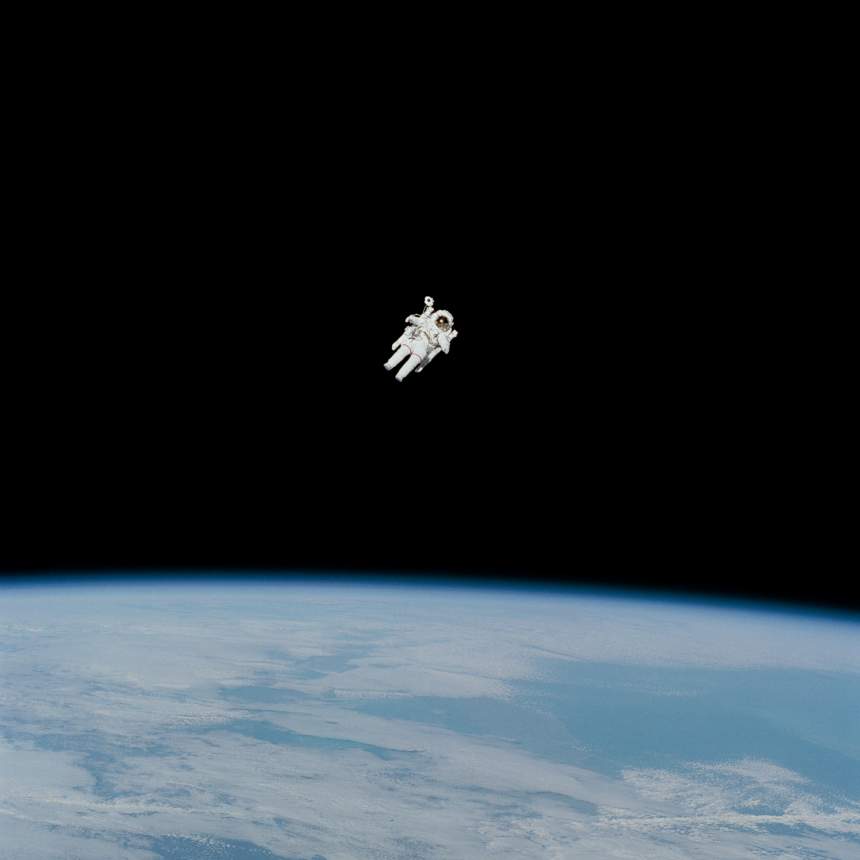
Image Source: NASA from Unsplash.com



I was excited to see another JD Strunk story in FFJ. It was the same sort of fiction that JD produces over and over again, which is to say: excellent! The characterization of the MC and Kirby, his alien counterpart, was very, very good. I felt I got to know something about the two of them. JD’s dialogue was superb as well. As I often tell myself, I wish I could write as well as JD Strunk.
You are too kind, Bill! Thanks for reading 😉