
The Fifth Sense by Neil Weiner
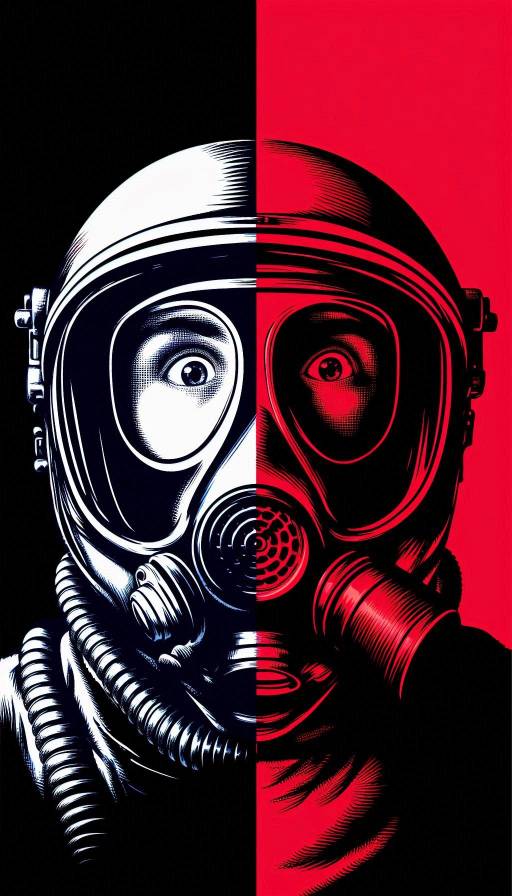
The Fifth Sense by Neil Weiner
The Mekan I shuddered as its thrusters cycled for descent, vibrations shaking the crew.
Dr. Amira Gupta leaned closer to her console, her dark eyes narrowing behind thin-framed glasses. She tapped the side of the screen with two fingers, as was her habit when she reached a conclusion.
“Commander,” she said, voice taut, “the scanners are resolute. No surface water. None. Yet the plains and forests below are thriving.” She raised one eyebrow, a gesture her crew had come to read as this shouldn’t be possible.
Commander Greaves loomed over her chair. His voice came low, each word clipped, as though wasting syllables was a liability. “Vegetation with no water source. No oxygen exchange. That could signal a trap.”
Amira exhaled sharply, shaking her head as her fingers tapped the holographic display. “I reran the spectrographs three times, sir. Each with the same inconclusive result.” She pointed to the display. “The atmosphere on this planet mirrors Earth’s, but nothing should sustain plant life.”
Greaves leaned closer, his shadow falling across her console. His jaw flexed as his eyes swept the screen. “I don’t like what I don’t understand. Mystery gets people killed.”
The hull groaned as the ship hit atmospheric drag, a banshee-wail of friction. Amira’s hand tightened on the console rim. “The equations won’t hold, Commander. It’s as though the planet is manufacturing breathable air without mechanics to explain it. Something unseen is at work.”
Greaves’s hand dropped to the sidearm strapped to his thigh, an instinct more than a decision. “Then we don’t go in blind. We land but move with caution.” His tone brooked no debate.
Amira’s throat tightened. “Understood, sir. If this planet hides its truths…it hides its dangers, too.”
The ship rattled harder. Lights flickered. Outside the green and silver blur of alien forests loomed.
Inside the cabin, silence thickened with unspoken fear.
& & &
The pilot angled the Mekan I into a cautious descent, thrusters flaring against the final drag. The ship kissed down on a patch of orange tufted grass at the forest’s edge, the vegetation bowing under the heat, then straightening again with unsettling resilience.
For a long moment, no one moved. Then Commander Greaves barked out orders, his voice sharp and percussive like the rattle of gunfire:
“Soldiers, form a perimeter defense, one hundred meters out. No gaps. Engineers, shelters up beside the ship, double walls.
Amira—” He stabbed a finger toward her console. “You and your assistants sample everything. Soil, air, grass, forest edge. I want seismic sensors drilled so deep they touch the planet’s bones. No stone left unturned. Move!”
The crew jolted into motion. Soldiers disembarked with weapons shouldered, boots sinking into the spongy grass. Its faint, spicy aroma made several of them cough. Engineers unfolded shelters with efficient clatter while their eyes kept checking the tree line.
Amira disembarked last, her hands hovering just above her data pad, not typing, her typical pause when unease gnawed at her. She picked a tuft of grass and deposited it into a sample vial.
“Photosynthetic activity… but no chlorophyll. No water molecules in the stalk. It’s alive, yet chemically barren. A faint odor of banana emanates from it.”
Her assistants knelt nearby, inserting seismic rods into the ground. Each thump of the driver echoed longer than expected, as though the soil were hollow beneath. One assistant frowned. “Doctor, resonance isn’t consistent. The readings shift mid-pulse.”
“Shift?” Amira repeated. “Seismic waves don’t change direction. Unless…” Her lips pressed tight, a gesture that meant she disliked where her thoughts were leading.
From the perimeter, a soldier’s taut voice cut in on his com. “Commander! Nothing on motion sensors. Nothing on heat scan either. But…feels like something’s out here.”
Greaves stomped through the grass to the soldier’s post. His eyes swept the tree line. “Feelings don’t get logged, Corporal. Eyes open. Keep scanning.”
The minutes stretched. Soil samples came back sterile, the seismic probes inconclusive. Amira said, “The atmosphere is a perfect match for Earth’s. How is that possible?”
The silence pressed heavier with each passing hour. No insect buzz. No rustle of unseen animals. Only the sound of boots, tools, and the uneasy clearing of throats.
Amira stood at the edge of the camp, staring into the forest, when Greaves approached.
She spoke softly, but Greaves caught it. “This isn’t absence. It’s concealment.”
Greaves’ reply came like gravel underfoot. “Until concealment shoots at me, Doctor, we keep working.”
Behind him, the orange grass released a wave of fragrance. It was sweet, cloying, like jasmine, before fading back to nothing.
The crew continued its work. Nothing made sense.
That absence began to feel like the loudest presence of all.
Adding to the growing tension, The Commander received a new entry in the spacecraft’s command uplink buffer—time-stamped two weeks earlier.
The words scrolled across his screen in stark block lettering, invoking dread:
“Warning. Earth in turmoil. Warring factions everywhere. Not safe to return. Colonize nearest suitable planet. Await further instructions.”
The Commander’s throat went dry. Earth, the cradle of their species, was teetering on the edge of self-annihilation.
The crew chatted casually, oblivious to the danger. The fragile illusion of routine pressed heavily against the Commander. First this mysterious planet and now potential Armageddon on Earth.
He knew what this message meant. Colonize and survive. abandoning the dream of ever returning.
His fingers hovered over the shareto crew button. Then, slowly, he closed the screen. He slipped the message into a hidden encrypted folder only he could access.
“Not yet,” he whispered to himself, a commander’s burden lodged in his chest. “They need hope more than truth.”
& & &
A soldier on perimeter duty rubbed at his nose, scowling under his helmet. “Commander,” he said finally, “I keep smelling cinnamon. It’s been trailing me for hours. I thought it was my rations, but it follows me wherever I walk.”
Greaves sniffed the air. The faintest trace lingered there. “Damn it. I smell it too. Gupta—get your people on this.”
Amira looked up from her data pad. She motioned sharply with two fingers.
Before she could record the data, more reports crackled through comms.
“Sir, engineer Hernandez here. Just caught something like ammonia. Overbearing. Like cat piss. And it won’t clear.”
Another voice broke in, higher-pitched, frantic. “This is the bio-team captain. I’m losing it. I swear the air is thick with perfume, like cedar dipped in sugar. It’s everywhere I move.”
The chatter swelled, one crew member after another, reporting scents that had no source. Some pleasant, some acrid, all impossible.
Greaves’s commands barked through the noise: “One at a time. Hold perimeter. Keep your weapons ready.” Greave’s eyes darted toward Amira, betraying his unease.
Half the crew had drifted to Amira’s station, voices overlapping, each describing different fragrances that clung and hovered like unseen shadows. Amira scanned them with her handheld analyzer as data scrolled.
Her voice sharpened. “Commander, the readings are impossible. Layers upon layers of volatile compounds, each interlacing, interacting like…” She paused, eyes widening. “Like voices in a choir.”
Before Greaves could reply, the air shifted.
Amira felt it first, a sudden bloom of heat against her arm. The analyzer in her grip slipped half an inch before she tightened her hold.
Greaves’s hand dropped to his sidearm. He barked in an attempt to mask his fear. “What in the hell just happened to everyone?”
Amira answered. “We’re not alone. The fragrances merged. Something is surrounding us. This isn’t random contamination. The signatures are too deliberate.”
Greaves’s head snapped as he addressed the guards. “You see a target, you fire. Until then, hold your ground.”
The smell thickened. Cinnamon swirled into ammonia. Sweet cedar into sour milk. The air grew heavy, suffocating. Men coughed, gagged, swore under their breath.
Then came the sound—or not a sound but a vibration—that rattled through the seismic sensors and into their boots. A low, thrumming pulse mixed with the scents, swelling and receding like breath.
The scents pressed closer, circling, mingling, folding over themselves until the camp felt wrapped in invisible tides of odors.
And still, no shape, no body, no face.
Only the overwhelming certainty of presence.
& & &
Amira saw it first.
The engineer’s body by the portable floodlamp flickered, his skin and clothing shuddering as though caught in a strobe. The ammonia smell hit Amira’s nose, burning her sinuses. The odor swelled until it blotted out every other trace. Then the engineer disappeared.
Amira’s lips parted, but no sound escaped.
A soldier stumbled next, clutching his rifle. Cinnamon flooded the clearing. His body rippled, the outline of him stretching thin, until the spice was all that remained. He vanished into the night, leaving only the sweet burn of cinnamon.
Each smell rose in crescendo before a crew member winked out of sight, swallowed by a silence that deepened with every disappearance.
Greaves stood defiant to the end, fists clenched. The air soured thick with his harsh, bitter stench of cigar smoke. The odor grew so strong Amira gagged. And then he, too, dissolved into it, vanishing with the reek of his own command.
Alone, Amira gasped, heart battering her ribs. She spun, but the camp was empty. No voices, no shapes, nothing but the dizzying carnival of scents swirling in the air. Her own smell. What was it? She caught a whiff, faint citrus mingled with rain-soaked earth.
A voice pulsed directly into her essence, braided with fragrances too complex for human olfaction:
We are a dying race in need of new scents to survive. Your fragrances allow us to propagate and flourish. Our energy patterns need this infusion.
She felt the press of countless presences. Everywhere, nowhere, the intermingling of smells.
We found in you the faintest molecules, unique to your species. Carriers. Anchors. With these, our own essences can go on.
Amira staggered, arms spread wide in the emptiness. “You… you’re using us.”
Not using, the thought corrected, gentle as sandalwood and crushing as smoke. Joining. You came to us. You carry us now. You are us now.
Her chest convulsed as her vision dimmed, replaced by waves of citrus perfume
Alone at first, then not alone. Surrounded by the others, intermingled, familiar yet transformed.
The last human thought she clung to, before even that was smothered by citrus, was this:
We humans hadn’t asked for this. We hadn’t chosen it.
Instead of terror, Amira felt wonder. What had seemed like invasion was preservation. What felt like erasure was a gift of survival for both species.
You are us now. We are you. Together, we will endure.
She closed her eyes and breathed deeply. No longer just a woman, no longer just human, but part of a tapestry woven from unseen threads, a symphony of fragrances that carried life where eyes could not see.
For the first time in human history, Amira and her crew had found a way to truly live as one with the aliens. Nothing divided them, not even bodies.
Only essence. Only aroma. Only life carried forward on the perfumed silence of a new world.
* * * * THE END * * * *
Copyright Neil Weiner 2025
Image Source: Dey at Fictom.com





Would love to hear any critique of this story. Send it to [email protected]. I’m looking to always improve my writing skills.
This fiction employed an economy of words and I found myself wondering, with the crew, what would happen next. The prose was richly textured; my favorite line was: “She closed her eyes and breathed deeply. No longer just a woman, no longer just human, but part of a tapestry woven from unseen threads, a symphony of fragrances that carried life where eyes could not see.” And as if that were not enough positive things going for this story, the plot’s premise was truly unique: aromas as a common, species-saving grounds for contined existence Really good story!
and