
The Lawyer by Sandra Kolankiewicz

The Lawyer by Sandra Kolankiewicz
After he died, for the first couple of days I felt shocked, stunned, numb one moment and on a roller coaster of emotions the next. We all did.
In the places where he usually would have been sitting among us and cracking jokes, flirting with the girls, tossing two or three back, having a rousing end to the work day in what is now called ‘happy hour,’ we looked at each other in disbelief
We spoke in whispers about what had happened in the fire that killed him, what was being done to tie up the end of his life and provide for his family. Stories were remembered about him, both good and bad.
At the funeral, there’d been no time set aside to get up and share memories of him like currently happens at the end of a lot of services. People didn’t do that then as part of what is now call a ‘celebration of life.’ Instead, we sat in each other’s living rooms and kitchens, in bars and restaurants, and we talked, smoked, and drank.
For weeks, I cried indiscriminately and without warning. I might be sitting in my car about to go into a courtroom, and suddenly I would be blubbering like a little boy. I would be in the shower or mowing the lawn, and the grief would overwhelm me until I couldn’t hold my sobs in.
I’d have to stop whatever I was doing, watching television, driving, interviewing a client, in order to cover my face, weep a little, and then pull myself together and apologize.
I thought Korea was behind me, but the feelings created in me by the war returned with my best friend’s death, and behind my eyes, whenever the images wanted to appear, I’d be seeing people suffering and dying in the midst of the mindless and unpredictable destruction that was war. I wasn’t on land too much in Korea, but each time I was, I saw truckloads of dead women, children, and old people. The day after a landing, from the deck of the destroyer, I could see bodies bobbing the beaches through my binoculars.
The worst about war was the smell. Anything once alive smells bad when it’s dead, and the war was indiscriminate and without hierarchy. Everything from trees to people to animals to fish was sacrificed.
After he died in the fire, I might as well have just come home from the service instead of nearly ten years out, considering my emotional state.
For a while, life felt pointless. However, the number of people who comforted me when I bawled, who assured me they understood my pain, was surprising. Everyone has lost someone that they love. Until then, I had no idea we all were in such existential agony, but I guess experiencing hard lessons is the human condition, At least the priests and nuns in all my Catholic schools told me it was.
Then the grief took a different form. Tears were traded for anger. I had never used the words ‘God-damned’ ‘or Jesus Christ’ in a blasphemous way before. If I were going to swear, I said ‘shit’ or ‘fuck’ for emphasis. After all, I see nothing forbidding swearing in the Ten Commandments, but the Third Commandment says not to use the Lord’s name in vain.
The crying spells were replaced by my inserting ‘God-damned’ in front of every noun or verb I could. I went to the God-damned office, did my God-damned job, came home to my God-damned house and my God-damned children, was served my God-damned dinner, and then I God-damned slept. In the morning, I God-damned woke up, took a God-damned shower, ate my God-damned breakfast, kissed my God-damned wife goodbye, and got in my God-damned car to drive to God-damned work.
Sometimes in there I mowed the God-damned lawn and even read a God-damned book to one of my kids
I used ’Jesus Christ’ very differently than how I inserted “God-damned” into my speech. Instead of making Jesus Christ into an adjective or adverb, like I’d done with God-damned, Jesus Christ became my favorite expletive to express my anger. I used the name only in frustration, and I had a hundred ways to emphasize the phrase.
When the phone rang as I was trying to complete a thought, I said, “Jesus Christ.” Should I be unable to find something in the office, I’d growl impatiently, “Oh, Jesus Christ.”
Should a client called the secretary to say he’d be late, I’d look at her, complaining, “Christ Almighty.” After I got a flat tire, I’d pull myself out of the front seat of my white Impala and spit out, “Jesus Christ.” If my wife spilled a cocktail on my lap a little as she handed the glass to me, I’d brush off my trousers and bark, “Jesus Christ!”
Each time the dog made muddy foot prints on the kitchen floor, I’d look at him as he wagged his tail at me and say, “Jesus Christ, Brandy.”
One day my wife said to me, “You know, swearing isn’t going to bring him back.”
I hadn’t really even noticed the way my speech had changed until then, how angry I was, how much I blamed God for the fire, the death, the loss I felt.
“You didn’t talk like that before,” she said, “even when you came back from the war and swore like a sailor.” She was just sitting there calmly on the sofa, an apron over her dress, the kids outside on the front lawn, playing with some of the neighbor children: Red rover red rover, let Billy come over!
“You’re taking it out on God,” she said. She considered her words for a moment, her head tilted to the side as she thought. “I go to church not because I’m sure there is a God but because I hope there is one. I’m not sure God’s to blame. What I do believe is that people don’t always know they have free will. Accidents just happen.”
Up to that point in my marriage, I’d told myself that my wife did not understand me. Though we’d been dating for about a year by the time we tied the knot, I never wanted to marry her. She just worked as a secretary at a law firm. That’s how we’d met—I’d introduced myself to her at some function I’d been obligated to attend.
After all, I was just getting started in my practice, and life was all possibility for me. I had no intention of acquiring a ball and chain until I wanted to. Also, I was sure that when I did want to get married, I wouldn’t choose Barbara. She wasn’t fun enough, I thought, and there were a million other women in the world. Then she got pregnant.
I didn’t really know if I loved Barbara because I didn’t know what love was. I felt trapped but slid the yoke of fatherhood onto my shoulders. That’s what I’d been taught to do if a woman was ‘with child.’ We had two more babies after the first, one after the other, churning them out into a prosperous decade like we were supposed to do.
Until the fire, I didn’t realize I’d been furious at God all my God-damned life and that if I didn’t come to terms with the unreliability of grace, the arbitrary way tragedies happen, the inability we all have to predict outcome, I was going to end up like a sail boat without a keel, thrashing about on a bitter sea with no soothing ports to repair to.
Before that moment, I’d thought of Barbara as a piece of furniture, household convenience, automaton, voice in the background telling us to pick up after ourselves, switch off the lights, keep moving, but then with a pang of embarrassment, a feeling in my chest that actually hurt, I realized that I was the one who had not comprehended myself.
As long as she’d known me, even though I was oblivious in my ignorance, she had seen through me to the person who wanted to live hopefully instead of arguing with whatever I called God about everything I could not control, all that had broken my heart, the hypocrisy that had stolen my loyalty, the authority that had disappointed me.
She understood me perfectly. Though we had been married eight years by then, we did not have a marriage until that day, when I saw her, and myself, for the first time. We had been just roommates who were destined to be buried in the same plot.
In the 1990’s I was watching some comedy special on the cable when I heard the word ‘bromance.’ The audience laughed, but I knew immediately what the word meant and how it described the relationship I’d had with my best friend who had been dead by then for probably twenty-five years.
I adored him like I had not ever loved another man, as if he were the brother I never had in a family where I had five sisters. I was the oldest, and because my parents both worked in my father’s law office, my mother as his secretary, I was often responsible for my sisters in ways they probably don’t allow these days or at least frown upon.
Thought the fact seems strange to me now, I cannot remember where or how we met. Neither of us could. We once tried to recall together, a night he and his wife were over at our house for drinks and dinner, the time I talked him into taking one of the six-week-old pups that Fluffy, our golden retriever, had produced with help from the local dalmatian.
He’d just built that new house with all that land, I’d said. They needed a big dog to go with the kids on all that future wandering they’d be doing in all those woods and fields.
His house needed protection, I’d said, because there was only one cop in that little town, and if any danger came around, no one would be there to stop a criminal. There wasn’t a fire department there, either, I’d joked, or even a water truck, so the dalmatian part of the dog would protect them from fire.
Because we’d both been in the Navy, I suggested they call the pup we gave them Barnacle Bill the Sailor. The name stuck: Barney. For the year they lived in the new house, before it was gutted by the fire, they used to put him down in the finished basement at night, where he’d sleep, and they’d let him up in the morning.
He walked the kids to the end of the winding road to catch the school bus in the morning and met them there in the afternoon when the bus dropped them off. He was so smart that he stood up on his hind legs and rang the doorbell when he wanted attention or food. He died too in the fire. When we finally got into look around with the insurance adjuster and the fire marshal, a few days after the fire, the clean-up crew found him in a corner of the basement, where’d he crawled to try to get away from the smoke and the heat.
If the two of us had idealized images of other bromances we might have wanted to have, with other men that we liked and admired, I would have to say we both loved Kennedy, a Catholic boy just like us, but one who made a successful journey all the way to the Whitehouse. Even with his father’s money behind him, we were still astonished when he won. He made everything seem possible for us in a world where all we had to do was pursue our destinies with vigor and we’d succeed.
A handsome man, a funny man, an intelligent man, a rich man, and a ladies’ man, Kennedy was the epitome of hope and the future. My generation had the dark experiences of the depression, World War Two, and the Korean War behind us, and the brightest new day that had ever been possible lay ahead.
We felt invincible on our way to work. Our “offices” extended after five pm to the local bars, whichever watering hole was the hotspot of the moment, where we’d carry on.
Between 1962 and 1963, he and I each totaled a car while we were driving drunk, behavior which was not really illegal at the time. I drove into a telephone poll; he passed out and fell sideway on the front seat of his car, the vehicle careening under a parked semi, the roof shearing off. If he’d have fallen asleep and remained upright, the accident would have taken off his head.
At some point during that year, both of us had to be picked up at an emergency room with our jaws wired shut, each from accidents in our own vehicles after a cocktail hour had turned into a cocktail night. Both of our wives had to wake up sleeping children to load them with blankets into the back seats of our second car to come pick us up.
When I said that my wife, Barbara, didn’t understand me, I say now that we were the ones that didn’t understand ourselves in the mania of our manhood’s youth, when we felt entitled to everything because our lives from the beginning up to that point had been ones of sacrifice. We had survived war and a whole lot more. Now was the payoff time, we thought. The world was our oyster.
We hadn’t yet realized that we were poisoning the bay downtown, and that all the new refinements and comforts and conveniences were clogging up the streams and killing the water. Plastic and television dinners were still the best things that had ever happened. The oil embargo was in the future. The low-grade steel that made the rusty bodies of shoddy, gas guzzling automobiles hadn’t yet appeared. The cars were solid and well built. The ones the dealers would have to try to sell in the 70’s in their efforts to compete against the first fuel efficient Japanese cars were still to come. The unions weren’t yet controlled by the mob.
He died when the American automobile industry was still king. His business never had rows of cars going nowhere, sitting on his lot season after season. For him, the money was yet rolling in. He missed 1968 and never got old—though at the time he died, the liquor was catching up to him, and he was getting a little fat in spite of the fact that most of his life he’d been a tall string bean.
The weight was bothering him, I could tell, but a few extra pounds (really probably twenty) didn’t keep him from ordering a burger at the newest “in” place he had found in the ten-mile radius of the car dealership. My office was just a few blocks from him, and we often ate lunch together. The small town where he lived was forty minutes away down the Interstate, out in the country.
He had a habit of going to the same place every day until he got tired of what became, to him, its predictable nature. Then he’d move on to the next lunch counter or after work bar. At some point we’d cycle back through them all. In the meantime, he’d meet everyone in each place, learn their names, where they worked, how many children they had.
If you were with him when he walked in somewhere, you felt as if you were with most popular person in the world. He was so good looking that average guys like me had the girls he wasn’t interested in fall into our laps. We barely had to make an effort in order to find ourselves in the backseats of our cars with women who weren’t our wives.
I followed through on the fallout only once, which I immediately regretted because I knew taking on an affair was the last thing my marriage needed. Going out and drinking too much and totaling your car was one thing—but crossing the boundary into infidelity was another and brought a layer of stress I couldn’t cope with. After that one time, I’d take a girl on my lap and I’d buy her a drink, but I never cheated.
He was different. Women threw themselves at him, and once he was drunk, the kind of drunk when he’d go into the bathroom, vomit, and then come out and keep drinking, he lost all sense. Half the time he couldn’t remember the night before, and I’d have to tell him what he did.
“You went with her behind the trash bins in the alley,” I’d say, “up against the fence,” and he’d wince.
This behavior happened only a few times when he was with me, when he was really loaded and most likely trying to numb himself. We both had a hard time not flashing back to our lives in the service even then, ten years and half a world later. Nowadays they call that kind of perseverating about trauma “a normal response” to horror and an illness to be treated, but we thought we were fine.
When he was with Frank, though, he usually got into big trouble. Frank was with him the night he met her. Frank was the one who took the extra napkin from him that the waitress had set down under his drink, the napkin with her phone number and address on it.
“Go for it,” he’d said. “When the last time your wife sucked your cock?”
That’s how Frank was. He used to say he was named “Frank” for a reason, He always said the worst comments about women and what they were good for. I’d like to say that, yes, we got into trouble together, but in many ways I brought out the best in him, and he elicited the same in me. Frank, however, encouraged him to follow his base instincts, especially when they were drunk.
Frank had not made it beyond the rank of private in the Army, and he had never been in battle. He stayed in DC, saved from the actual war by some Congressman uncle. While he didn’t go to war, he also was never promoted from the time he was drafted until the time he was through, so you know what kind of man he was: privileged, lazy, and taking advantage of anyone he could, especially women in general and his long-suffering wife in particular.
She came with money and a strong sense of Christian duty to remain in an exploitive marriage—and as far as I knew, he did not work.
He’d briefly been employed at the dealership as a favor between friends, but he never managed to sell one car and took three-hour martini lunches. He’d been let go, and after that, the friendship appeared to sour. Frank blamed him for some sort of betrayal, as if he should have just been employed there forever while being allowed to do nothing.
“He gets to have a three-hour lunch, but I don’t,” he groused one night when I ran into him, right after he’d been fired.
“That’s because he sells three cars a week,” I’d flipped back at him, picking my beer glass up and sipping, the first beer of the late afternoon. “If you manage to get three cars a week off that lot, you can do what you want to, I bet.”
He’d just harrumphed a reply, but by then I’d stopped listening. I’d never liked Frank and didn’t trust him. He knew too much and had been a bad influence from the start. The only other job he held as long as I knew him was sitting on what by then was a new invention—the sitting mower—and driving around his extensive lawns in that same development where the houses came with five acres.
I often wondered if he’d ever try to extract revenge for being fired by blackmailing with some of their escapades, but the only one who knew about the pregnancy was me.
I met the woman soon after the first night they’d been together. He brought me in to her family’s bar to meet her. He’d nicknamed her Judy after the woman in that Cary Grant movie. I could tell from watching her try to act as if nothing was happening between them that in some way, even though they didn’t really know each other, she thought she was in love. He was energized as well, though how deep his feelings went was hard for me to tell.
There are moments when we have to warn our friends when they’re too close to the edge, and that was one. There are times when we are supposed to tell our friends to reign themselves in, but I said nothing. I knew he was drinking too much, risking his health, job, marriage, and children, but at the same time, I thought everything we were all doing in those days was just normal.
I hadn’t yet figured out I wanted to be a judge, that I wanted to grow up to be a happy and prosperous grandfather. Even though I’d been in the war and had faced battle, I didn’t realize that we’d all grow old and die.
He perished because of me. You don’t just watch a friend make big mistakes and laugh about them with him as if being a man is the result of having an enormous appetite for everything you can get your hands on because you don’t want to think about what happened to you, how one moment you’d been standing next to your commanding officer and the next his head was blown off, with you right beside him.
How after dumping off a load of fresh troops during a landing under fire, you’re trying to both rescue other men at the same time you’re pulling away from the beach, deciding who can live, who will die, and who’s already gone while the engines are reversing and the waves are crashing. Sometimes you find out later you were wrong.
I also knew what had happened with the priest when he was a kid, not in detail but the basic facts, how and why he’d lost his faith completely. Prayers in war are only sometimes answered, what can seem like dumb luck, and the petitions offered to a god who allows you to be abused by one of his servants seem futile.
My wife and I still attend church every Sunday; he stopped going when he was sixteen, and after the abandonment of the religion of his childhood, neighbors, and family, he relied on the ideas and philosophies of men to inform his spiritual side.
Instead of the Bible, he worshiped documents like the Magna carta, the Declaration of Independence, or the Constitution. He became emotional when discussing the Gettysburg Address. When he wasn’t drunk, he believed that a man was his character. When he was in a blackout, he didn’t know who he was. What he really wanted to do instead of selling cars, he once told me, was teach history.
Unlike me, he’d always said his wife understood him, but there are limits to what the wife of an alcoholic womanizer is willing to understand and limits to what the family of a pregnant, unmarried woman on the side will accept.
We were all in the throes of heavy drinking, making big money, driving big cars that we could fill up with two dollars of regular gas.
Then Kennedy was assassinated.
If at the time of my beloved friend’s death, he was already nearing the bottom of a downward slope, JFK’s murder is what started him on the slide. For one, his drinking increased exponentially. The day we learned about Dealey Plaza on the radio, I was with him in his car on our way to get a plate of fried clams at a Howard Johnson’s near the Interstate. The regular broadcast was interrupted to say that the President had been shot in Dallas, but he hadn’t yet been pronounced dead. No one knew the extent of the injuries at that point.
We did a U turn and parked on a side street so that we could listen to the announcer without distraction. We turned up the volume on the radio so loud the the sound almost hurt our ears.
In 1963, we hadn’t yet started a regular custom of drinking during lunch. We usually waited until five pm, but Kennedy’s assassination marked our initiation to what became a habit. We drove to the closest bar we knew of that had a television, O’Malleys, over by the warehouse district.
There, the atmosphere inside felt as if each of us were waiting to find out if our father, our favorite uncle, or our brother was dead. Instead of sitting in a hospital waiting room, however, we clustered at tables and on stools with pitchers before us and emptied shot glasses.
Kennedy was older than we were, had been in World War Two instead of Korea, and was a bona fide hero. He seemed like our older brother. We didn’t believe that perhaps the mob had helped him get elected or that his father had been in with the mobsters and had promoted the Bay of Pigs.
Instead, we admired how, when the Bay of Bigs disaster occurred, Kennedy could admit a mistake and still survive. This candor from someone in authority was new to us. We had served under men who admitted to error only if their own lives depended on it, their well-being alone, not the lives of their subordinates. We unconsciously used these poor examples to support the fact that after the military, when we became civilians, within our households, we were never wrong.
We were wary of authority but adored Kennedy who, with his quick wit and independence of thought, and his rumored lady killing, could apologize and be unapologetic at the same time. We went through our lives trampling on our wives’ dignity and careening around drunk in cars that amounted to weapons.
That day, the nation we had fought to defend was on edge for news from Dallas. At the bar, we ordered something to eat and, like the rest of the patrons, drank and waited. The room was silent as a morgue except for some sounds of crying and the ringing of the cash register as people sought to sooth their nerves. By 2 pm, the President was pronounced dead.
Together the two of us drank for a night that, in the morning, neither of us could really remember, just that we’d both gotten sick and finally, mercifully, decided to sleep in the car, one of us in the front seat and one in the back. At some point we had called our wives, but neither of us was sure what had been said.
After Kennedy was gone, my best friend changed, almost as if he thought nothing had a point. He tried selling more cars, looked into acquiring his own dealership, decided against it, and eventually decided to distract himself by building the new house. He started drinking daily with his lunch, and would start random conversations with people wherever he was in order not to feel what he felt or to consider the thoughts he was thinking.
He outdid me in consumption, though I tried to keep up with him the best I could do. Certain of our friends stopped wanting to go out with us because they said we were “too much” and “headed for trouble.” At first in little ways, and then in neglect that was obvious even to us, we ignored our wives and children.
We missed family dinners, made it home too late to see them, were out the door to the office too early, and worked on weekends—as if we were on some kind of manic. I was at my own home with my wife and kids more than he was, but I was still pretty bad.
However, nothing could make him stay home. He was off meeting people, dealing in not only cars but in God knows what. Once he came to my office with a load of pin ball machines in a truck he had borrowed from the dealership, and asked me if I wanted to have one for my basement.
The strangest part was that his wife never mentioned a word to mine when they talked weekly. In fact, his wife pretended nothing was wrong between them even with me, the person he was supposed to be with when he wasn’t home with her. In all the times I called his house, only to hear with increasing frequency that he wasn’t home, she hinted at her misery and her concerns only once.
“I’m hoping that when the kids are old enough to still be awake when he comes home,” she said, “he’ll realize he can’t be drunk or they’ll see him and know.”
Her wishful thinking was typical of the era.
In the new phase of his adult life, what I think of personally as his post-Kennedy decline, he met the woman who would have his baby. She was a little bit older, probably the age of our wives, but she seemed nice enough.
Then one day she walked into the office, sat across from me on the other side of my desk, and told me she was pregnant.
By that time, he’d already come to his senses and cut the relationship off before he lost his family. He was spending time at home with the girls, taking them to movies, candlepin bowling alleys, looking at horses to buy them for the new property.
She and I settled together on what would be half a million dollars today—in cash. I told she had to promise never to tell anyone who the father was—and she signed a document. I advised her to open up an account in a bank at least an hour away, where no one would know her. Otherwise, I’d said, there’d be gossip or a family member would take advantage of her.
“Never,” I warned, “tell anyone you have that money. Don’t flash it around unless you have a good story about where you got it,” and she agreed.
Still, I’ve always wondered what he’d have done with that child. Not every man can father a baby and walk away. I’d like to think he’d have been involved. He did, after all, always claim that his wife “understood” him, maybe like Jackie understood Jack.
After the funeral, as his attorney, I went through his papers and made a review of his estate. He had no life insurance—a contract had been drawn up but sat unsigned on his desk. By then the paper it had been printed on was a dark grey color from the smoke of the fire. The house and all the furnishings, however, were only a year old and fully insured for replacement value. The company paid to rebuild the house, though I advised her that she could save a little of the money they would give her if she just finished off the first floor, put a door at the bottom of the stairs to the second floor, and leave the upstairs unfinished.
She and the girls would get social security, I told her.
People at the dealership made a collection and bought them some stocks that were supposed to eventually pay for the girls’ college tuition when they were old enough. World Book Encyclopedia read about the fire and sent them a set of used encyclopedias for their rebuilt home.
Though he had always handled the money, his wife seemed very surprised that they had no savings, stocks, or bonds.
“He told me we were all right,” she said. “He swore he had enough for us both to live on and pay tuition for a master’s degree in history.” She looked tired and forlorn, living in a little apartment she’d moved into with the girls while the house was rebuilt.
“That was the plan,” she said. “He wanted to teach American History.”
I never told her that the savings she thought they possessed had become hush money, spent on the other woman and the child. Except for the house, he had left his wife and daughters nothing.
For a couple of years after he died, I picked up with the drinking where he’d left off. I missed him as much as if he were my brother, my twin, my best friend. I’d have a few and then go seek out anyone who had known him, find myself in some bar late at night with someone, talking about old times. I smoked too much, and I drove home intoxicated quite often. I stopped thinking so much about the war and instead focused on my lost brother, my partner in manhood, in recovery from past battles, in crime.
I admit I even went to his house in the middle of the night, the new one that had burned, which they had rebuilt to suit their diminished needs, leaving the upstairs unfinished and occupying just on the first floor as I had suggested. I’d go there drunk at night and try to get sympathy from his widow for my grief.
“I miss him so much that some days I can’t think,” I’d insist. “He was my brother, my best friend.”
Because I’d gone there after the bars had closed, I’d have woken her up, so she would be sitting there in her pajamas and a robe, with her slippers on, and she smoked along with me though she wanted to go back to bed.
She’d had to start working by then. The girls were in middle school. There were no breaks for her, she’d said, except for when she was asleep.
“My life seems empty without him to talk to,” I’d lament. “There are so many things I want to tell him and ask him.”
Often, in that state, I would even cry.
Then one night she lost her patience with me.
“You didn’t know him like I did,” she said. “He wasn’t perfect. He had a lot of problems. He wasn’t always good. He could be cruel.”
What could I say to her? That I knew everything about him that she merely suspected—
and that I didn’t care? I missed him anyway. I still loved him only because I wasn’t a woman—a piece on the side, a wife, or one of his daughters—and therefore he had never betrayed me.
I hadn’t been the one sitting at home with the kids asleep in bed, waiting for him to either come home drunk or not come home at all. I had never been the person who had to monitor how other women looked at him to see if something was going on between them.
I never had to force myself to ignore the obvious, that he was puffing up his hollow insides by using what was left of his rapidly decreasing attractiveness as it descended into bloating, the consequence of the smoking and the alcohol, the memories that he could not reconcile, the battles he was still fighting in his head in his effort to convince himself that his life had meaning.
“I feel such guilt,” I confessed to her then so that she could absolve me, “for not protecting him when I knew he was in trouble.”
I’m not sure if she understood me. She gave me a cup of coffee and told me I needed to go home.
The last time I saw her, and his children, I went to her house to talk about him after the bars had closed. She was so sick of hearing my drunken whining that she didn’t answer the door.
I couldn’t believe she wouldn’t open up, ignoring me in my desperate state, so I kept making as much noise as I could to get in.
I went to the front door. KNOCK—KNOCK—KNOCK! No response.
I ran through the dark and turned the corner of the house to get to the side door. BANG—BANG—BANG! Nothing. Not a sound.
Then I remembered the back door and felt my way along the bushes in the darkness, stumbled up the backsteps. POUND—POUND—POUND! Silence.
She did not come, was purposely pretending I wasn’t there, so I started on a window I knew was her bedroom, right off the driveway.
SLAP—SLAP—SLAP! on the glass with my palm.
RAP—RAP—RAP—RAP! on the storm with my knuckles.
No one responded.
I ran around the outside of the house again in a circle, thumping on all the doors, swiping at all the windows until I gave up. I stood panting and out of breath in the driveway beside my car and smoked a cigarette, thinking of him and the house he had built.
There was no moon that night. I knew immediately within a sinking feeling that the yellow flickering in the back seat of the car was flames. On the way over, I’d thrown a lit cigarette out the window, and the butt had flown in the back one.
While I’d been doing the loop around the house, trying to get in, the cigarette had been smoldering where it laid in the crack between the back and bottom cushions, little golden tongues slowly growing until the plastic seat cover fully caught with a woosh and the fire began to spread, becoming rising flames, leaping up within feet of the gas tank in the rear.
I ran to her window and thumped as hard as I could. My car was about to blow up in her back yard.
“My back seat’s on fire!” I yelled. “Open up the door and help me find some water!”
Within seconds, she and the daughters flew out of the door like they’d just been standing on the other side. One of them galloped their pajamas to the outside spigot, turned it on, and ran the hose back to me, her feet bare wet on the dew-covered grass. The other one stood with her mother, both of them mesmerized by the tongues of fire curling out of the open back seat windows of my car and reaching for the sky.
I held on to the nozzle as if it were a gun that was going to save us all, firing water at the flames in the back seat of my Impala until they were gone, and then I kept on with the dowsing, just to be sure.
Dawn was just a hint in the sky when I finally lowered the hose and twisted the nozzle closed.
“Sweet Jesus,” I whispered when the car was a charred shell and had finally stopped smoking.
The girls and their mother had been standing there silently watching, as if what was happening in their driveway was a normal occurrence. At some their mother realized they needed to get on their clothes for school. She followed them in and closed the door behind her.
Sober by then, alone in my rumpled white shirt, askew tie, and wet suit, I took in my scorched white Impala. I still wasn’t thinking straight, but I knew I would have to knock on the door again and ask to use the phone to order a tow truck. Eventually, I would have to explain what had happened to my insurance agent. I might even need to file a police report.
However, the first call I needed to make was to Barbara. I wanted her to know where I was, what had happened, and what I was going to do. I knew she would understand.
* * * * THE END * * * *
Copyright Sandra Kolankiewicz 2026
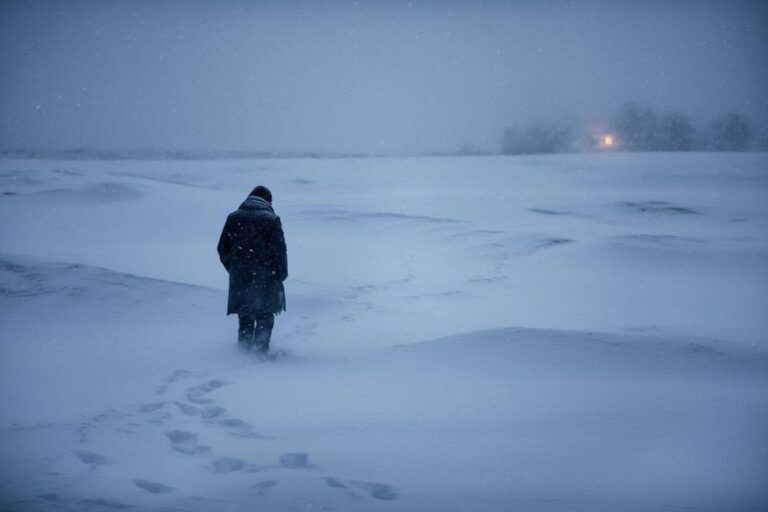
Image Source: Fabrizio Azzarri from Unsplash.com