
The Saltness of Time By Randy Attwood
The Saltness of Time By Randy Attwood
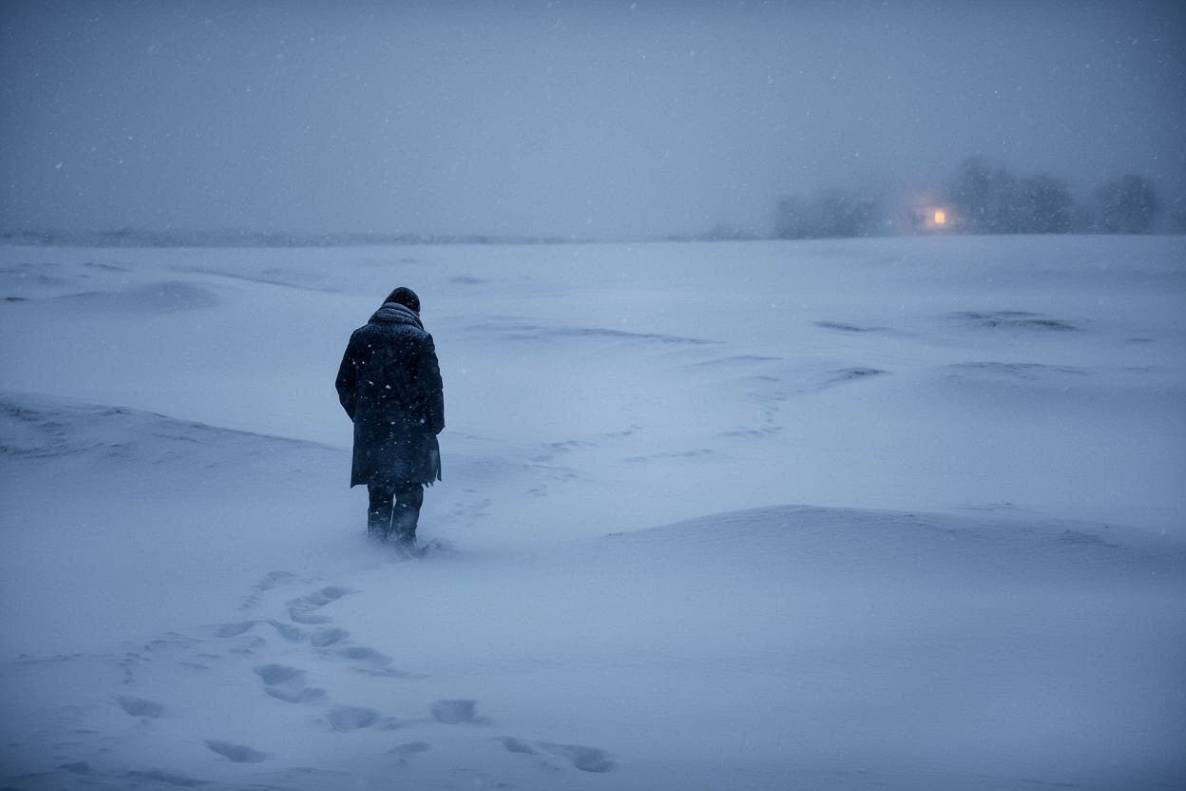
“I like these kinds of snows. They cancel things out.”
The voice that broke the silence in the cold room had that gravel-grumble smokers get and keep — even after they stop smoking. The nervous plucking of his hands at his worn brown sweater said he still missed his cigarettes. His lined, but healthy, blood-perfused face meant he had smoked heavily most of his life before something had made him stop. Bypass surgery, I diagnosed.
There were five of us that night: myself and my fiancée, Stephanie; her sister, Kristin, and her boyfriend, Ted. And him. He was in his late forties or early fifties. Once thin but now with a small cannonball pot, the result of not smoking and not changing his eating habits while his body’s nutritional needs had changed its. And not exercising. Nutrition and exercise were the new panaceas we were being taught in medical school.
On our way to spend Thanksgiving with my fiancée’s parents in western Kansas, we had stopped in Lawrence to pick up Kristin and Ted, both undergraduates, she majoring in theater, he in fine arts — painting. A snow storm had muscled us off the Kansas highway into a small town where we had found an old hotel, miraculously open. He, too, had found this prairie port and now we all sat in the lobby around a fire. Because the electricity was out, a kerosene lamp added another natural circle of light to the fireplace glow in the dingy room.
“This night reminds me of that other night,” the strange man continued. “Long ago, but not that many miles from where we are now. Odd blizzard then, too, had canceled things out; started new things in motion. You’re all Kansans, aren’t you?” he asked in a way that said he already knew the answer. We nodded our heads in affirmation.
“I thought so. Weather determines our life, doesn’t it? We have so much of it. Endure so much of its extremes. Learn from it. Not just farmers and crops. More. I’ve lived in Florida. Disgusting weather. Two seasons: couple months of nice, the rest of heat and humidity. Lived in Ohio. Despised it: all gray for six months. Lived in Seattle. Talk about depressing: rain, rain, rain. Weather in Kansas surprises. Never boring. I like that. Wakes you up.”
He was a little spooky. But I figured he was harmless. And there were myself and Ted to protect the girls, snuggling against us as we sat on the divan. We both had our arms around our respective women, sharing the commingled warmth of our young bodies in front of the fire, the only source of heat in the hotel. Sleeping arrangements had yet to be worked out. We had taken two rooms and by looking at Ted I could tell he was sharing the same hope I had: that we would take our girlfriends to our own beds, as we each certainly had done in the past, but neither of us knowing if the sisters would acknowledge that fact to each other through the act of allowing it to occur again in the presence of the other. The alternative was unappealing: sharing the narrow double bed with Ted.
The stranger sat in an overstuffed chair near the fire, getting up as needed to feed it new logs.
“I haven’t told many people this story. Perhaps you’d rather not hear it. I know how hard it is for young people to listen about what rocked the hearts and flamed the passions of old people when they were young. It seems so long ago it’s hard to believe lives back then were blood and bone real. And what happened to me that night reached back into the last century. I mean, Gabrielle was born in the 1880s. No, wait, might as well get it right. She was eighty-nine when we ran across her and that was in 1963, so she would have been born in…'” he stopped briefly to calculate in his head and Stephie, the little math whiz, spoke up with the answer, “1874.”
“Eighteen seventy-four. Amazing that I can pass on, personally, now more than hundred years after her birth, some of the reality of Gabrielle. If you’d care to hear about it,” he said and it was more a plea than a question. Something there that needed telling.
The two artsy types were hooked. Their sets of eyes didn’t waiver from the stranger’s face. The way Stephie leaned her head against my chest told me she didn’t want to move. None of us objected. He took it as our assent.
“Usually the killer blizzards come in February when the ground is so hard from the cold you’d swear it would fracture the wheat seed planted there in fall and crush the seedlings. But, like this year and this blizzard, winter chose November to crack her knuckles over Kansas.”
“Her? Is winter feminine?” Ted interrupted him before Kristin could.
“Oh, yes. If you’ve ever loved a woman and have her leave you and find your heart has been turned into a lump of ice in your chest, then you know winter is feminine. Just like summer is masculine,” he responded.
“And spring and fall?” Kristin wanted to know.
“Spring is feminine: hopeful, fresh, innocent — like a young woman’s face. Fall is masculine: the brooding empty gaze of a defeated middle-aged man. Anyway, winter cracked her knuckles over Kansas that year in November. An arctic air monster had sneaked across the Rockies, caught in its grip the lingering moist air from the Gulf of Mexico and Pawnee County staggered under a two-foot load of snow that stopped everything, except two boys on skis.
“We were just sophomores. Fred was my best friend. We did everything together. Sat in class beside each other, roamed the prairie together, learned to play snooker together. Took up the guitar and pretended to be folk singers. Weekends found one of us staying at the house of the other. Fred lived in Larned. His dad was the sheriff. I lived on the grounds of Larned State Hospital west of town where my dad was the dentist for that loony bin.
“Fred stayed at my place the Friday night that storm hit us. It shut down the roads, downed the phone lines and only because the hospital had its own power station did we still have electricity.
“We woke up to a wondrous world of white. You just had to get out into it. I remembered that our neighbors, a couple from Germany, skied. Fred and I had never skied, but we went next door and the good Herr Doktor showed us how to get into the skis and off we went to cross country. It seemed easy. No major hills nearby to try, but a few banks gave us a hint of the thrill a real hill would have provided. You know what I miss most about youth? It’s the discovery of new things. Amazing how quickly in life — about your age I suppose — you stop trying new things, get stuck in the ruts of the familiar. I miss Fred, too. The older men get, the harder it is for them to make new friends. Anyway, skiing made us famished and we went back to the house for lunch.
“After lunch we went down to my room in the basement and worked on a few songs, something by Peter, Paul and Mary, I can’t remember what, when we heard the doorbell ring and in a few seconds my dad was calling to Fred to come upstairs. There we found the hospital’s security chief who had come by to tell Fred the sheriff’s department had radioed out that his dad had been taken to the hospital with a heart attack. ‘How is he?’ Fred asked. ‘Don’t know, son, but they got the doctor to him so I’m sure they’re doing all they can. I’m sorry you can’t get into him, but the snow plows won’t get to us until tomorrow,’ the officer told him.
“‘I could ski in. It’s only three miles,’ Fred said after the security chief left. Dad argued against it, but soon gave in, hoping, I think, that were the situations reversed his own son would have demanded the same. I added to the weight of Fred’s decision by saying I would go with him. So Mom filled a thermos of hot tea and Dad spiked it with a gurgle of whiskey. We set off on a route we didn’t use often by car because it was longer, but we reasoned that it was flatter. The usual, shorter route would have presented a fairly good sized hill for us to climb. So we headed across the small bridge spanning Pawnee creek leading to a road that paralleled the Arkansas River and followed it to town.
“I don’t know about you, but I love the prairie. The expanse and openness of it. I’m in big cities too long and I just have to get out, get back to where I can see miles out. The prairie opens us up to the vastness inside of us. Life can constrict you, make you feel tiny and worthless. You have to know there is a vastness inside of you that you can never fully explore, never fully should explore. Socrates admonished, ‘know thyself.’ I don’t think we should know ourselves too well. I think within us there are mysteries, mysteries about ourselves that are and should remain mysteries to ourselves.
“Skiing across the prairie was easy. At first. And then the wind came up. A cross wind from the north that kicked up snow and obscured our vision. We must have been halfway to town when I fell, twisted my ankle. When I tried to get back up I knew it was no simple sprain I could walk off. I couldn’t bear any weight on it. We took the laces out of my boots and tied the skis together to make a kind of sled I could sit on. I took my scarf from around my neck and Fred used it as a rope to pull me. He was winded after a hundred yards and had to stop to rest. We knew we were in trouble. Night was not that far off.
In the distance towards the river we saw a large stand of trees and concluded it must contain a farm house. Fred pulled and puffed his way on. A mailbox by the highway told us it was the home of Gabrielle Wentworth Asbury. Neither Fred nor I had heard of the name. The driveway must have been a quarter of a mile long and I remember how suddenly I felt closed in by the sudden forest that lined the narrow road. Fluffy blue spruces were smothered in snow. Cottonwood trunks were columns of white where the blizzard’s fury had slapped on snow and left it like a numbing sting. All the trees seemed to be waiting for a strong wind to shake their heads and free them from the anesthetic white stuff. Through the trees we could see acres of fruit trees, untended. Old apple trees twisted and gnarled like dead withered hands stretched up out of the snow. Maybe the trees were dead. But you never know in winter what is dead and what has just buried its life deep within itself waiting for spring. Tall elm trees that had survived the Dutch Elm plague presented themselves. I was hoping there would be a house because not moving meant my body wasn’t generating as much heat and I could feel the cold seeping through my winter coat. I wasn’t disappointed. What a house we found!
“It was a house made for another era, another place, a set of dreams beyond my understanding. In the failing light and in the shadows of the trees, the air around the white, three-story mansion had a bluish tinge, the color of my own cold lips. The house needed painting. And what a job that would be! Wide eaves above the attic windows that were above that third floor. Fancy cut posts, gables and columns. The entire front porch of the house was screened in. It had the look of a plantation mansion and I wondered if the porch might not contain a misplaced southern gentleman in a white suit and Panama hat, frozen in mid-stride while smoking his after-dinner cigar.
“I guess we didn’t feel proper enough to attempt entry to such a house by its front door. We headed around the side to find the service entrance. And there we saw an old woman shoveling a path through the snow. Fred, too, was stunned by the scene and for a few seconds we just stared at her. She wore a scarf over her white scraggly hair. Her movements were so brittle, as she pushed the small shovel into the snow, it seemed as if her limbs might snap off at any moment from the force of her work. Yet the length of the narrow path from the house headed in the direction of the barn bespoke her strength.
“‘Hello,’ Fred called. His voice cracked like a gunshot over ice. She startled. Fred pulled me with him as he approached her. Her face was pallid and her lips were blue.
“‘Oh,’ she said. ‘Oh, thank God you’ve come.’ Her frozen lips had trouble moving to shape the sounds. Her body shivered making her voice quaver. Fred stepped out of his skis and led her back to her house.
“‘My heat is off. Trying to get to the woodpile,” I heard her tell him as they walked away. He led her as you would a wisp of smoke. I stood up and found I could still put no weight on the ankle. I used one of the skis as a crutch under my armpit and hobbled towards the back door.
“I made my way through the kitchen to the sound of Fred’s voice. He was explaining about his father’s heart attack and my ankle. He was wrapping her in blankets. She sat in an overstuffed chair. Her feet were on footrest. Fred was creating a cocoon of woolen blankets around her.
“‘So we stopped here hoping for help,’ Fred said.
“‘It will be you who will have to help me. Can you get a fire going? I’m so cold. I don’t think I’ve ever felt this cold.’
“‘Yes, Ma’am, right away.’
“It was growing darker in the room, a sitting room just off the kitchen, but in the dim light I could see just how crammed and cluttered it was with stuff. She must have concentrated her life from the immense house into this one room. Bookshelves loaded with books and in front of the books pictures in gilt frames. Small wooden boxes that must contain other mementos. Stacks of letters were tied together with ribbons. Small ceramic figurines freckled the room. Stacks of National Geographic’s were under end tables. Fred lit two candles before he went to fetch wood from the barn and the flames seemed like frozen wax lights as they illuminated the flower print wallpaper.
“‘What’s your religion,’ she suddenly asked me.
“‘What?’ I asked.
“‘Your religion, what is it?’
“‘Catholic,’ I told her.
“‘Bless me, Father, for I have sinned. It has been…’ she started to tell me her confession, but I stopped her.
“‘I can’t hear your confession, Ma’am, I’m not a priest,’ I told her, but then the cold seemed to take physical possession of her, shaking her with jerks that seemed to rip away at her life and finally tear open the door to her very soul from which a blast of emotion, long pent up, erupted.
“‘No, not yet. Not yet! Wait!’ she screamed.
“‘I thought she was dying. I wanted to go to her, to touch her, touch her in that manner any of us will want to touch a person we are with who is near death. But that natural instinct, I have to tell you, was wiped away by a palpable fear, a fear that if I went near her at that moment, the blast from her open soul would sear my own.
She expelled a long breath that made the candle flame flicker and set the patterned wallpaper aquiver. The house itself seemed to look over my shoulder in expectation of the great event of her life, for death is the great event of our lives, the event that defines our life because it ends it.
“But she slept. She slept while Fred brought wood in and started a fire. He stacked more wood beside the fireplace and even more on the back porch. Then he stood by the fire and rested.
“‘She must live alone. Odd that nobody’s checked on her, especially since the electricity’s out. But I guess they would have had to ski here like we did, and skis ain’t something farmers have around. Phone’s out, too. Look, I’m going to make it on in to town. Find out how Dad is, the department’s four-wheeled Jeep ought to be able to get out here and take her into town.’
“‘It’s getting dark,’ I argued against the idea of his going.
“‘That’ll make it easier. I can see the glow of the lights of the town to guide me. I can’t just sit here. I can’t.’
“So he left to make his journey across the snow-covered prairie. I stayed to go on one of my own through the life of Gabrielle Wentworth Asbury.”
The stranger stopped to get up from the chair and put several more logs on the fire.
“Hypothermia?” Stephie directed the question to me; I was one year ahead of her in med school.
“That’s the obvious diagnosis. Mental confusion before unconsciousness. Having wrapped her in the blankets would have allowed for natural warming of her body,” I replied.
“You’re a doctor?” the stranger asked me.
“We’re both in medical school,” I told him.
“Hypothermia,” he repeated the diagnosis and commented: “So much of medical learning is just being able to attach a name to something and then following established protocols.”
“That’s right,” Stephie responded, defensively I thought. I could tell by her voice she was miffed more by his asking me if I were a doctor, but not asking her, then she was by the mechanistic description of the healing art both of us were studying.
“But the words we use to understand the outer reality does so little to understand the inner one. Gabrielle’s mental state vacillated from confusion to clarity, but it was during her moments of confusion that I learned most about her inner reality.
“‘Do you think the apple trees will survive?’ She suddenly asked me when she awoke.
“‘What?’ I replied.
“‘George, you have to get over your despondency. We have to get on with our lives,’ she said and then stopped. I could see that she was looking at me, really looking at me, and then at her surroundings.
“‘Oh, my goodness. Excuse me, young man. I must have been dreaming. Where’s your friend?’
“I explained to her about Fred’s father’s heart attack and his need to go on into town and asked how she was feeling.
“‘Warmer. Tired, very tired. A fire is so warm. Just to look at it makes you warm. We used to have a fire every night in winter. Helps make a room happy. This house is impossible to heat. When winter came, we holed up here.’
“‘It’s a big house,’ I noted.
“‘Biggest house in several counties. My husband was very proud of this house. When it was built, it was the biggest house in western Kansas. The things I could tell you about this house. It has three stories, not including the attic. George, my husband, George Wentworth, had most of the wood and all the carpenters shipped in from back east. “Stand the test of time, this house will,” George used to say and slap the walnut beams in the basement.
“‘We closed off the top floor after Amy died. The doctor said I couldn’t have any more children. George should have had his children first instead of building the house and then trying to fill it. After Amy, I couldn’t help fill it anymore. Not with children, I couldn’t. So George just nailed that top floor shut and it hasn’t been open in over sixty years. I’ve forgotten what’s up there. Maybe it’s empty. Sometimes I wish my brain was, too, instead of jumbled up with all the things inside of it. What is it about the brain of an old person? Why does it play such games with him? Why does my mind make me, actually force me, to remember so clearly things so long ago and other things sometimes only hours past seem so vague and distant? You have no idea what it’s like to wake up on an early spring morning and look out of your bedroom window down at acres of flowering apple trees. I can remember looking out of the window down at George and Amy playing under the apple trees in bloom, although I have to admit it always made me sad to look at Amy. She was the living reminder that I could have no more children, that I was a failure to George.
“‘But George’s early enthusiasm ruled this place. I’ll never forget that one day when George came bursting into the kitchen holding his first bushel basket full of apples. His cheeks were as red as those apples as though he and fruit were both embarrassed by their success. “How about an apple pie?” he asked, then laughed, “how about a dozen apple pies?” All that evening we sat together and peeled apples. I can remember so vividly the smell of apples and cinnamon and baking dough. Those smells filled this house. And fresh milk from our milk cow. We used to eat tremendous breakfasts of pancakes, eggs I collected every morning from our hens, whole pitchers of apple juice. We even had our own smoke house.’
“‘Did you grow anything besides apples?’ I asked her.
“‘Of course.’ she answered. ‘Some wheat, not much, mainly for our own flour. We could get it milled in town.’
“‘There was a mill in town?’
“‘Of course. Farmers weren’t as stupid as they are today. They would keep enough wheat for their own flour instead of paying those Chicago millers the transportation to and back and all the middlemen who have their hands in what wheat farmers grow in their own backyard. I kept a vegetable garden. The days were busy and full then, young man, not like today: so busy and just empty. Went to bed early, up at sunrise and before and then finished work at sundown. A busy life and we were mostly independent. That’s how George wanted it. He came from a rich family back east. His father was a judge and wanted George to study law, but one fall George visited Kansas with a friend and decided to come here and grow apples. Everyone thought he was crazy. Settlers said it was impossible. Too dry. But George found out that the Arkansas River has the largest underflow in the world except the Nile. George figured if he planted trees near the river, those roots would reach right down into that underflow and he would still be far enough from the river in times of floods. He studied the situation. He discovered this side of the river is higher here than on the other side so when the river swells, that side takes most of the water. George was a great planner, he was.
“‘He wanted to be independent, he said. He said people back east were getting too soft, losing American ideals. Life was too easy back there, he said. He started with his father’s money helping him out and made his plans. That must be why he married me. A stupid girl from a big German family of 13 kids. I was the youngest. Now there’s a wife who can produce children, he must have thought, give me a brood, a family I can get my teeth into. George used to tell me of his dreams for having a dozen children, of turning the plantation, he always called it, into a show place of the good American life. He wanted to reach eighty and have a gross of grandchildren blossoming all over the plantation just like those apple trees. And he would be the patriarch. You know, he even predicted the dust bowl. Never lived to see it, but he predicted and planned for it. First thing he did was plant rows of trees: cottonwoods and hedge apples and stands of walnut and oak. “In a drought,” he’d say, “with the apple trees reaching down into the river soil, we’ll be okay.” He was right. Oh, he was a real planner, my husband was. He loved trees. It’s a shame he didn’t live long enough to see the trees he planted reach such heights. I have, though.’
“Your husband died young?” I asked her.
“‘Thirty-five. A farming accident. He was born after the Civil War and died before the Great War.’
“World War I?
“‘That’s right. He had thirty-five years of life in a time when America was filling out her chest and George said he wanted to fill out this pocket of America’s lungs. Let’s see, how old would he be today? He was five years older than I was. My Lord, he’d be ninety-four. Can’t imagine George being ninety-four. But then sometimes I lay awake at night and wonder if it’s all really possible. Did it all really happen? Did George really come out here when he was only twenty and build this house and plant those trees? And then I sleep and wake up and I don’t believe I’m eighty-nine. I am twenty-four and my face does not have wrinkles. I will get out of bed and brush my brown hair and be eighteen, an excited girl waiting for evening when that strange young man who lives near us will come by to pick me up in his new buggy. Sometimes I wake up in the night and George isn’t beside me. He’s still sitting in front of the fire, reading or thinking, and I call out to him. George, George darling, when are you coming to bed? George? Can’t you hear me? Are you all right? And I get out of bed and put on my flannel robe and walk in here and see him sitting. George, why didn’t you answer me. George, George…’
“I could tell by her eyes she wasn’t really seeing me anymore. ‘I’m sorry, Ma’am, I’m not your husband.’
“‘What? Why don’t you ever talk to me, George? I can’t stand it. I really can’t. Francis says you should see a doctor. You’re suffering from melancholy, George, you must get a grip on yourself,’ she continued and then stopped. ‘I’m, I’m sorry, young man. My memories, you see. So clear and I guess I’m still trying to understand what made George turn into just a stump of a man. What happened to his dreams? It had to have been more than Amy’s death. And maybe I still feel guilty for marrying Francis so soon after George’s accident. Excuse me for getting carried away.'”
The stranger stopped in his tale. Stopped to look away from the fire, from his memories, to gaze at us. “I have to admit,” he said, “that I regretted then that I had stopped her attempted confession. She had something she wanted to unburden from her soul. Are any of you Catholic?” He asked.
None of us were.
“Wouldn’t matter, I suppose. I understand private confession before a priest isn’t much in the life of the church anymore. Myself, I left the church years ago. Odd that the only thing I miss about it is the confessional. Cleansing to tell another person the awful things you’ve done in your life. More cleansing than just telling God. Why is that?”
It was a rhetorical question, but Ted, the painter, answered it: “Easy to say things in your mind. Hard to say them with your voice to a living ear.”
“Yes, that’s it exactly. I think it was that fact and my feeling she needed to confess that prompted me in what I did that night. And another thing happened. I needed to go, excuse this indelicacy ladies, go pee. Then, after hobbling to the bathroom, I decided while I was vertical I should pick up some more wood from where Fred had stacked it on the back porch. There, I had my own set of hallucinations. I still don’t know what caused them. They were aural only, but they were real for me. I remember standing on the back porch looking out at the white glaze of the snow under a full moon. The light was so brilliant I wondered if it would wipe out the glow of the town’s lights Fred said would serve as his guide beacon on the horizon. The quiet was remarkable. I had never known quiet could have such intensity. The wind had stopped. No tree limbs creaked. The highway was shut down so no rumble of distant semi-trucks existed. I started thinking how I had never heard such a silence before when I realized I was feeling vibrations. Sensory deprivation will cause hallucinations. Maybe it was the lack of sound that made me believe the acres of snow had become a vast sounding board stretching over the prairie and bringing to me the vibrations of its past. But there was no doubt to me then, nor is there now, that I heard Indian ponies passing in the night and I could feel the heart throbs of a terror-struck pioneer family, huddled, praying for God to protect their lives in a dismal soddie. I heard, then, too, the shouts of children in an ancient Pawnee settlement, ignorant of what would follow a Spaniard’s search for gold. I heard a shovel scoop out earth to make room for a tiny coffin and sobs tore at my heart. My body was rocked by the thuds of buffalo bodies, one after another, hitting the prairie as a hunter decimated a herd. And then I actually felt the vibrations as the first plow ripped the sod and make the entire prairie sigh. It sighed the word ‘land.’ Land, it’s a word as magic as the sea, isn’t it. There even reached to me the sounds of monster fish from when Kansas was, for thousands of years, a great inland sea, only to dry up, like dreams, and leave beds of salt and shark’s teeth for a Kansas boy to wonder at.
“I felt connected to the history of the land where I was born, connected at the deepest emotional parts of my being. It changed me. It was from that moment, for example, that I can date my drifting away and finally leaving the church. Though I could not voice it then, I understood the importance of emotional truths and that understanding led me on paths I otherwise wouldn’t have taken. I use that understanding, too, as a justification for the tricks I played on that old woman that night. I was suddenly hungry for the emotional truths of others, too. Ended up guiding my career choice.”
He stopped to use the fireplace poker to shift burning logs and place two fresh ones on top of the flames.
He was starting to worry me. He held us enthralled a little too much. We didn’t know what he did. We didn’t even know his name. But maybe my suspicion was influenced by my rotation through psychiatry. Medical students get a lot of sympathetic illness. We’re warned to guard against it. Study something and you start to develop its symptoms. You start prodding every calcium deposit you can find on your body thinking the node might be cancerous. The corollary is that you see in others the sickness you are studying. During psychiatry rotation one of our professors explained the study he was doing on sociopaths. Good liars all because they themselves believe the lies and then use them for some advantage. Was this some elaborate lie? Was there an advantage this guy was after? On the other hand, I, too, was a Kansan. I could understand the feeling that your being is grounded in the salt beds of the dried up seas that were the bedrock of the now loam-rich sweeps of the prairie. After all, I, too, had once found a shark’s tooth, as had my father before me.
Before he could sit back down and start the tale again, I asked him:
“We haven’t introduced ourselves,” I said, and proceeded to name the four of us then paused for his name.
“I’m Brad Adams,” he informed us.
“And what do you do, Mr. Adams?” I asked.
“I used to be a psychologist, private practice. I gave it up several years ago and entered sales.”
“Why was that?” I probed.
“A heart attack. Bypass surgery convinced me I was under too much stress. So I changed a lot about my life,” he said and looked me full in the face.
“You mentioned emotional truth. What’s that?” Kristin, Stephie’s sister, the budding actress wanted to know.
“Emotional truths? Emotional truths are the deepest levels of reality inside of us. They’re not rational. That doesn’t mean they are irrational, it just means they don’t comply to rational thinking. For example, you can’t argue yourself in love or out of love. Feelings just are or they are not, whether you should have them or not. And people who were important to you who die, but you dream about them for the rest of your life. These people aren’t dead to you at all; they are part of your emotional truth. I wonder what kind of dreams Gabrielle had.”
“But isn’t there a logic, like Freud said, to the symbols through which we can understand the emotions and dreams we have?” I had to interrupt in one of those questions that mean the questioner wants to demonstrate his knowledge more than he wants to hear answers to his question, a failing I fought in myself.
“No. If I remember my Freud correctly, the symbols you talk about are the ones that lead to a view of our subconscious. I’m talking about the emotional reality of our lives grounded in the acts of our lives, not the reasons buried in the subconscious that may have caused those acts. I think it’s hard enough just to view honestly and acknowledge our own emotional realities, let alone try to do what Freud attempted — understand them.”
It was an eloquent answer, eloquent enough to make one shut up to hear what more he might have to say.
“I think back to then,” he continued. “I was just a sophomore. What did I know of relationships between men and women? Next to nothing. I was a, excuse another indelicacy, a virgin. The thought of kissing a girl was enough to make me faint. There were pictures of Gabrielle in many of the frames. She had been a lovely young woman: long hair, apple cheeked. I wonder how many clues I picked up from those pictures. I can only remember a few specific ones now, but they must have fed me, directed some of my questions.
“When I hobbled back into the room carrying as many logs as I could under one arm and went to the fireplace to throw them in, she was in a confused state again. ‘I want you to be nicer to Francis, George. He walks all the way out here to see us and is the only friend we have. It’s lonely out here, George. If you’re going to spend all your time being a farmer, if you won’t talk to me, then you need to realize I need some companionship. Now, George, answer me. We need to talk about this.’
“And something told me to be silent. To keep my mouth closed and not try with my voice to bring her back to the here and now. I was becoming fascinated by her own past. Hearing her live in it would tell me much more than bringing her back to the now and listening to her describe it.
“‘George! George! This is insane. It’s driving me insane! You must talk to me! You must! You must!’ she screamed and her arms came out from under her blankets beating at the air in front of her. ‘George! George!’ she shouted two more times and then grew quiet. Perhaps the cold on her arms brought her back to reality. She put them back under the blanket and sighed.
“‘Why wouldn’t he talk to you?’ I asked her.
“‘He used to talk to me. All the time. Even though he knew I couldn’t have any other children, we talked about adopting children. He talked to me about the plantation, how the apple trees were doing, his plans, how Amy was growing, how and when we should go about adopting children. Amy would play on the floor before us with the wooden toys he made for her with his own hands. My goodness, look at me, I’m crying. I haven’t cried for Amy in twenty years. What has gotten into me tonight? It’s as if she were just here in front of me with the fire so red on her cheeks and her teeth coming in. She died, I’ve lost count. Let’s see, I’m eighty-nine and she died when I was…I was only twenty-four. How many years is that?’
“‘Sixty-five,’ I told her.
“‘That many years. Are you sure?’
“‘Yes,’ I told her. ‘It would have been in 1898.’
“‘That many years ago, before the turn of the century,’ she said. ‘Oh, you know,’ she went on, ‘a woman gets so old and lives alone, she just goes on, not really feeling depression or loneliness. She just exists. I don’t know where the days go now. I do things during the day and if at night I make a list of all the things I do, they don’t fill two hours. Where does time go? When you get old you’ll understand. But then that’s what we always say, isn’t it, to the young. “Just wait and you’ll understand.” No, you’ll never understand. The world changes too much. People are changing too much. And I have seen so many of the changes. You know what death is for an old woman? You wait for it so long, you get tired of waiting for it and you just forget about it, so it seems to just forget about you, too.’
“‘But it remembered Amy too early in her life?’ I asked, prompting her back to that painful point, prompting her back closer to one of her emotional truths.
“‘I remember how George made her coffin,’ she continued. “He was such a good carpenter. He used the walnut planks he was saving for a table. I remember he almost fainted when he put her little body in it. After he nailed the lid shut, he had to sit down on the floor. He couldn’t move. Then he went out and started digging a grave. He wouldn’t let anyone help him. But then men express their grief differently than women. He dug two holes, both the same size with neat edges and square corners. After he put Amy’s coffin in the hole he read from Ecclesiastes: “Consider the work of God; who can make straight what he has made crooked,” then filled the grave and put stones on top of it. He told me to go to the house and bring all of Amy’s clothes and toys. He handled her dolls and the pieces of doll furniture he had made and touched her clothes one by one before dropping them into the other grave. There was a music box that George’s mother had brought back from Switzerland and mailed to Amy. It had a little ballerina in a white satin dress and small flowers made from silk. The ballerina would twirl around when the box played Swan Lake. Amy would sit for hours and look at it and the little bells that actually tinkled on the ballerina’s slippers. When it would wind down, she would take it to George and he would take the key out of his pocket and wind it up again for her.
“‘George turned the key several times and the little metal bars played the tune and the tears just dripped off his nose. But then he threw that music box into the grave, too. And then the key. And then the shovel. And then he filled that grave up using his bare hands. And he never talked to me again. He nailed shut the third floor and nailed shut his voice to me. He’d sit in front of the fire just staring at it like you are now. He became like a cottonwood tree, rooted, getting bigger and harder week after week. He would work all day on the plantation, alone, never hiring any help. Do everything himself, work himself to exhaustion then sit in front of this fire. For many months I tried to talk to him. “George,” I would say. “We can adopt children, you said you wanted to. There are so many unwanted children. The place needs children, George. George. Think of me! Think how I feel!’ She was screaming again and again it was my silence that kept her in whatever fugue she had entered. ‘Don’t shut me out like this, George. Why are you doing this to me? First my family and now you. Why? Why?’ She wondered and I wondered, too.
“‘Ma’am, are you all right? I’m not your husband. Ma’am?’ I finally stopped the charade.
“‘What? Of course you’re not my husband. My husband is dead. Both my husbands are dead. I know that.’
“‘How did George die?’ I asked her.
“‘A farming accident. I told you that, didn’t I? Francis was there to see it. Poor George stumbled and fell and that pitchfork was wedged against the barn wall in the strangest way. Went right through his chest. Poor Francis had to watch him die and Francis was such a sensitive soul. Poor Francis. Did I tell you about Francis, Francis Asbury?’
“‘No,’ I told her. ‘I’d like to hear about him.’
“‘Francis was a godsend for me. He just showed up at the house one day. Two years after Amy’s death. Walked clear out here from town where he was the new librarian. Wanted to get to know us. Brought some books with him to loan to us. He was someone I could talk to. George went into a deep depression after Amy’s death and wouldn’t talk much. Worst two years of my life. Then Francis showed up and I had a friend. Francis would walk out in the afternoon, stay the night. We had plenty of room. He’d read to us in the evening. It seemed to help George. Soothe him. Francis was a poet. I have some of his poems. Ezra Pound once personally rejected one of Francis’ poems for publication. Imagine, Ezra Pound actually read one of Francis’ poems. The structure was inexact and the theme seemed to be an indistinct cosmic one, Mr. Pound wrote Francis. That was when we were in Paris. You do know who Ezra Pound is, don’t you?’ she asked me and I had to admit at that time that I did not, although I would soon go learn about him. ‘Goodness,’ she responded when I admitted my ignorance, ‘What do they teach you in school these days? Well, Francis thought he could at least become famous in Kansas. He thought he would become the Byron of the Plains. Do you know who Byron is?’ she asked and I acknowledged I remembered hearing that name in English class. ‘Some of the newspapers published his poems in their letters to the editor column. He was building a small following. One woman even wrote asking when his poems would be published. Francis wondered about that, too.
“‘Francis felt horrible about George’s death. Bizarre accident. The pitchfork. George was such a big man, when he tripped, all that weight. The pitchfork went right through his heart. Francis had to watch him die. Francis was such a comfort to me after the accident. Helped me with the funeral. Hired men to work the place. Then convinced me a sea voyage would help clear the horrible accident from my mind. I needed to get away. He offered to accompany me. So we sailed to France. He studied poetry in French and could speak the language. I knew German from my family and so I agreed to go to Europe.
“‘Francis loved Paris. I studied French and visited galleries and took up the piano while he wrote in the morning and went out in the afternoon and evening with his new poet friends, buying them drinks. But, you know, a Kansas poet in Paris was just too odd. I think they laughed at poor Francis behind his back after accepting his drinks to his face. But I would never even hinted at such a thing. And, well, Francis wasn’t a very good poet. Even I could see that. But my affection for him grew. He was knowledgeable and you should have seen him arguing about Baudelaire. But you wouldn’t know who that was either. Anyway, we were married in the American embassy. Soon after, Francis started receiving all those rejections of his poetry. We planned to pay ourselves to have them published, but the First World War broke out and we had to come back to the plantation. I was horrified by how the help had let the place run down. There was hay that had been allowed to rot in the field, pruning to be done, cleaning. George would have been furious.
“‘Francis had no interest in the plantation. It was up to me to run it. Francis turned one of the upstairs rooms into a study and would read and write until early in the morning and then sleep past noon. Francis’ trouble was that he was always trying to write intellectual poetry while ignoring the natural beauty outside his own window. More rejections came from New York and London. I dreaded seeing the postman stopping at our place. When the post brought a rejection notice, Francis pretended that it didn’t matter, but he’d sulk. Took to drink. Never left his rooms. I’d try to cheer him up, tell him that time was needed. I’d remind him how long it took George to build up this place. But that only made things worse. He wanted to leave Kansas, go to London. Be near literary people. Bring out his own volume of poems. After all, he used to argue, that’s what Ezra Pound did for his first volume. But I wouldn’t sell George’s plantation. Francis became depressed. The poor man just couldn’t write. Wait a minute. I have the poem here somewhere. Just a minute, it’s in a book. Here, you see, he couldn’t even finish his own suicide poem. Maybe if he could have written it, he wouldn’t have shot himself.’
“‘Shot himself,’ I repeated.
“‘Pistol. Bullet in the head. I woke up to the shot one night and rushed into his room and found him sitting at his desk, head on this piece of paper, his last poem. His last failure. Too bad. He would have been a good teacher. I think perhaps my money ruined him. Gave him a chance to realize dreams he only should have dreamed, not tried to attain. He had money to stop his library work. He’d been good at that. With me, he had money to fail. He just wasn’t a creator. George at least created this plantation. Well, look, look at what a poor poem it is. Horrible stuff. No rhythm. He could never get words to mesh right.’
“I reached over and took the piece of paper from her hand. There was a stain, brown, on one edge and I wondered if it was blood. The words were written in longhand, the handwriting firm and strong. You’d think it would be shaky. ‘Twilight end more brilliant shows the shapes of doom clear light obscures.’ I remember that line. I read it out loud and she shook her head. I remember telling her how I never understood poetry, that it seemed to me that poets were trying to hide what they wanted to say instead of just saying it. I suggested that my English teacher might like to see the poem, could help make sense out of it. I read another line, ‘The deeds we do in name of hope.’ What deeds, I asked her. What was he talking about.
“She demanded I hand the poem back to her. I wish now I had kept it. Wish I could remember more of it. But when she took it back from me, she crumpled it into a ball and threw it into the fire.
“‘That seems a pity,’ I said to her as the paper burst into flames. ‘A man’s last words.’
“‘No,’ she responded, ‘A man’s last weakness.’
“She gave a sigh then, one of those sighs we all make from time to time. The deep inhale then loud exhale that tries, if only temporarily, to cleanse regret from our souls. It let her sleep. I used the time to snoop. I hobbled about the room and looked at the pictures. It was obvious the large man in them was George. Francis was recognizable. His thin face. No pictures of Amy, no little girl. On the shelf I found a folder of papers and opened them. They were Francis’s poems. I took the folder back to the chair with me and sat down to leaf through them. And in those poems I found one that was remarkable. I wept as I read it. Reading words had never done that to me before, but these words from more than fifty years before made me weep. They set up within me, too, the dawning of understanding. She woke and I started reading the poem to her. I can only remember parts of it now. ‘The ground above her grave cold, but not as cold as is my living heart above her dead one.’ You see, Francis had written a poem about George exhuming the body of Amy to see his little girl once more. There were lines about how each shovel of soil he dug and piled beside the grave seemed to be earth that he was shoveling on top of his own heart, that the nearer he came to the face he had to see once more, the deeper he was plunged into his own despair. He opened the coffin lid, the nails creaking in the wood like the prongs of a pitchfork would scraping against his rib cage on their way through his chest. He covered his weeping eyes with his hands when he saw her rigor mortis smile. Finally he forced himself to look at her face, brush her face and find there the evidence of damnation.
“When I finished the poem, she spoke and I heard in her voice a tone I had not heard before. It chilled me. ‘I found that poem after Francis killed himself. I should have burnt it long ago. I should have burnt all his poems. That was a poem that could never be published. Why had he written it? Why write something you can never publish? I need to go to the bathroom. Help me up,’ she instructed me. I hobbled over to her, helped her remove the blankets around her legs and she stood, resting a hand on my shoulder as I hobbled along the room. When we passed by where I had been sitting, she snatched the folder of poems and threw them into the fire. She was so quick about it, it caught me off guard. I would have fought her to save his poems. The old dry paper burst into flames and it was like watching a soul perish. She went back to the sofa and wrapped herself in blankets again. ‘There, I should have done it years ago. Byron of the Plains, indeed. Now I’ve even outlived Francis’ poems.’
“‘Twilight end more brilliant shows the shapes of doom clear light obscures,’ I quoted to her from Francis’ death poem. I tried not to panic my memory, simply stay calm and remember what I had read. And there it was in my mind, the poem about George digging up the coffin of his daughter to look at her face and I recited it verbatim to her.
“‘You’re evil,’ she said to me when I finished. ‘Put some more wood on the fire.’
“‘That’s all there is,’ I lied to her.
“‘There’s more in the barn,’ she told me.
“‘I can’t get out there with this ankle,’ I told her. ‘Francis’ poems didn’t give off much heat, a man’s life’s work. Pity to burn them and they didn’t even give off much heat.’
“The fire was burning down to a bed of coals and the cold started winning its attack on the room.
“‘You’re Catholic?’ she asked me again.
“‘Yes, Ma’am,’ I told her and decided that this time if she wanted to confess to me I would let her.
“‘I have a question for you. In the matter of confession, say a person has a sin to confess, but then because of senility he can’t confess it.’
“‘I guess it’d be like a person who dies in a car wreck on his way to the confessional. Depends on whether he had had the opportunity before or in his heart he really wanted to confess. I guess it’d come down to whether the person really intended to confess his sin before he went insane.’ I told her.
“‘I didn’t say insane. A little senile. And at what point does intending become stalling. Intending for years to make a confession, but then becomes senile.’
“‘Are you Catholic, Ma’am?’ I asked her.
“‘What I am has nothing to do with it. I’m asking a theoretical question. We’re discussing theology, and I want to know the modern Catholic viewpoint.’
“‘Well, fear is part of what the purge of confession is all about, fear of speaking our sins in front of another person. At least that’s what Father Penny tells us.’
“‘I think confession is something private between the person and God. No priests for me, thank you.’
“‘Then you don’t have to worry about confession, Ma’am.’
“‘That’s right, young man, I don’t. If you get to be eighty-nine, you’ll see there’s not much you have to worry about at all. You live past worry.’ she said.
“‘Into what?’ I asked her.
“‘What?’ she asked me back.
“‘You live past worry into what, Ma’am?’ I prodded her.
“‘I don’t know. I guess into this,’ she said and looked around her.
“I could feel the cold seeping into my own body and saw that she was starting to shiver. It was time to stop the act and get more wood for the fire, but I kept it up. ‘You know, Ma’am, Father Penny used to tell us that hell was a place with flames that froze you. Now what do you think a fire that freezes would be like?’ I asked her.
“‘Gott in himmel…heavens, I can remember that German prayer my mother taught me. I didn’t know I still knew it. They’re all dead now. I was the youngest and all my brothers and sisters have died. Their children used to come and visit me, but I knew it was just because they wanted land or money or even the whole plantation. They couldn’t trick me, though. No one can trick me, not even Amy could trick me. I knew. I loved George, too. My own husband. My very own house and new clothes. You don’t know what it’s like being the youngest of thirteen children in a poor family. I showed them, though. Showed them all. Look where I live. Look what I have done in my life.’
“‘What have you done, Gabrielle? What was the damnation George found on Amy’s face when he looked at her body again? Why did Francis write in the poem about a pitchfork going through George’s chest? Did you and Francis kill George?’
“‘I had nothing to do with it. Francis came out of the barn and told me there had been an accident. But George was better off dead than wallowing in his sorrow over Amy. I couldn’t have a life of that. You have to understand, Father, every time I saw George looking at me I saw myself entering Amy’s room that night. She was three and already wrapping George around her little finger. Spoiled already. He wouldn’t let me punish her. She was taking George away from me. Because I couldn’t have any more children, I knew George was investing all his life in Amy and I would have nothing of George. I thought it was for the best. I did it while she slept. A hand over her mouth and nose, the other behind her neck. She woke, but not for long. Not for long. I saw the marks of my fingers on her face when I lifted my hand. I covered them with my face powder. Amazing how well I slept that night until George’s scream in the morning woke me. Can God forgive me, Father, can God forgive me?’
“I wanted to tell her no. I wanted to tell her that her sins were too great for even God to forgive, that I didn’t feel she was sorry for them. Burning Francis’ poems meant repentance did not ache her heart. Instead, I began the ‘Te Absolvo,’ and watched her face relax with relief.
“Fred returned shortly after that with a sheriff’s deputy driving the four-wheel jeep and carted us all back to town. His father was doing fine. In the truck, she was quiet, huddled in blankets, her face serene.
She died a few months later. I went to her funeral. Few relatives came. She was buried back on her plantation, as she called it, beside Amy and George and Francis. She gave the place to the Kansas University Endowment Association with the stipulation that the four graves be maintained. They manage the land now. All the fruit trees are gone. Good wheat country. Sometimes I visit the graves. Put flowers on all four. The books were given to the KU library and when I was a student at KU I went through the laborious process of getting the list of titles she had donated and then going through the stacks to pull them to see if any of Francis’s poems might have turned up hidden in them. But there were none. Their only existence were the few in my memory, and those not remembered whole, except his poem about George exhuming the body of Amy. I had written that one down, but then what was I to do with it?
“One semester I had a girlfriend who worked at the library and she helped me. I got the poem printed on good paper and had a one-poem book made out of it. She catalogued it in with a group of other new books and so it sits somewhere in the KU library. Francis Asbury’s name is listed in the catalog. But who would ever look him up? Perhaps some student, a budding poet someday, may find that slimmest of poetry volumes and read the poem and wonder at it, even weep, but not understand as I understood. Later, when I had the money, I made a donation to the Endowment Association as leverage to get permission to put up a memorial for all four of them at the grave site. On that memorial I had chiseled another bit of verse Francis had written that I could remember. The phrase from his suicide poem: ‘Twilight end more brilliant shows the shapes of doom clear light obscures.’
“I often think about the clear light of their individual lives, the grand hope George had, the happiness of the apple trees under blossom and then fruit, the joy of Gabrielle with the plantation and possessing George, the joy of Amy playing with a loving, adoring father, and the hope Francis must have had in his heart for his poetry. All that joy obscured the shape of doom waiting in Gabrielle’s soul, a doom that may be in any of our souls. I told Fred the story, of course. He wanted me to write it down, but I said no. It was the kind of story that should not see the printed page, but should be reserved and told on a night such as this, among strangers. There have been only a few occasions.”
There was quiet in the room for a while, quiet except for the hiss of the fire and the whistle of the wind. I didn’t know whether to thank him for telling us the tale or not.
“Can you tell us how to reach the plantation?” Ted broke the silence and asked. “I’d like to paint the landscape there with the graves and the memorial.”
Ted surprised me. I had seen his work. It was all abstract.
“Of course. And if you ever display it, make a copy of his poem from that book in the library to place underneath it.”
It turned out that Stephie and I shared bed that night, as did Ted and Kristin. I don’t know about Ted and Kristin, but Stephie and I didn’t make love. Yes we did. I held her in my arms as she went to sleep and against my body felt the slowing rhythm of her heart, counting, individually, each. precious. beat.
* * * * THE END * * * *
Copyright Randy Attwood 2026
Author’s Note: The Saltness of Time was first written as a Fred story in my twenties. I returned to it in my forties. I had written a novel, Crazy About You, in first person, but using a technique of the narrator looking back to tell his story. I thought that added the needed element for this Fred story. Conrad’s Heart of Darkness has always been a favorite and for many years I made sure to reread it once a year. I liked how Marlow told his story on the boat outside the Thames waiting for the tide to change. I created my captive audience and it turned out I made them actors in the tale more so than were Marlow’s listeners.
Image Source: Dey from Fictom.com



The Saltness of Time is from Shakespeare:
History of Henry IV, Part II ,Act I, Scene 2
Falstaff. My good lord! God give your lordship good time of
am glad to see your lordship abroad. I heard say your
was sick; I hope your lordship goes abroad by advice. Your395
lordship, though not clean past your youth, hath yet some
of age in you, some relish of the saltness of time; and I
humbly beseech your lordship to have a reverend care of your
health.