
The Latest in Modern Communication Technology by James Rumpel
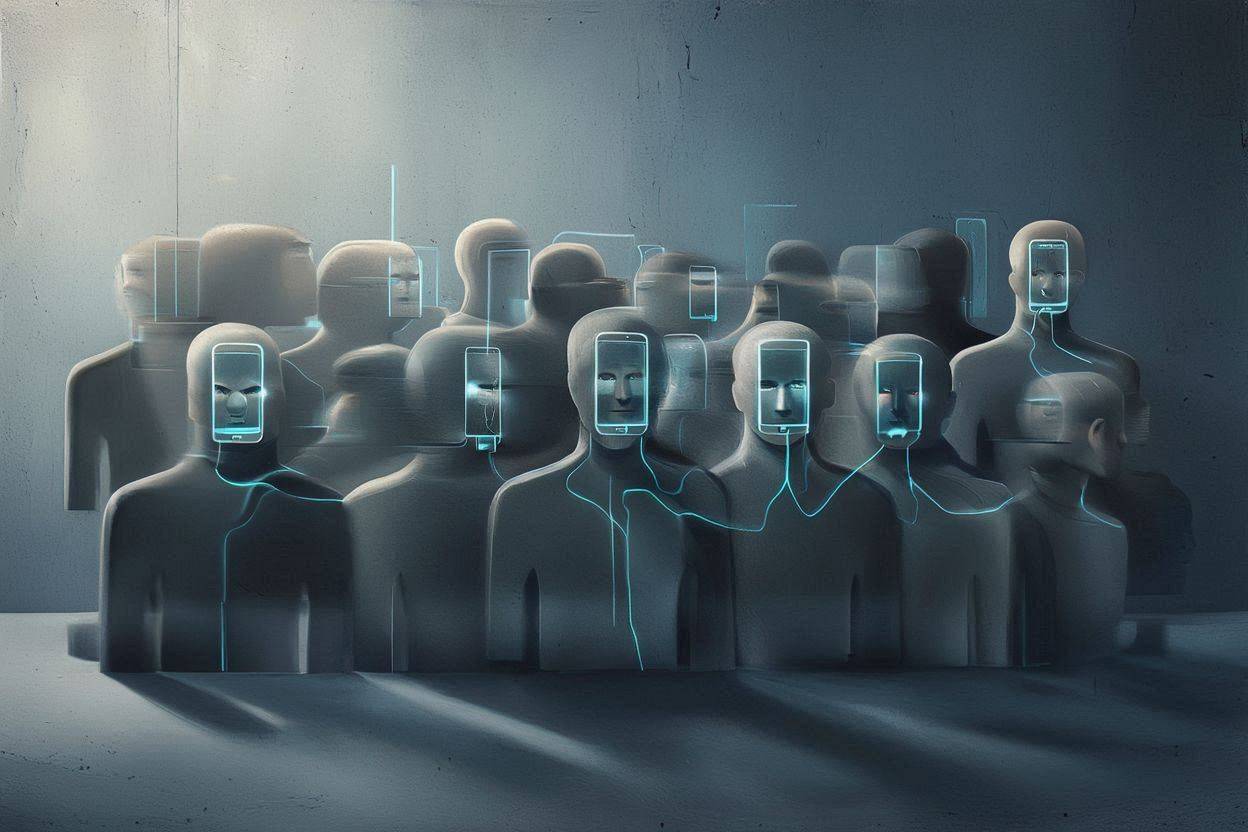
The Latest in Modern Communication Technology by James Rumpel
Jace Larado peeked around the corner, convinced that his heavy breathing could be heard anywhere within a twenty-mile radius. Seeing that the coast was clear, he looked back at his wife, Elly, who was leaning against the wall behind him. She, too, was panting furiously, her face the color of white-hot ashes.
“We can go now,” Jace whispered. “I don’t see any of them.”
“I can’t keep going like this,” wheezed Elly. “I can’t run anymore.”
Jace looked into the eyes of his wife of forty-five years. She was showing signs of her advanced age: wrinkles and blotches contaminated her once-beautiful face, but her eyes were as mesmerizing as they had always been.
“It’s okay. You can go slow. I’ll hang back and hold them off as long as I can before I follow.”
“No, I can’t let you do that,” sighed Elly.
“I’ll be fine,” insisted Jace. “I’ve still got a few tricks up my sleeve. Go. I’ll meet you at your brother’s place and then we’ll get out of the city. Hopefully, the resistance will find a way to block the signal.”
“Are you sure?”
“Go. We can’t waste any more time.” He leaned forward and gave her a quick embrace and peck on the cheek. “Go.”
Elly did as he asked. She turned the corner and began heading down the hall toward the stairwell. What started as a slow jog quickly deteriorated to an unsteady walk. She slid her hand along the wall for support.
Jace continually glanced back and forth between the love of his life and the doorway at the other end of the corridor.
As he had feared, their pursuers arrived before Elly was out of sight. Jace stepped into the middle of the passageway, hoping to conceal Elly’s escape. A group of five young men and women burst through the door. They paused briefly at the sight of Jace simply standing there before sprinting toward him.
Jace took off running, or at least the best approximation he was capable of, heading down one of the perpendicular hallways. He hoped the entire contingent of hunters would follow him, though he didn’t risk looking back to check.
Somehow, he made it to another corner before he was caught. Even more miraculously, the first apartment door on his left was slightly ajar. Jace slithered through the opening, quickly and quietly pulling it shut behind him.
With his back resting against the inside of the door, Jace tried to calm the constant eruptions of air exploding from his nearly bursting lungs. To his shock and relief, he heard the footsteps of the people chasing him pass by the door and dissipate as they continued down the corridor.
It was only after he was certain that his pursuers were gone that Jace took a moment to examine his surroundings. He was in a small apartment. It looked like the typical living quarters young people lived in nowadays: sparsely decorated and immaculately clean. He remembered a time not so long ago when the world’s youth found it necessary to express their freedom and noncompliance. That was no longer the case.
A sound from the adjoining room snapped Jace out of his reverie. He ducked behind the kitchen counter, peering around the corner.
A woman, a child really, in her early twenties, emerged from the other room. To Jace’s dismay, he noticed she was wearing a familiar headset. Around the top of her head and covering both of her ears was a set of headphones similar to the old Walkman headsets Jace as seen when he was a child. A microphone curved around from one of the device’s earpieces into position in front of her mouth. Emerging from the other earpiece was a plastic arm supporting a two-inch by two-inch video screen positioned in front of the user’s left eye. As much as Jace had hoped for the opposite to be true, there was no denying, this woman was a Z-Phone XXX user.
Jace silently scolded himself for getting his hopes up. He knew better than that. The chances of anyone under the age of sixty not using the technology were infinitesimal.
When the Z-Phone had first come out, Jace had briefly considered getting one. There was no denying the technology was amazing. In the end, he had decided not to by one because he didn’t feel the need for constant exposure to the network. He only needed his phone occasionally. Jace had never felt any disdain toward the younger generation and their need to be connected. That is until the most recent update took effect.
“Negative,” said the woman into the microphone. “No one is in my apartment.” She walked toward the front door and Jace’s hiding spot.
When she had nearly reached Jace’s position, he jumped out and made a desperate grab at her head. By some stroke of luck, two of his fingers caught on the Z-phone’s microphone support, and Jace was able to pull the device from the girl’s head. In one continuous motion, Jace dropped the phone onto the ground and stomped on it.
“Hey,” said the girl, obviously flustered and disoriented. “Give us back our phone. We need it.”
Relieved by the lack of violence in the girl’s reaction, Jace slid the broken phone behind him with his foot.
“You don’t need it,” said Jace, using his calmest voice.
“Yes, we do,” replied the woman.
“Don’t you mean to say, ‘Yes, I do.’ You are only one person,” said Jace. He recalled a time when pronoun usage was important for a much different reason.
The girl stared at him.
“You don’t need to be hooked up to everybody else. You can think independently.”
The girl continued to stare.
“That stupid phone has taken away your independence. You’re nothing but a drone for some sort of hive mind or whatever is calling the shots.”
After a few more minutes of staring, the girl shook her head. “No, that is not true. We do as we do. You are wrong. You need to be assimilated or cancelled. We cannot have true harmony while people like you interfere with us.” She took a step toward Jace.
Jace backed away. She was not a large girl. Maybe he could physically best her, but then again, he was nearly eighty years old and only one slip away from a broken hip.
“Please listen to me,” he said. “I don’t mean your … hive any harm. My wife and I just want to be left alone.”
The woman hesitated. Did Jace see a glimmer of compassion in her eyes? “We do not wish to hurt you. You remind me … us of our grandfather.”
“Yes, that’s good,” said Jace. “I don’t want to hurt you either. What’s your name?”
“Uh,” the young woman seemed to strain as she reached into her memory. “We are called Z-phone Unit 123B5-90”
“No, I mean your real name. The name you used before you started using the Z-phone.”
The inner turmoil the woman endured showed clearly on her face. One moment she appeared to be concentrating intently, the next, she was upset, confused, or ashamed.
Finally, she answered, “I am Belinda.”
“Oh, that’s a pretty name. I had a granddaughter named Bella. That’s pretty close.”
“Why are you here?” asked Belinda.
“My wife and I are just trying to live out our lives in peace. We don’t want Z-phones. We just want to be left alone. Will you help us?”
“Why don’t you want Z-phones?” asked Belinda. “They are the latest in modern communication technology and allow you to have constant contact with any and all information you could ever need.”
The fact that she was, word for word, repeating part of the Z-phone’s advertising campaign was not lost on Jace. “I’m old. I don’t need or want that technology. I just want to live my life in peace. All I’m asking is for you to just let me go. I won’t bother you anymore. Please, Belinda.”
“We … I mean, I … don’t think it would be bad for you to get to live the way you want.”
Jace smiled. “Doesn’t it feel nice to be able to think and make decisions on your own? You don’t need a Z-phone to think for you. You are more than capable of thinking for yourself.”
“I don’t know. The Z-phone is the latest in modern …”
“Belinda, think for yourself.”
After a long silence, Belinda nodded. “You’re right. I can make my own choices. I don’t need to be told what to do and believe. Thank you.”
“So, can I go?” asked Jace.
“Yes. I will not tell anyone that I saw you.”
Belinda gestured toward the door. “Good Luck.”
Jace opened the door and looked up and down the hall before heading back in the direction he had originally come.
After Jace left, Belinda picked up the broken Z-phone. She held it in her hands for the longest time before dropping it into the garbage.
A knock on the door drew her attention.
She opened the door to find two young men wearing blue polo shirts and khaki pants.
“Hi,” they said in unison. “We are here from the Z-phone Service Center. It appears that your Z-phone has malfunctioned in some manner. We are here to give you the free replacement guaranteed by your warranty.”
“Um,” began Belinda, “I don’t really think I want to have it replaced.”
“That’s not acceptable,” said the two gentlemen. “Our warranty clearly states that you are to receive a replacement phone.”
One of the men grabbed Belinda by the shoulders, holding her tight. The other nimbly pulled a new Z-phone from his pouch and placed it onto her head.
“No, I … we don’t want this.”
“There,” said the service reps, “isn’t that much better.”
Belinda squeezed her eyes shut, resisting with all of her might.
“Thank you,” she said, eventually. “We feel much better.”
“We’re glad to be of service.”
“One more thing,” said the young woman, “A fugitive just left my apartment.” She pointed down the hall. “He went that way.”
* * * * THE END * * * *
Copyright James Rumpel 2026
Image Source: Dey from Fictom.com





James Rumpel did his normal superlative job in crafting this dystopian fiction. I loved the descriptive term, “hive.” As part of that older generation, I took particular interest in a future in which a cell phone…er Z phone rules. Maybe we’re already there…