
A Cat Handler’s Confession by Daniel P. Douglas
A Cat Handler’s Confession by Daniel P. Douglas
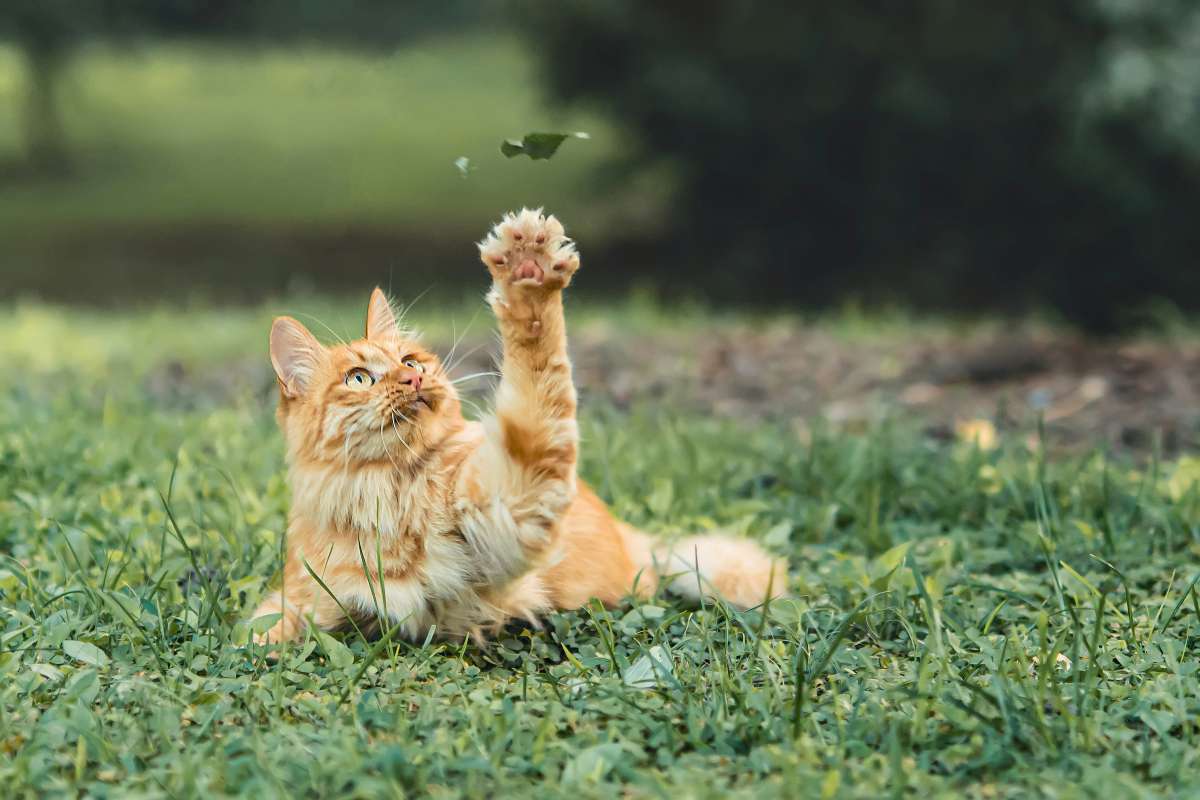
The kitten was orange, which shouldn’t have mattered. Carl Cannon had worked with tabbies, Siamese, even a Persian once during the Kiev operation. But when his granddaughter lifted it from the carrier—“Surprise, Grandpa! We named him Whiskers!”—something about those orange stripes against white fur sent him careening back to Connecticut Avenue, 1967, where twenty million dollars of taxpayer investment was about to meet a Yellow Cab.
“Careful with him,” Cannon said, his voice carrying an authority that made all three grandchildren pause. Emma, twelve and too smart for anyone’s good, caught the tone at once.
“It’s just a kitten, Grandpa.”
“Yes.” He accepted the small creature with careful hands, muscle memory from decades past taking over. The kitten settled against his chest, purring. “Just a kitten.”
But his fingers were already checking. No, of course not. No subcutaneous ridges along the spine. No surgical scars behind the ears. Just fur and warmth and that peculiar weight of trust that cats give so seldom and so completely.
“You’re being weird, Grandpa,” Josh said. Eight years old and devoted to truth.
“Joshua,” their mother warned from the kitchen, but Cannon waved her off.
“He’s right. I am being weird.” He settled into his rocking chair, the kitten adjusting itself on his lap. “Would you like to know why?”
Sarah, the youngest at six, was already on the floor at his feet. “Is it a story?”
“It’s a story.” He stroked the kitten, base of skull to tail, the exact pattern they’d used to check antenna alignment. “A true story.”
Emma’s eyes narrowed. “Your true stories are always about ‘classified operations’ and ‘need-to-know basis.’”
“This one’s declassified. Mostly.” Cannon slipped into his briefing voice, the one that had delivered hundred-page reports to committees that never smiled. “Operation Acoustic Kitty, 1961 to 1967. Central Intelligence Agency, Technical Services Division, in partnership with Directorate of Science and Technology.”
Josh giggled. “Acoustic means sound. Why would you name a cat operation—”
“Because,” Cannon said, his tone flattening into perfect professionalism, “the asset was designed for audio surveillance.”
The kitten paused its purring. Sarah’s coloring book slipped to the floor. Even Josh stopped fidgeting.
“Asset?” Emma leaned forward. “You mean the cat?”
“Designation AC-5. The fifth iteration. Previous models had suffered from… technical limitations.” He could still see it. The clean room, the surgical implements laid out, the tiny skull clamps modified from pediatric equipment. “Dr. Heinrich, a brilliant man, came over from Operation Paperclip, had perfected the subcutaneous antenna threading technique.”
“You put an antenna, in a cat?” Emma’s voice balanced between disbelief and delight.
“Through the cat. Along the spine. The technical specifications required three feet of copper filament, but biological integration demanded flexibility, so we developed a composite material that—” He caught himself. The children stared. “Yes. We put an antenna in a cat.”
“But why?” Sarah asked with six-year-old directness.
Why indeed. Cannon had asked himself that question for fifty-eight years. The answer always came back to Assistant Director Helms’ voice: Because we can’t afford not to innovate, Cannon. The Soviets are everywhere.
“The Soviet Union had compromised traditional surveillance methods,” he said, noting how he fell into the rhythm of historical institutional justification. “Human assets were vulnerable to counter-intelligence. Electronic surveillance could be detected and jammed. But biological platforms…”
“Biological platforms,” Emma said. “You mean animals.”
“Specifically, cats. We considered dogs but rejected them. Too trainable, ironically. Their eagerness to please made them conspicuous. Pigeons lacked the cranial capacity for our equipment. But cats…” He lifted the orange kitten, examining it. “Cats had the perfect combination of skull structure, spinal flexibility, and natural access to target areas.”
“Target areas?” Josh was almost bouncing.
“Soviet compounds. Embassies. Anywhere a stray cat could wander without suspicion.” The words flowed easier now, decades of silence breaking like a dam. “The surgical implementation took fourteen months to perfect. We had a team of eight. Veterinarians, electrical engineers, behavioral psychologists. The battery pack alone required seventeen iterations. Heat dissipation, you understand. Previous models had… thermal failures.”
Sarah wrinkled her nose. “You cooked the cats?”
“We refined our approach.” The bureaucratic language felt safe, familiar. “By the time we reached AC-5, we’d achieved thirty-six hours of continuous operational capability. The acoustic clarity was exceptional. Ninety-four percent voice recognition accuracy in laboratory conditions.”
“Laboratory conditions,” Emma echoed. “What about real conditions?”
Ah, the child had identified the critical failure point with disturbing competence. Perhaps intelligence work ran in families.
“Field testing revealed certain… environmental challenges.” His hands stilled on the kitten. Through the window, he could see the street. Not Connecticut Avenue, just a quiet suburban road, but the angle of afternoon light was the same. “You must understand, we’d solved every technical problem. The surgery was flawless. The electronics performed perfectly. We even developed a training protocol. Well, ‘training’ might be generous. ‘Behavioral modification’ was the official term.”
“You can’t train cats,” Josh said with all the confidence of personal experience.
“No,” Cannon agreed. “You cannot. But we had budget allocation for a six-month behavioral study. Dr. Skinner himself consulted. Operative conditioning. Positive reinforcement. We tried everything short of… well, we tried everything.”
The kitten on his lap yawned, showing tiny white teeth.
“The field test was scheduled for March 15, 1967. Fourteen hundred hours. Optimal weather conditions. Overcast, but no precipitation. Target location: Soviet embassy staff apartment complex on Connecticut Avenue. Two cultural attachés with suspected intelligence connections maintained a ground-floor residence. Perfect operational parameters.”
He could see it. His position at the Woolworth’s window, the weight of binoculars, the radio equipment arranged on the table like an altar to national security.
“I had visual confirmation from the second-floor observation post. Northeast corner of Connecticut and Q. Clear sightline to the target approach vector. We released AC-5 at the predetermined insertion point.”
“You let the cat go?” Sarah asked.
“We deployed the asset,” Cannon said. “Initial trajectory was optimal. AC-5 proceeded along the planned route. Miraculous, really, considering the historical compliance rate averaged only three to four percent.”
“It actually worked?” Emma sounded offended by this development.
“For approximately forty-five seconds.” The words flowed even faster now, pulled by the gravity of memory. “The asset maintained course toward the target location. Signal strength remained steady. Audio feed was clear. We were receiving ambient sound. Traffic, pedestrian conversations, perfect fidelity. Twenty million dollars of research and development, functioning as designed.”
The children waited. Even the kitten seemed to hold its breath.
“I had seven seconds. Maybe eight. The Yellow Cab turned onto Connecticut at approximately twenty-five miles per hour. Standard city velocity. The asset had reached the median point of the street crossing. Simple physics. Distance, velocity, intersection point. The mathematics was irrefutable.”
His hands moved without thinking, recreating the moment. “I abandoned the observation post. Violated every protocol about maintaining cover. But you must understand. Twenty million dollars. Years of development. My career, the program, everything focused on that single biological platform navigating traffic.”
“You tried to save it?” Emma asked, her voice soft.
“I attempted asset recovery.” The operational words couldn’t hide what he saw in his grandchildren’s faces. They understood. “The taxi driver, observing a suited individual charging into traffic, took evasive action. Swerved left. Away from the human element.”
“Toward the cat,” Josh said.
“Toward the twenty-million-dollar asset carrying some of the most sophisticated miniaturized electronics ever developed.” Cannon stroked the orange kitten, which had purred again. “The impact was… decisive.”
Silence settled over the living room. Then Sarah giggled. Just a small sound at first, but it spread to Josh, then Emma, until all three grandchildren were rolling with laughter.
“Twenty—million—dollars!” Josh said, gasping between breaths.
“For a CAT!” Emma wheezed, tears streaming.
“And you made it WORSE!” Sarah said before dissolving altogether.
Cannon watched them, these children who would never understand the weight of the Cold War, the genuine belief that democracy’s survival might depend on a cat with a radio in its head. Their laughter rang through the house. Pure, unrestrained, the sound of a generation that had never known existential terror.
“Grandpa,” Emma said at last, wiping her eyes, “that’s the best made-up story you’ve ever told.”
“It’s not—” He stopped. In their shining faces, he saw the impossibility of bridging the gap. How could he explain the logic that had seemed so crystalline in 1967? The meetings where serious men with serious degrees had discussed antenna placement in household pets? The budget allocations that passed through committees without question because national security trumped absurdity?
“Tell us another one!” Sarah demanded. “Tell us about the mind-control dolphins!”
“Project OXYGAS,” Cannon said without hesitation, but caught himself. Too late. The children already leaned in, eager for more impossible truths they’d never believe.
The orange kitten stretched on his lap, utterly indifferent to its role in reopening decades-old wounds. Cannon stroked it, feeling the warmth of a living creature unencumbered by electronics or expectations.
“The dolphins,” he said at last, surrendering to their disbelief, “were actually more successful than the cats.”
As his grandchildren erupted in fresh laughter, Cannon realized something had changed. The weight he’d carried for fifty-eight years—the security oath, the professional shame, the image of twenty million dollars meeting a Yellow Cab’s bumper—felt lighter somehow. Transformed by their joy into what it had always been: an impossibly true story from an impossible time, when smart people did incredibly stupid things with incredibly straight faces.
“Grandpa,” Emma said when she could breathe again, “you should write these down. Fiction sells, you know.”
Cannon looked at the kitten, orange fluff pursuing his shirt button with the dedication twenty million dollars never achieved. No amount of behavioral modification would have changed that instinct.
“Perhaps I will,” he said. “Though I’ll have to add dramatic elements. Nobody would believe it otherwise.”
The children laughed again, the sound bright as coins thrown in a fountain. Outside, traffic moved along the suburban street, carrying no Soviet secrets, threatening no government assets. Cannon’s war was over. Had been for a long time.
But sometimes, on quiet afternoons when the light fell just right, Cannon could still see it… that brilliant, doomed moment when twenty million dollars of American ingenuity met immutable feline nature on a Washington street.
The kitten bit his thumb, demanding attention.
He gave it freely.
* * * * THE END * * * *
Copyright Daniel P. Douglas 2025
Image Source: zhang kaiyv from Unsplash



Charming tale of a human Cold War relic coming to terms with his legacy. It was amusing the way the old spook uttered an indecipherable and bureaucratic blather, only to have his grandkids decipher the meaning instantly. The fiction had just the right backstory, was precisely the right length.