
Skunk Hours by T R Healy
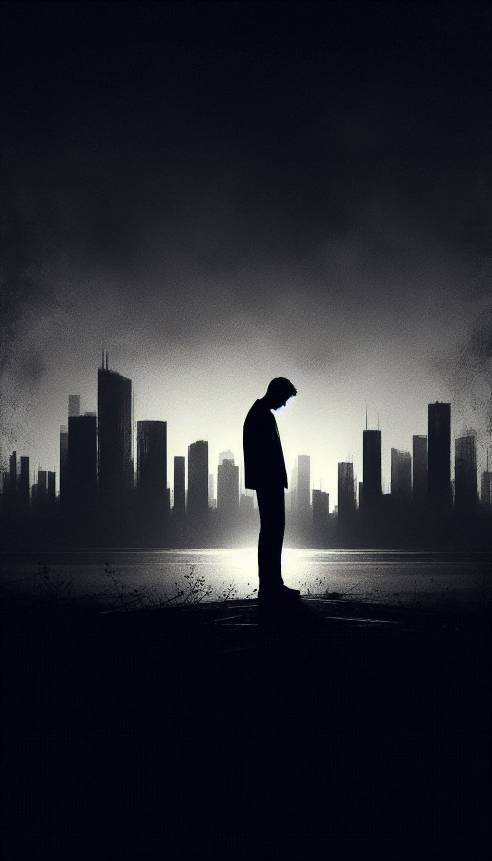
Skunk Hours by T.R. Healy
“My mind’s not right.”
— Robert Lowell, Skunk Hour
“Damn it!” Scoble groaned when he noticed two dark spots under one of the cots of the Open Arms Lodge.
Immediately he went to the lavatory, yanked two paper towels from the dispenser, soaked them in hot water, and returned to the sleeping quarters. After getting down on both knees, he scrubbed the spots until not a trace of them remained on the floor. Satisfied, he got up, the towels wadded up in his hands, and continued to walk through the shelter to see if there was anything else that required his attention.
i
“Boylen!” Jennings, the squad leader, called out in his Texan twang. “Take the point.”
“Why me?”
“Because I said so.”
Swearing under his breath, Boylen stepped to the front of the ragged single file line, the butt of his rifle banging against his canteen, and grudgingly proceeded down the middle of the dusty urban street.
Just minutes earlier, the squad was ordered to patrol the street all the way to the waterfront to find out if there were any hostiles in the area. Before fighting broke out not more than a month ago, the street was bustling with traffic and lined with numerous shops and parlors and restaurants but now all were closed. A few had shutters on their windows but many didn’t even have their doors locked. Nearly all of the city had become a ghost town, with the residents having fled north to a designated safe zone. The few who remained were considered adversaries.
“What’re we going to do when we reach the waterfront?” Vasquez wondered out loud.
Scoble, who was half a step behind him, said, “Do an about face and march back up the street.”
“You really think so?”
He shrugged. “I wouldn’t be surprised.”
“Neither would I,” Mengis grumbled. “All we ever do is march up and down these damn streets.”
“Like rats in a maze,” Courter chimed in, pursing his lips.
“I don’t know what the hell for,” Scoble said, “because no one’s here but us.”
“Pipe down!” Jennings barked. “You’re here to look not to talk.”
One by one the soldiers tramped down the street, looking from side to side at the vacant businesses. And soon, as he often did, Coolidge began to hum the Seven Dwarfs song “Heigh-Ho.” Quickly the others joined in, except for Jennings, swinging their arms in time with the familiar Disney song. A three-legged dog, seemingly attracted by the humming, appeared from behind a pile of rubble and limped alongside the squad. They passed a bullet-riddled bus, two bicycles stripped of their tires, an overturned food cart, and a fountain full of sand.
It was a strange parade, Scoble thought, as he stepped over a ring of shattered glass.
Half a dozen blocks later, as they approached another intersection, the dog drifted away and Scoble wondered if it knew something they didn’t about what was ahead. They had barely started across the intersection when Boylen crumpled to the ground before they heard the rifle shot that killed him.
“Take cover!” Jennings shouted just before he was struck in the neck.
Dazed and confused, the rest of the squad barged into a teahouse on the corner of the street as more shots were fired in their direction. Scoble, like the others, lay on the floor, trying not to move a muscle. More and more shots were fired at the small teahouse, shattering the one small oval window and all but shredding the front door.
“What’re they trying to do kill the damn teahouse?” Courter asked in frustration.
“That and everyone inside it,” Mengis answered.
“Where are the shots coming from?” Vasquez wondered.
Orwig started to get up on one knee to get a better view then thought better of it. “Probably from that office building across the street.”
“Can you see anybody?”
“Nope.”
“There has to be more than one shooter.”
“Three at least.”
“That sounds about right.”
“Where’s the radio?” Scoble asked. “We’ve got to call for help.”
Courter looked at him. “I thought you had it.”
“Nope.”
Vasquez groaned. “Boylen was carrying it.”
“No way.”
“Yep.”
“So it’s out there on the street.”
“Damn.”
“We’ll have to wait until it gets dark before we dare to go out to get it,” Scoble remarked after another volley of shots struck the teahouse.
“They’ve got eyes on it,” Orwig claimed. “We go out there we’re dead.”
“I suppose.”
“We don’t get back to the compound pretty soon folks there will come looking for us.”
“They better.”
Scoble soon became aware of an awful smell inside the teahouse and thought if he got away from the kitchen door it wouldn’t be so bad and crawled on his belly and knees to the opposite end of the small dining room. He was mistaken, however. It was just as bad there and he was compelled to breathe through his mouth.
“What’s that terrible smell?” Mengis wondered as a bullet knocked an etching from the back wall.
“I have no idea,” Vasquez admitted. “But whatever it is it’s pretty rotten.”
“Maybe it’s some food gone bad,” Orwig suggested.
“Could well be,” Mengis said then low crawled out to the kitchen. He was there only a couple of minutes then crawled back to the dining room. “It’s not food.”
“What is it?” Vasquez asked.
“There are two bodies back there,” he said solemnly. “A man and a woman. I assume they owned this place. It appears they’ve been dead for quite some time.”
“No wonder it smells so bad in here.”
“The snipers must’ve picked them off,” Orwig declared.
“That or they couldn’t stand what was going on here,” Scoble suggested, “and they took their own lives.”
“I don’t know about that, Harry.”
He didn’t say anything more and buried his face in his hands as more shots struck the teahouse.
What in the world am I doing here? he asked himself for the hundredth time.
& & &
During his junior year in college, his counselor suggested he should think about applying to law school. If his Uncle Joe, who was dumb as a stump, could become a lawyer, he was sure he could as well but, unlike his uncle, he wasn’t loud and aggressive and knew his limitations so he doubted if he would be very successful practicing law. Anyway, he was tired of going to school so after he graduated from college with a degree in International History he enlisted in the Army. Soon after he entered the service, he realized he made a grave mistake. There was nothing he could do about it, though, but grit his teeth and complete his enlistment. More than a few times he thought about going AWOL but didn’t have the nerve to do it.
One who did have the nerve was a medic, Specialist 4 Noddings, who insisted it was only a matter of time before he took off. He only entered the service to get away from his querulous parents who were always nagging him to go to college which had no interest for him at all. But, like Scoble, he realized his enlistment was a mistake and was determined to correct that mistake.
“You should come with me, Harry.”
“I’d like to but I can’t.”
“Why not? You don’t like the Army anymore than I do.”
“I’m not a lucky person. Never have been. I’d be caught in a couple of days, if not sooner, if I went AWOL.”
“Not if you come with me.”
“I would. I know I would.”
Late one night, sound asleep in the barracks, Scoble was awakened by Noddings who said it was that time.
“Time for what” he muttered.
“To get the hell out of here.”
Though tempted, he said again, “I can’t. I’d like to but I can’t.”
“You sure?”
“Yep.”
“Absolutely sure?”
“I am.”
“All right.”
“I wish you luck.”
Noddings smiled. “Say, if you ever get down to New Orleans, look me up. I’ll probably be working in the kitchen of some Creole restaurant.”
“I’ll do that.”
One weekend, not too many months later, he did go to New Orleans and looked for Noddings in half a dozen restaurants but never found him. He just hoped the MPs never found him, either.
& & &
It was almost three o’clock in the morning and Scoble still couldn’t fall asleep. From all the snoring he heard, he assumed he was the only one still awake in the rank teahouse. He was scared, of course, aware that any second a bullet could strike him dead but what really kept him awake was the awful smell of the decaying bodies in the kitchen. He tried not to breathe through his nose but every so often he forgot and the wretched odor almost made him sick to his stomach. Earlier, he had removed the bandana from around his neck and tied it across his mouth and nose but it didn’t help much. There was nothing he could do to avoid that oppressive smell. More than anything, more even than sleep, he wanted to go outside and breathe some fresh air but was afraid if he went out he would be targeted. So he lay in the dark on the damp floor, praying this ordeal would soon be over.
Around half past ten the next morning, a tank and an armored personnel carrier arrived at the teahouse. Immediately shots were exchanged until the tank blasted the office building into smithereens. A sergeant then entered the teahouse and ordered everyone to come out and get aboard the APC. Scoble was one of the first to leave but, instead of getting into the vehicle, he fell down on his knees, leaned his head back, and took several deep breaths as if to rid himself of the awful smell inside the teahouse.
ii
Following his discharge, Scoble didn’t return home, realizing there wasn’t anyone there he wanted to see, and rented an apartment just a few miles from his last posting. Soon he found work as a cashier at a market not too far from his apartment where he figured he would not be under any pressure because cashiering was something he had done part-time while going to school. He was wrong, however. After just a few days there, he quit because he felt so confined inside the market, almost as if he couldn’t breathe, even though it was one of the largest supermarkets in the area.
He didn’t know what he wanted to do other than to be someplace where he didn’t feel trapped as he did months ago in that teahouse. Five and a half blocks from his apartment house was an enormous public park, Memorial Gardens, which was full of cedar trees and hawthorn hedges, a duck pond and a tennis court, and a rustic old bandstand. Because it was such a warm summer he spent a lot of time at the park, especially after he was compelled to move out of his apartment because he couldn’t afford to pay the rent. Wednesdays were by far his favorite days at the park because that was when the grass was cut and he loved the smell of freshly mown grass.
On the other days he practiced the deep breathing techniques that Noddings, a yoga enthusiast, had suggested he perform to release tension in his body. He sat cross-legged on the grass, his spine erect, his head still, and closed his eyes. Then, to the count of five, he inhaled deeply through his nose then, also to the count of five, he exhaled through his nose, executing what Noddings referred to as the “same-same” breath. Sometimes, as he inhaled, he would pull his abdominal muscles toward his spine and keep the hold as he exhaled in an effort to calm his mind. Always he breathed through his nostrils because Noddings claimed it cleaned the breath. Occasionally, in the middle of the night, he would wake up with the stench of the teahouse in his nostrils and, at once, he would sit up and slowly and deeply breathe until the awful smell dissipated and his breath was cleansed.
& & &
Often, when he visited his grandfather as a youngster, they spent the afternoon at the small park just down the street from where his grandfather lived. They rode the rickety seesaw, tossed horseshoes, and watched boys play basketball on the black-topped outdoor courts. And sometimes his grandfather would make paper airplanes and they would see how far they could throw them. His grandfather always beat him but gradually he got closer and closer and was all but certain one day he would throw his plane farther but it never happened.
One afternoon, wandering through Memorial Gardens, Scoble noticed a newspaper lying on one of the benches several feet in front of the bandstand and on an impulse removed one of the pages and made a plane that his grandfather always referred to as the “dart.” It was not as complicated to construct as some of the other planes his grandfather made but it flew almost as well. His creases were not as precise as his grandfather’s but still he thought it was good enough to take flight and got up from the bench, reared back, and tossed it toward the bandstand. It wobbled right after it was launched and did a nose dive not more than a foot from the bench. Frustrated, he took another page from the newspaper and constructed another plane whose creases were much firmer. This one nearly made it as far as the bandstand and he grinned with satisfaction. He then made a couple more planes, both of which reached the bandstand, and was about to make another one when an incensed woman interrupted him.
“I know what you’re up to, mister,” she barked, gripping one of his paper airplanes in her left hand.
He crinkled his eyes. “Pardon me?”
“You’re trying to lure some child over to you.”
“What?”
“You heard me.”
“That’s ridiculous.”
“Say that if you like but I know what I saw.”
“You didn’t see anything of the kind.”
“I promise you if you don’t stop throwing these paper airplanes I’m going to report you.”
“Who to?” he shot back. “Air Traffic Control?”
“I’m serious, mister.”
“Why don’t you go bother someone else, lady?”
“I’m keeping an eye on you.”
“You do that.”
“Oh, I will,” she promised, chucking the plane in her hand on the ground. “You can count on that.”
Stunned, he just shook his head as the woman strode back to the bandstand. He couldn’t believe she had accused him of being a sexual predator of all things and angrily crumpled up the rest of the newspaper and got up from the bench and shuffled off to another side of the park.
& & &
Just before he quit his job at the market, Scoble purchased several cartons of Marlboro cigarettes. He was not a smoker, regarded it as a foolish habit as well as a dangerous one, but knew many people on the street were smokers. So, a couple of days a week, he went down to the bus depot where he knew a lot of vagrants hung out during the day and let it be known that he had cigarettes to sell at a dollar a smoke. For nearly a month he earned enough money to be able to afford dinner at a nearby McDonald’s. Then one evening, on his way to Memorial Gardens where he often slept in a dark corner of the park, he was jumped by two men who stole his cartons.
He had a few dollars left in his wallet, which would allow him to eat for another week, but clearly he needed to find another way to make some money. He thought about applying for a cashier position at some delicatessen or maybe at a sporting goods store but knew he couldn’t tolerate the confinement. Still, he made some applications, and one afternoon, after applying at a gigantic hardware store, he noticed an elderly woman waiting at a bus stop. A large leather handbag was slung over her left shoulder and, almost before he quite realized it, he yanked it loose and sprinted around the corner with her frantic screams burning his ears. He hadn’t run so hard since he was in the Army. Panting heavily, he dashed through a grimy alley, dodged across the middle of a busy street, and then down another alley. For a split instant, he thought he heard footsteps behind him but didn’t dare turn around and just kept running as fast as he could.
When he finally reached the park, he ran along one of the hiking trails, brushing the shoulders of some startled hikers, until he got to the dark alcove where he slept at night. He was so exhausted all he could do was lie against a cedar stump, breathing so loudly he was worried someone might hear him. His shirt was soaked with sweat and the smell was so powerful it reminded him of that long night he spent in the teahouse. Immediately he stopped breathing through his nose, even though he knew it would help to calm him down, but he couldn’t stand the smell of himself. It was suffocating, as awful as the smells that woke him up in the middle of the night.
For several minutes he just stared at the handbag, as if waiting for someone to come and take it back, but no one came so he emptied its contents on the ground. There was enough inside to fill a shoe box but all he cared about was what was in the woman’s wallet. He found only eleven dollars, however, along with a dollar and a half in change in her coin purse.
“Damn,” he groaned in disappointment.
He wished now he could return the handbag to the woman but suspected, if he did, he likely would be arrested so he buried it under a mound of cedar chips. He would sooner starve than steal another purse he decided. Every bead of sweat on his body filled him with absolute disgust and desperately he pinched his nostrils together to get rid of the rancid smell.
iii
When it started to get cold in the evening, Scoble found it difficult to sleep even though he covered himself with a couple of discarded tarps. His bones ached from the chill and at times his teeth even chattered. He dreaded the thought of spending nights in a shelter, surrounded by strangers, but he had to find some place warm to sleep. So, one frigid night, he walked into the Open Arms Lodge which was just a few blocks from the north entrance of Memorial Gardens.
As soon as he opened the front door, he was greeted by a chunky woman with coral red hair who was barely five-foot tall. Gaudy rings were on many of her fingers and even gaudier bracelets covered her wrists.
“Welcome, friend,” she said. “I am Mother Margaret.”
“You’re a nun?”
“No. It’s just what some guests call me,” she explained. “And you are?”
“Harry Scoble.”
“Nice to make your acquaintance, Harry.”
“And yours as well.”
“I am the manager of this shelter.”
“I see.”
“Please, follow me, and I’ll find you a cot for the evening.”
They walked down a narrow ammonia-scented hallway to a door near the end which Mother yanked open with a slight groan.
“After you, Harry,” she said, stepping back from the door.
When he walked past her, he saw a room the size of a basketball court filled with dozens of Army surplus cots. Most were already occupied and because no pillows were provided the guests slept on their hands or bunched up towels.
“Years ago, this building was of all things an Oldsmobile dealership and this was the showroom for their latest cars.”
“My father drove an Olds.”
“Maybe he purchased it here.”
“Nah. He lived a long ways from here.”
She then walked to the back of the spacious room to a row of cots in front of a primitive mural of people riding a merry-go-round.
“All of these are available, Harry, so take your pick.”
Without hesitation, he set his backpack on an end cot.
“You know, if you like, we can lock up your belongings for safekeeping but that’s entirely up to you.”
“I prefer to keep them myself.”
“Whatever suits you,” she said, tugging an earlobe. “Now we have some rules that all our guests must abide by if they wish to stay here.”
“Of course.”
“First off, if you don’t already know, this is an overnight only shelter. So there is a curfew enforced.”
He was surprised, thought the shelter was open pretty much all hours like a house of worship.
“All the entrance doors are locked at seven p.m. sharp which means no one is allowed inside the facility after seven. There are no exceptions, mind you, so if you’re even a minute late you will not be let in. Is that understood?”
“Yes.”
“This is a non-denominational shelter but a makeshift chapel has been set up in one of the utility rooms which anyone is permitted to visit while staying here. And, on Sundays, a service is sometimes conducted by a visiting clergyman.”
Scoble had been inside more than enough chapels and was not interested in visiting another one.
“A bell rings at six o’clock every morning and by seven everyone must vacate the shelter. Again, there are no exceptions.” She paused briefly to stifle a yawn. “I’ve already mentioned that we can keep your belongings if you like.”
“Yes, you did.”
She nodded, rattling the bracelets around her wrists. “No pets are allowed on the premises and that includes service dogs. No alcohol or drugs. Any sort of intimidating behavior is not tolerated.” Again she paused. “I believe I’ve gone over everything that needs to be covered. Are there any questions?”
“No, ma’am.”
“I’ll let you settle in then.”
& & &
Not for a moment did Scoble regret his decision to spend evenings inside the amply heated shelter. It was just too cold outside to continue to sleep in the park. His only concern was the unpleasant smell that emanated from the lavatory. It didn’t make him nauseous but it did make him pinch his nostrils together whenever he entered the room. It reminded him of the latrines he had encountered in the Army. So, with some of the money he found in the handbag he stole, he purchased a scrub brush and a bottle of cedar-scented cleaning agent at a nearby grocery store and brought the items back to the shelter. Then, before he went to bed, he scrubbed the urinals and toilet bowls and a good portion of the floor.
His third night of cleaning he was almost through when Mother Margaret entered the lavatory and saw him on his hands and knees.
“What are you doing, Harry?” she asked with a frown.
“I’m doing some cleaning.”
“I can see that but what for? We have a janitor who does all the cleaning.”
“I know, ma’am, but I have a hard time going to sleep because of the smell in here so I thought I’d take the initiative and get rid of it.”
“I don’t smell anything odious.”
“That’s because I’m almost finished.”
“We can’t afford to pay you for your work,” she said, a little puzzled by his behavior. “We only have money in our budget for one janitor and that’s Ira.”
“I don’t expect any payment. I just want to be able to sleep at night.”
“Suit yourself, Harry.”
After a couple more nights cleaning, the lavatory smelled almost as clean and fresh as the scent of the cedar trees in Memorial Gardens but Scoble continued to clean the room before he went to bed. He was afraid if he didn’t the unpleasant odor would return.
Mother Margaret was so pleased by his work that, a week later, she asked if he would help Ira clean the windows in the sleeping quarters.
“I’m afraid I won’t be able to pay you but I can give you a hot meal for lunch.”
Readily he agreed to help Ira, grateful for anything that gave him some purpose for getting up in the morning. He was tired of wandering the streets day after day and began to think of the shelter as where he belonged. He felt safe there and he felt needed. More and more Mother found small jobs for him to perform so that, before long, he was spending nearly all morning inside the shelter and dreaded it when he had to leave. It was so cold outside and so full of unpleasant smells that he often wore a surgical mask across his mouth and nostrils.
“I’m doing all I can to get you some financial assistance,” Mother told him one morning as he folded some blankets. “I believe it’s only a matter of time before you start getting paid for what you’re doing around here.”
“I’d appreciate that.”
“You more than deserve it.”
“I’m just glad to be of some help. It makes me feel worthwhile which I haven’t felt in quite some time.”
& & &
Late one night, half asleep, Scoble shot up in his cot because of another awful smell that filled his nostrils. It was smoke but not the cigarette smoke that was so prevalent in the shelter. Half the staff reeked of tobacco, including Mother Margaret. It was wood that was burning. Blinking rapidly, he surveyed the nearly full sleeping quarters and saw black smoke swirling outside the windows he and Ira cleaned the other week.
“Fire!” he screamed, leaping up from his cot. “Fire!”
At once, he grabbed a push broom leaning against a stool and swatted it against the legs of one cot after another.
“Get up and get out!” he shouted, racing up and down the aisles in his bare feet. “The shelter’s on fire!”
It took a couple of minutes before the other guests realized what he was shouting then, panicking, they rushed to get out of the sleeping quarters. Many shoved others out of their way, a few of them fell to the floor and were trampled over without any regard for their safety. Scoble tried to convince them to take their time and leave in an orderly manner but they paid no attention to his pleas.
“Out of the way!” was all Scoble heard among the crush of people. “Out of the goddamn way!”
Realizing there was no point in continuing to plead with them not to run, he went up to the second floor and knocked on Mother Margaret’s door but there was no answer and he remembered she told him earlier she was going to spend the night with an ailing cousin.
Lucky her, he thought.
Next, he went back downstairs and darted into the lavatory to see if anyone was there but it was empty. He started to head back to the sleeping quarters then hesitated and took a deep breath. To his surprise, there was not a hint of smoke in the room and it was as quiet as the chapel down the hall. Not really wanting to leave the shelter, which he regarded increasingly as his home, he figured it was as safe there as anywhere in the building, closed the door, and sat down cross-legged in a corner, and began to inhale slowly and deeply through his nose. The air was every bit as fragrant as the air in the park and he knew it was because of all the cleaning he had done and he could not help but smile with satisfaction.
& & &
The fire was pretty much out by the time Mother Margaret arrived at the shelter. Nearly a third of the building was destroyed, its windows broken, its walls blackened with smoke. Dozens of burnt shingles were scattered across the front lawn. A small American flag fluttered in the wind along with the pages of a singed Bible. Articles of clothing were strewn everywhere, including a pair of scorched gloves that belonged to Mother.
Right away, she asked one of the firefighters if he knew how many people perished in the blaze.
“Only one, ma’am.”
She was surprised. “I suppose he was burned so badly he can’t be identified.”
“He wasn’t burned at all. He died from smoke inhalation. Apparently he thought he would be safe holed up inside the rest room and he was from the flames but not the smoke.”
“Poor Harry.”
“Excuse me?”
“Nothing,” she replied, stepping past the firefighter.
She was confused, not sure why Harry didn’t leave like the other guests unless he thought he had nowhere else to go.
* * * * THE END * * * *
Copyright T R Healy 2025
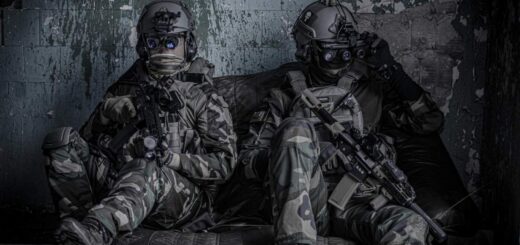
Image Source: Dey from Fictom.com




Another terriifc FFJ story about mental disease. Poor Harry, suffering in silence all his days. The ending was a bit of a surprise, but very well done. Thank you for writing it.
This was an intriguing, prescient story of mental illness and I am happy you received recognition for what you have accomplished by writing the fiction. Congrats on the Pushcart nomination!