
The Path of Totality by James C. Clar
The Path of Totality by James C. Clar
8 April 2024
The sidewalks along East Avenue were crowded with people. Most were toying with little plastic glasses that, when all was said and done, they wouldn’t need. As was often the case, a pewter gray ceiling of cloud hung over the city. Even so, the anticipation was palpable. Rochester, New York was one of a few cities in the nation to sit right smack dab in the middle of the path of totality for the first complete solar eclipse visible in the northeast in one hundred years. By 1:45 P.M. the old mansions, office buildings, neighborhood cafes and front porches in the area had all-but emptied. Local residents and throngs of visitors were set to watch what promised to be a once-in-a-lifetime spectacle.
Kiernan McManus walked eastward. The grounds of the Eastman Museum were on his left. The collar of McManus’ light jacket was turned up against the early April chill. The historic manses and the stately oak, chestnut and elm trees gave the avenue an old-world calm that he always appreciated. Especially today. Kiernan was unusually anxious despite having walked this route – and rehearsed this meeting in his mind – a dozen or more times. The drop was to be in person. Always dangerous. Still, the set up was perfect; the exchange hidden by a rare cosmic event. All eyes would be on the sky.
McManus slowed his breathing, willing himself to calm down. Already, there was a discernable change in the quality of the light. It seemed more like early evening rather than mid-afternoon. He checked his watch, 3:00 P.M. Twenty minutes to totality. A small group of people had gathered around the astrolabe in the museum’s sunken garden. They were listening to an astronomer explain what they would have been seeing in a very few minutes – had they actually been able to see anything through the clouds.
There she was, standing next to the bronze statue of Philip Seymour Hoffman near the entrance to the museum café. As prearranged, she had a cup of coffee in her hands and she was wearing a stylish red and yellow scarf. Kodak colors. A tourist, perhaps … or maybe just an ordinary fan.
Kiernan approached casually. “Beautiful day for an eclipse!”
“The weather here is certainly consistent,” the young woman responded smoothly with the countersign.
McManus felt a sense of relief wash over him. It was almost done. He was looking forward to walking in the daylight again. He was done with the shadows. He slipped a flash drive from his pocket and with a practiced gesture, pressed it discretely into the woman’s palm.
“It’s everything they asked for,” he said quietly. “Have to tell you, though, it’s worth a good deal more than you’re paying me.”
The woman smiled archly. “You’ve done us a great service.” She passed him an envelope which he quickly placed in the inside breast pocket of his jacket.
It was only then that Kiernan noticed that all around them the light had faded. It was as though someone had shut a curtain or turned out the lights in a room. Again, he looked at his watch. It was 3:20 P.M., totality. A collective gasp rose from the group assembled in the garden. The street lights along the avenue had come on, casting halos on the pavement. Almost imperceptibly, day had become night.
Small talk was not part of the plan but the moment, the atmosphere, was so strange that Kiernan couldn’t help himself. “Can you feel it? The temperature must have dropped ten degrees.”
“Yes,” the woman agreed. “And I suspect it’s about to drop even more. As I said, Mr. McManus, you’ve done your country a great service.”
Kiernan looked at the woman in bewilderment then alarm. The fact that she knew his name, let alone spoke it aloud, almost overshadowed the import of what she had said.
“My country,” he said with growing comprehension, “you’re not with them?”
“No, and neither are you. Not anymore, that is.”
With that the woman reached into her pocket and produced a leather case. She opened it to reveal a badge.
“Agent Lofton, Homeland Security. Counterintelligence.”
The crowds on the street had started to press onto the museum lawn and blend with the group that had been in the garden. Faces were lifted toward a sky that showed nothing but darkness. Eclipse glasses dangled forgotten in most people’s hands. Useful now only as souvenirs. An otherworldly silence was broken by the sound of a slight breeze moving through the trees.
“They recruited me,” McManus said by way of explanation. “They gave me no choice.”
“That’s how it works,” Agent Lofton stated. “But there’s always a choice. You could have come to us. We’ve had suspicions about you for quite some time.” Lofton patted her pocket. “Now you’ve given us proof.”
The darkness deepened. Ink-black shadows were etched across the Georgian façade of the stately Eastman Mansion itself.
“They threatened my family.” McManus’s voice had taken on a pleading quality. “If you arrest me, there’s no telling what they will do to keep me quiet.”
“It’s quite fortunate, then, that we’re not interested in arresting you. Welcome to the team! You’re ours now. We want you to continue playing your role. From now on, though, you’ll give them only what we want you to. Of course, you’ll pass on to us anything you learn that you think might be useful or important.”
A gray, diffused daylight crept slowly back as they spoke. It meant nothing to McManus as he processed what he had been told. He stared out toward the elegant street and watched silently as folks started heading home or looking for a place to eat. He didn’t even bother checking his watch this time. It didn’t matter. He had trod his own path toward totality. It would be a long time before he saw the sun again.
* * * * THE END * * * *
Copyright James C. Clar 2025
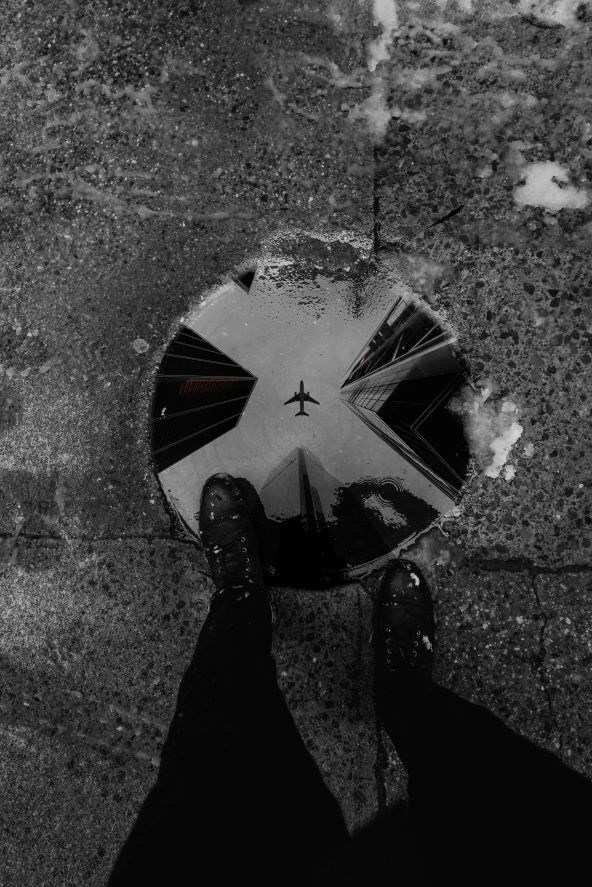
Image Courtesy: Zac Wolff from Unsplash

James, as usual, you’ve crafted a poignant narrative, stripped from the pages of a big city newspaper or a spy novel. So much plot and backstory in such a short space of time. Well done!