Lives and Crimes with Grant Tracey

Lives and Crimes with Grant Tracey
The Weight of Good Intentions
FreedomFiction.com presents an insghtful interview highlighting the unique personality of author Grant Tracey. Let FreedomFiction.com take you through his philosophy, influences, creative process, career journey, and outlook on publishing and writing lifestyle.
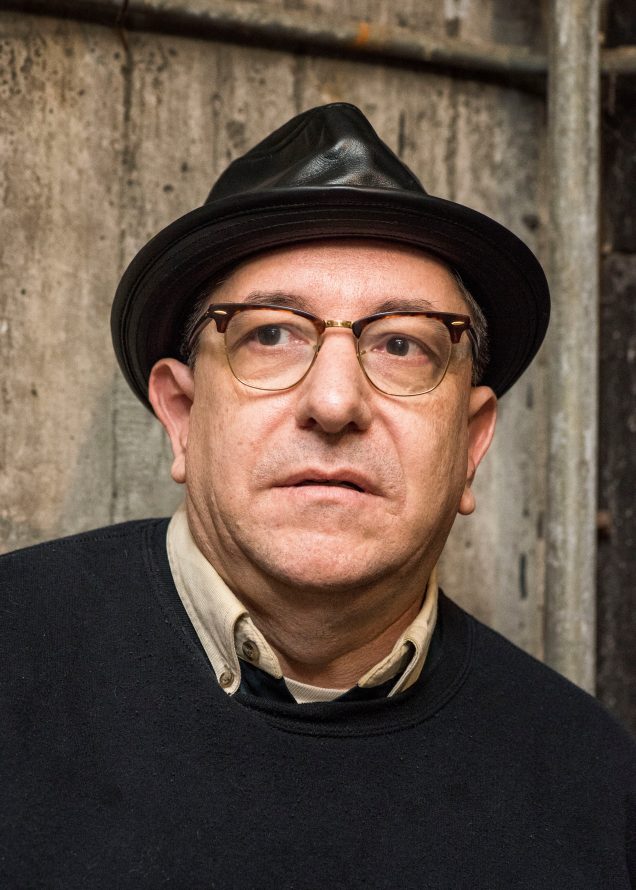
Grant Tracey is like no other author ever published by FreedomFiction.com and his very first submission in 2023 was published as Editor’s Choice fiction the very year we started categorizing and compiling this list of best fiction in each genre.
Wait, that’s not all. Three subsequent short stories followed, only one each in year 2024, 2025 and 2026. You know what? Each of those stories also got listed under our Editor’s Choice fiction listing. Four stories, four years apart, in crime genre and with a working class blue collar hero as the protagonist. Incredible stuff for us in recent times of prolific media and promiscuous matters.
Read one, read all of Grant Tracey, only at FreedomFiction.com
https://www.freedomfiction.com/tag/grant-tracey
Here is an incredibly informative and even educational interview with this author with a vision…
Dey: What first made you want to become a writer?
Grant Tracey: When I was nine or ten I was really attracted to the late-night gangster films I saw on CBC. G-Men in particular with James Cagney. Then in my teenage years I started reading Dashiell Hammett’s Continental Op stories; The Dain Curse; Red Harvest and Raymond Chandler’s Marlowe stories: The Big Sleep; Farewell My Lovely; and the four stories featured in Trouble is My Business. I was hooked. At seventeen I started writing a series of detective stories set in Cleveland with titles like Accidents Will Happen and It All Makes a Lot of Sense. I knew nothing about Cleveland but it seemed like a badass place to be a PI. The stories were pretty derivative of my mentors.
Dey: What kinds of stories or subjects naturally attract you as a writer?
Grant Tracey: I like pyrrhic stories, where a hero goes on a journey and dies a little (metaphorically) discovering some hard truths about the human condition. I’m influenced in part by Chandler’s essay “The Simple Art of Murder” and how down these mean streets a man must go. Like Chandler, I believe our hero should have a moral center (he’s a kind of knight errant). Unfortunately, my heroes are complex shades of gray, making bad choices that compromise their morality. I’m also an unabashed liberal and interested in social justice. I’m particularly disturbed by child abuse, violence against women, and entitled men who think the world is theirs.
Dey: Which themes or ideas keep appearing in your work, even unintentionally?
Grant Tracey: A lot of my stories have a mood of sad resignation or world weariness (classic elements of noir). Part of what makes the journey pyrrhic is the hero’s full understanding that even though he may solve a crime, the cycle continues, on and on and on. Another theme in my work is life’s uncertainties and how my heroes have to navigate a series of exchanges with people who aren’t always telling the truth. Our hero has to sift through lies and more lies. Who can he trust? Himself, mainly. This is something I learned from reading Hammett, particularly The Maltese Falcon.
Dey: How would you describe your writing process from idea to finished manuscript?
Grant Tracey: I always start with a situation. Something that throws, in the Aristotelian sense, our story out of stasis into chaos. This is the destabilizing condition that launches our hero on his journey. In terms of process, I usually hand write my first two drafts. I can’t explain why, but I think differently, and feel more connected to the story world when writing by hand. I’m not so much chasing the plot as pursuing nuances of character and mood.
Dey: Do you write with a detailed plan, or do you discover the story as you go?
Grant Tracey: I often don’t have the whole plot planned out. I mean, I usually know who the killer is, but I have no idea how the story is going to unfold or what complications may arise. I like to be surprised, and often character’s, through dialogue, will take my stories in unknown directions. I live for that. I let the characters make choices that affect what I’ll write next.
Dey: What part of writing do you enjoy the most—and what part do you struggle with the most?
Grant Tracey: I struggle with fixing failed stories. For every story I’ve published, I have one that doesn’t work (they’re in a file on my desktop labeled “No!”). I usually end up harvesting a scene out of a failed story for a story that ends up working, but those failed stories are work-ups for something much better.
Dey: How has your writing changed over the years?
Grant Tracey: My writing style I’d describe as heavily influenced by Ernest Hemingway and parataxis: subject-verb-object constructions; short sentences mixed with compound sentences joined by “and”; very few sentences start with a subordinate clause; concrete nouns and strong verbs carry the visuals.
I’m also aware that the sweet spot for a lot of crime stories in journals is between 3500 to 4500 words, so I don’t have time like Ed McBain does (by the way, I love the 87th Precinct books) to have three to four pages of dialogue of an interrogation scene. Instead, I often slide into narrative telling, summary, and half-scenes to move a story along. Moreover, I can’t take a page to describe what Eddie Sands might observe in a room or at night driving his hack. I have to pick out two or three salient details. My stories are a series of brief scenes, almost like film clips, giving the narrative a rushing drive.
Finally, from Raymond Chandler, whose writing inspired me, I want my prose to be lyrical, literary, figurative, to have moments of making a reader catch her breath.
Dey: Are there writers, artists, filmmakers, or thinkers who continue to inspire your work?
Grant Tracey: I mentioned a few already. Chandler, Hemingway, Hammett. I also love the perverse anarchic energy of Mickey Spillane and Jim Thompson. Two very different writers, but similar in how they grab hold of me as a reader and don’t let go. They hit me emotionally and that’s something I want to achieve as a writer.
In terms of filmmakers, I admire the work of several directors, especially John Cassavetes, whose characters always surprise me, making hot choices, shifting the tone of a scene; Quentin Tarantino whose dialogue can be menacing, playful, and simultaneously both; Martin Scorsese, who isn’t interested in necessarily presenting us with good people but people who are interesting; and Samuel Fuller, who like Spillane and Thompson visually and emotionally grabs a hold of me. Fuller had a saying, he called it the third face. The first face is the one we show in public; our persona; the second face is when we let down the mask with those close to us; the third face is the one we didn’t know we have but it lies deep within us and comes out during moments of crises, like during combat or emotional duress. I’m often interested in finding those third faces in my work.

I’ve written a series of essays for North American Review’s Open Space called “Crafting Crime” where I explore techniques of various crime writers and how others can learn and master these narrative maneuvers. Check it out: https://northamericanreview.org/open-space
Dey: What role does personal experience play in your writing?
Grant Tracey: I don’t want to get into this too much because it’s painful, personal. But the mood of my stories comes from a real place. I’m a relatively happy person: I have a wonderful wife of nearly forty years, three loving daughters, and a great job as a university professor teaching creative writing and film studies. However, my father was an alcoholic and my childhood was full of both verbal and physical abuse. I use the pain of those memories to explore some of the darker edges of humanity.
I drove a cab for a year, between undergrad and graduate degrees, and many of the details in the Sands stories (about which days of the week are slow; call sheets; clearing after a call; dealing with alcoholics; etc.) are actual working details, things I’ve experienced. Believe it or not, there was even one night, where a fare ordered me to, “Follow that cab!”
Dey: How important has discipline and routine been in your writing career?
Grant Tracey: Very. I don’t write every day, but I do think about crime stories every day and I’m constantly feeding the creative engine, watching vintage film noirs and true crime shows, reading crime novels (recently I’ve been devouring as much of the Georges Simenon’s Maigret series), and when I feel ready to write I spend several hours/days at it. So it’s an ongoing recursive process. Summers I usually write from July to mid-August a Hayden Fuller novel (he’s the hero of a detective series set in 1960s Toronto that I publish with Twelve Winters Press). Notice the surname. Yes, that’s in honor of Sam Fuller (and noir actor Sterling Hayden).
Dey: How do you deal with rejection, criticism, or creative self-doubt?
Grant Tracey: I don’t worry about rejection any more. It’s part of the biz. I figure, okay, it didn’t work for that editor, but I believe in this story, and I’ll find an editor who will share that point of view. Send it out again. My problem isn’t so much self-doubt; my problem is I love every first draft I create, and sometimes it takes quite a bit of time (occasionally up to a year or two) to honestly assess what’s wrong with a particular story and how to fix it. As the kids would say, LOL.
Dey: What does success mean to you as a writer?
Grant Tracey: Having someone tell me that they love a story I wrote. I think “Signet Society” had a nice comment on your pages from a fella (prolific author & commentator, Bill Tope) who totally got and admired what I’m doing with my craft. That makes me feel alive, connected to others.
I enjoy writing. It’s like a drug. I don’t drink, never smoked pot, never taken an illegal drug in my life. I’m a real square, but writing is my narrative fix.
And there’s just a real feeling of accomplishment when you’ve written a story that works. It’s a kind of click when I know the ending’s right, and the story’s right. It’s like hitting that resolve chord when playing the guitar. It’s magical.
Dey: Do you believe publication is essential for a writer, or can writing itself be enough?
Grant Tracey: I’d be a liar to say publication isn’t important. Of course it is. And I love publishing. Publishing is how fellow artists feed the lake of ideas. We borrow from it, and we put back into it for others to take and borrow. Someone might never have read Anton Chekov (I have, I dig him), but if you’ve read Bernard Malamud, in a way you’ve read Chekov, because Malamud admired the Russian author and was inspired by him. Together they are part of the lake that we all swim in.
Dey: Has publishing changed your relationship with writing in any way?
Grant Tracey: Yes. Like I said earlier, I’ve learned how to master telling a complex crime story in 3500-4500 words by limiting my options. I’m constantly making choices that are driven by the word count. If I choose option A that will make the story go sideways and get me into the 7000 word range. If I choose option B I’ll be more on pace for the particular magazine’s sweet spot.
Moveover, because I like complexity in plotlines and the sifting through lies and interrogating liars, I need to write scenes of brevity to accumulate as much storytelling detail as possible to keep the story interesting and on the rails. Thus, I opt, at times for summary mode and narrative compression.
Dey: What is your opinion of the modern publishing world and today’s reading culture?
Grant Tracey: Gosh. I don’t want to go into a rant here, so I’ll keep my comments brief. I really wish people would read more. It astounds me when I hear that in some high schools folks are no longer reading complete books but excerpts.
A friend of mine was in Ireland recently and he went to a park in Dublin and people all around were sitting on benches reading novels, poetry, creative nonfiction. In America, we got this whole anti-intellectual thing in ascendancy these days. What I’d give to see people sitting in a park, reading.
I also wish there were a way to get the word out on all the great art being published by small magazines and small presses. There’s so much great writing that no one knows about because it’s not on the best-sellers list.

Dey: What kind of emotional or intellectual experience do you hope readers take away from your work?
Grant Tracey: That they’re entertained. That I write a yarn that they enjoyed inhabiting the space of. Secondly, they admire something specific in the craft (language; dialogue; themes; twist ending; double twist; composition of paragraphs; how I close scenes, etc.). Thirdly, that I leave them pondering something puzzling or disturbing about the human condition.
Dey: What advice would you give to aspiring writers trying to find their own voice?
Grant Tracey: Read writers in your field. See what they do and riff and find your own musicality within those prior traditions. What’s your vision? Are you a writer of nostalgia, leaning into what’s come before and creating art that combines lovely repetitions with thoughtful variation? Or are you a writer that deconstructs, questioning prior narratives, and seeking something transformative. As an artist my vision is nostalgic with transformative moments.
And don’t give up. Don’t let anyone ever tell you, you suck. If you believe in yourself, stay with it, keep writing. Put in the stick time, the hours, and you’ll see results.
Dey: Looking back on your career so far, what has writing taught you about life and/or people/society?
Grant Tracey: That we’re complex people, full of gray. And don’t be afraid of exploring those contradictions. I write moral protagonists, but I allow them to fail, to make horrible mistakes. I try to take a page out of Simenon’s lead character, Maigret: I listen, I don’t judge.
* * * *
Grant Tracey’s recent novel ‘A Shoeshine Kill’ is available for purchase:
Tell ‘em FreedomFiction.com sent ya!
Image Source: Photos of Grant Tracey by Grant Tracey
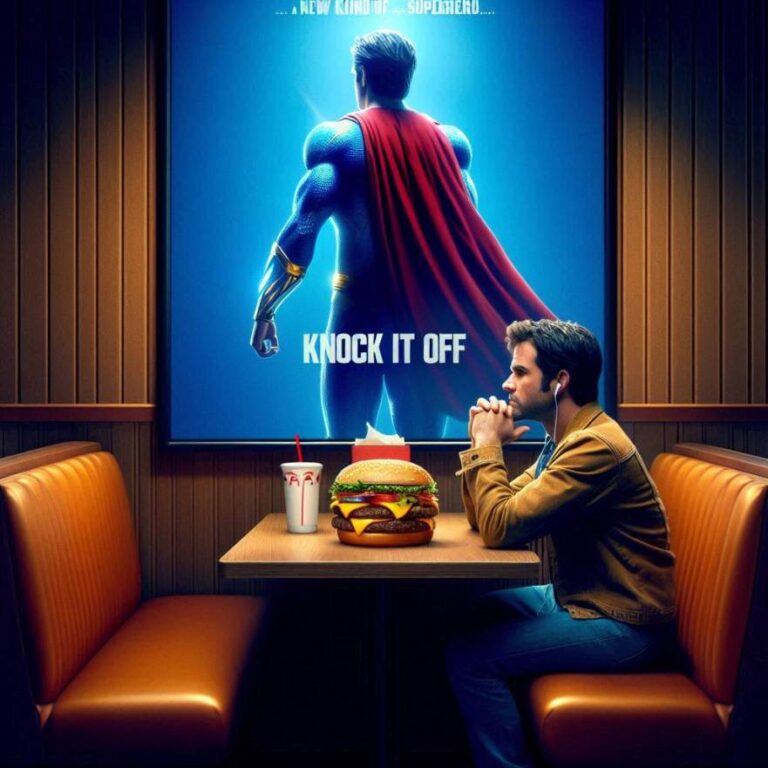
Image Source: Illustrations of Eddie by Dey