
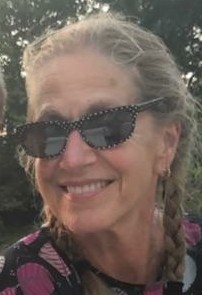
A Personal Choice: Interview with Author Sandra J. Kolankiewicz
A very deep insight into the crafting and understanding of a story and its elements by author Sandra J. Kolankiewicz. A moving personal view from a personality with over 600 published works. We hope you enjoy and educate yourself as we were delighted to be part of this interview with Sandra.
Dey: What first made you want to become a writer?
Sandra: I always enjoyed writing and liked the positive feedback I got from teachers. However, my father died when I was nine, saving my family in a housefire, and soon after that event, writing took on a very different role in my life. The writing process became a way of understanding myself and the world, an attempt to create order from the chaos I was experiencing. Writing has been a meditational practice that I have always turned to and tried to preserve for the sacred communication with the unseen and unknown that it is. All creating is the turning of wave into particle, so whether we know it or not, we are participating in something bigger, this creative energy that we all have access to.
Dey: Was there a particular book, author, or moment that influenced your decision to write?
Sandra: I would have to say that To Kill a Mockingbird was a major influence for me. That tone she strikes throughout the book, whether in the funny, tragic, or heartbreaking parts, never wavers and really compels me. In general, I was influenced by the entire canon, those who were put in and who were left out, because I was standing on their shoulders. I love seeing some writing technique or approach I have never experienced before and which makes my brain work differently. However, I am not sure if I would have kept up the regular discipline of writing if I didn’t need to do it as a way of understanding, coming to terms with, and expressing experience on multiple levels—which all began with my father’s death.
Dey: What kinds of stories or subjects naturally attract you as a writer?
Sandra: I like anything that makes me grow. I am often attracted to something I don’t understand or don’t know about and pursue it just to learn something new. I recently reread To the Lighthouseand loved it as much as I did when I first turned the pages—and as a more mature writer now, I saw other aspects of technique that I had not noticed before. I also read The Posthumous Memoirs of Bras Cubas, written in 1881, but so very modern and funny. I am attracted to writing that makes me work as a reader. However, if I have to work too hard, I do give up and move on, though I often circle back to something I didn’t respond to before.
Dey: Which themes or ideas keep appearing in your work, even unintentionally?
Sandra: How complex we are all in the way we act in the world, experience the world, and are treated in the world. How possible growing through terrible times in your life can indeed both break you and bring out character. The polar ends of duality and all the points in between. Death is never very far away—and very empowering when you realize how important your time really is and how little of it you have. The great leveler. Without it, we would be insufferable. Death is the only thing that gets us all on our knees, makes us stop and look at each other…and pause in profound ways….before we move on back to the chaos.
Dey: How would you describe your writing process from idea to finished manuscript? Do you write with a detailed plan, or do you discover the story as you go?
Sandra: I make a list of what I need to include in each section I am writing, and then I just let it rip. If I am really nervous about a section that is important to me, I ask my ancestors to help me and I pray for guidance. I often have an idea of how things should go, but if my characters starting going in a different direction, I go with them. The same with my poems—I might think a poem is about one idea, but it often turns into another by the time I am done with it. I do have poems and other pieces I have been working on for fifty years because I don’t quite have the key in yet. Fixing one of those is always fun!
Dey: What part of writing do you enjoy the most—and what part do you struggle with the most?
Sandra: I like being on fire with creativity, but not in a way that burns. I think of artists as the transformers that bring down pure energy into a form of expression that we can all appreciate. They turn wave into particle, and that process is a bit like being a human modulator. We all know what it sounds like when the transformer blows in the neighborhood—boom! So, for me a slow and steady burn is the best. I especially like when I have to jump from a story into researching because I don’t have enough info to make what I am writing believable. I struggle with the more practical aspect of writing– beyond writing and getting something published in print or online—pulling collections together, promoting, etc. But then I remind myself that kind of activity is also a form of turning a wave into a particle, so I am trying to embrace the parts of the writer’s journey that I had a tendence to ignore earlier in my….whatever it is….I wouldn’t call it a “career.”
Dey: How has your writing changed over the years?
Sandra: I am more thoughtful and compassionate. I used to be very “gotcha,” like people were punchlines.
Dey: Are there writers, artists, filmmakers, or thinkers who continue to inspire your work?
Sandra: I think I am grazing widely from a cornucopia of possibility, between digital and live. If something strikes my curiosity, I pursue it. May you ever pursue your curiosity!
Dey: What role does personal experience play in your writing?
Sandra: I used to write about myself all the time. Now I make things up. The making up part, for me, is the most fun. However, I did cycle back to a narrative that I could write only because everyone was dead, the story of my father’s death. Fifty years had passed, and while I did have family stories and mementos—I had a rule that if I had experienced or someone else had, or even if I had just heard something as a rumor, I had to include it in the book. However, memories are not a narrative. Therefore, I had to make a lot of stuff up—and really enjoyed the use of my imagination in that context, which gave me a kind of distance to the story I had not had before. The story now has become larger than my family’s story– and taken on a life of its own. I did use personal experience as a jumping off point into an understanding of life and people that is greater than the original and taught me a lot in the process.
Dey: How important has discipline and routine been in your writing career?
Sandra: There is no “career” without sitting down and spending bazillion of hours in front of a page, a screen, or some other way of recording words. I had more time before I became a mother—and a mother of a kid with pretty involved autism—and another child with extreme intellectual needs in a different direction–and somehow I still managed to find that one hour at 5 in the morning before the day got rolling. Many people don’t understand that part of being an artist. Spending time in the shed with your ax. I have seen people sit around and talk about what they were going to write or compose and then never follow through. Sit down and follow through. Make that promise to yourself and keep it, especially if your personal growth needs to process through writing as mine does.
Dey: What have been the biggest challenges in your journey as an author?
Sandra: Mean people. The educated snarks.
Dey: How do you deal with rejection, criticism, or creative self-doubt?
Sandra: If you are writing for praise, you are writing for the wrong reason. I decided a long time ago that my writing would stay “mine,” that I would never depend on it to make money or make a living. I did not want to teach someone how to be a creative writer. It seems to be the same as telling someone how to live. One thing I know for sure is that people are writing in journals to themselves all the time, and always have been, crafting little gems of wisdom and understanding, or their personal tragedies, writing of the way they are trying to make sense of the world, and they aren’t worried about publication. They don’t think of themselves as “writers,” but they are. As long as my purpose for writing is clear, I feel good. I write for myself first, possible publication after.
Dey: What does success mean to you as a writer?
Sandra: Hollis Summers told me that longevity and pacing was the strongest attribute of a writer. I didn’t know what he was talking about because I was only twenty-three, but I understand now. Self-pacing, self-discipline, etc. have allowed me to write for the full arc of my existence, from a young person to a sixty-eight-year-old. That, to me, is success beyond publications.
Dey: Do you believe publication is essential for a writer, or can writing itself be enough?
Sandra: As someone who has had nearly 600 individual pieces published in print or online, I must admit I enjoyed that someone related to what I wrote enough to publish it. Very few of those publications awarded me money in exchange. I am very grateful for the encouragement I received from so many editors. But the reality is that every piece that was accepted was most likely rejected at ten other places first. 600 acceptances means 60,000 rejections. If the writing had not been important to me, I wouldn’t have kept going with all that slap down….and if the writing had not been crucial, I wouldn’t have had 600 pieces to get accepted!
And those 600 published pieces didn’t pay the bills. If you are planning on supporting yourself through your writing, then you either have to get paid for what your write or find sponsors who are willing to pay you to write what you write, as with a blog, for instance.
Dey: Has publishing changed your relationship with writing in any way?
Sandra: I would make a good Golden Retriever. I really like a pat on the head—makes we feel as if I am not alone. But let’s get this straight—writing is lonely! So is doing scales on your people. But you have to separate yourself from others and spend time in the shed with your ax, chopping wood.
Dey: What is your opinion of the modern publishing world and today’s reading culture?
Sandra: I need to better inform myself and am actively trying to understand the new publishing world. I used to have students try to take college English classes on their phones, and I would wonder how they thought they were going to be able to do it successfully if reading and composing only on their phones. But I see so many people I know, posting books they have just finished on FB and weighing in, that I know readers still love books. I wish people played with books with the same intensity as they feel when they are playing a video game.
Dey: What kind of emotional or intellectual experience do you hope readers take away from your work?
Sandra: I hope they grow in self-understanding and compassion—and in understanding and compassion for others.
Dey: What advice would you give to aspiring writers trying to find their own voice?
Sandra: Don’t let the bully in the workshop shut you up. Go and do what you want to do anyway, even if it fails. You will have learned something.
Dey: Looking back on your career so far, what has writing taught you about life and/or people/society?Sandra: I taught developmental English for most of my academic career. I learned that if you don’t have adequate writing and reading skills, you cannot move forward with achieving your dreams. At the same time, people who are missing many of the needed skills still have something profound to say, often about topics about which the rest of us are clueless, and if they are encouraged, they will find their writing voice, hop on a metaphorical unicorn, gallop away, and have fabulous lives contributing to the betterment of the world.
*
You can read fiction by Sandra J. Kolankiewicz at FreedomFiction.com by visiting
*
Sandra’s personal blog at