
Horror Vacui by Michael Zadoorian
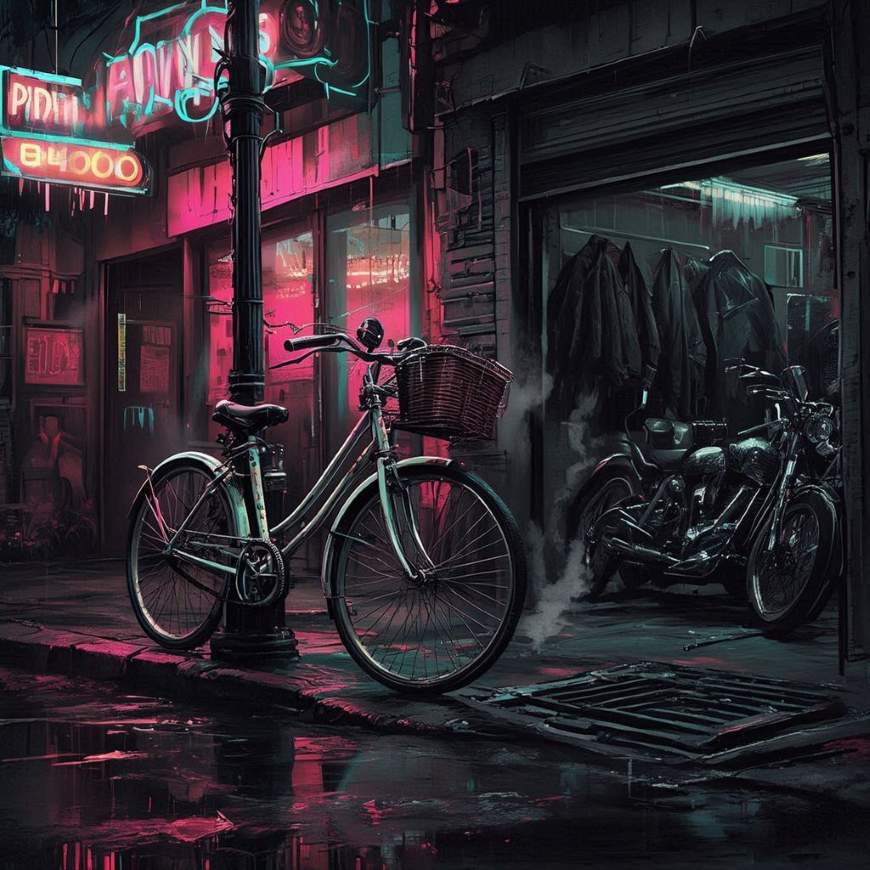
Horror Vacui by Michael Zadoorian
She was handing out rolls of Smarties with bible verses on them. Mia, silently approached by her in the Biography stacks at the library, was stunned and barely able to squeak out a “Thank you?” as she accepted the candy. Taking candy from strangers was not something she normally did, having been warned about it by her father roughly forty years earlier, but she accepted the Smarties and noticed right away the quote on the side: “The name of the LORD is a fortified tower; the righteous run to it and are safe.”
Huh?
At that moment, Mia looked into the woman’s eyes. They were brown and wet and magnified through the yellowed lenses of large Seventies eyeglasses that didn’t quite fit her. Yes, there was the thousand yard stare that she might have expected from someone who hands out Bible Smarties at the public library, but there was something else in the eyes as well: the drawn, anxious look of someone who was afraid to go home, as if perhaps to an abusive spouse. When Mia tried to imagine that spouse, she could now only think of Jesus.
It was the first time that the woman had ever approached her, but Mia was definitely familiar with her. Every time Mia walked into the library, no matter the time of day, she was there. And Mia was there a lot, working on a part-time research project for a non-profit that helped women with families from underserved parts of the city move into renovated houses. The job was her reason to get out of the house. The house that was hers now, crammed full of objects and memories that she did not want or need, but could not seem to get rid of.
When Mia needed a break from research, she would often sneak a peek at the woman. Sometimes Mia would find her sitting at one of the communal tables, staring straight ahead in a kind of trance. Once Mia had watched her for five minutes straight and never once saw her blink. Other times, she was gregarious, fast-waddling around, chatting up clerks and librarians and circulation people. The woman was definitely in her sixties, yet surprisingly spry.
All libraries had homeless people in them, Mia knew that, having clerked in a number of them, but this woman didn’t look homeless. She was round for one thing, and wore different clothes every day – wrinkled, over-sized t-shirts and rolled up men’s slacks or baggy jeans, often with a fanny pack holding it all up. She didn’t smell bad. (She never would have been able to sneak up on Mia if she did.) Mia had never seen her go into the restroom for more than a few minutes, which meant she wasn’t washing up, like the homeless men and women — the French Bath that left grimy water splashed on the mirror, the sink ringed with filth and the floor needing to be mopped.
Mia looked at the Bible Smarties in her hand, wondering whether or not to eat them. It would be a really interesting way to poison people. Oh screw it, she thought, untwisting the package at each end, swaddling the tidy row of pastel discs in its wrapper. She grabbed an orange one on the end. It was the taste of St. Joseph’s Children’s Aspirin, a flavor that brought her to tears right there in the stacks.
& & &
The next day, when Mia came into the library, the woman was sitting at a table with books stacked around her, a fortress of them, no higher than her head, but high enough to look strange and intentional. The stacks were curved around her, about two inches equidistant from each other, allowing her to be vaguely seen through the stacks. It looked as though she was reading a newspaper in there.
Mia found a seat by the window that allowed her to watch the woman from across the room. She got started on today’s work, which was to create a database of companies that might potentially donate furniture for the renovated homes.
After an hour, Mia got up and walked over to the Reference Desk. Danielle, the Adult Reference Librarian, was with a patron. Mia stood quietly as they finished up. She knew Danielle fairly well. She had assisted Mia with many reference questions. Mia had also volunteered at a number of library functions, handing out cookies and punch. It was another one of Mia’s projects to get out of the house.
“Hey,” said Danielle, greeting Mia with a familiar smile, the kind reserved for if not a peer, then at least a sister of research. Danielle’s teeth were so white against her flawless mocha skin. She was by far, the most beautiful librarian Mia had ever encountered in all her years hanging out and working at libraries. It was not a profession known for attracting great beauties, but Danielle was definitely one of them. Unfortunately, Mia had also heard stories from some of the other staffers about Danielle’s various “admirers,” who were closer to stalkers than patrons.
“Can I ask you something?” said Mia, after the patron walked away.
“That’s what I’m here for.”
“You know that kooky patron who’s in here every day?”
Danielle arched one of her immaculate brows. “I’m afraid you’re going to have to be more specific.”
Mia tilted her head in the general direction of the woman. “Lady in her sixties or so. Fanny pack.”
Danielle turned her head to the table where the woman was sitting. Mia watched Danielle’s auburn twists sway. “The one currently behind the Stonehenge of books?”
Mia nodded.
“That would be Aunt Lorna.”
“Beg pardon?”
“That’s what she tells everyone to call her: Aunt Lorna.”
Mia noticed that Danielle pronounced “aunt” the Southern way: ah-nt. It was the way many folks pronounced it in Detroit. Then there were the people like Mia who bleated it out with the Midwestern short “a.” Aant.
Just then, Mia decided that she too preferred the Southern way, figuring everyone could stand a little more gentility in their speech. “Aunt Lorna? Really?”
“You heard right. She gets mighty agitated if you lose the aunt. I figure, well, she’s probably someone’s aunt, so whatever. Why do you ask?”
“She slipped me a package of Smarties with scripture on them yesterday.”
Danielle did not look pleased. “We’ve talked to her about that.”
“It wasn’t a big deal. Really.”
“What is up with that woman and the candy?”
“I’m sorry?”
Danielle took a pained breath and lowered her voice. “A couple of months ago she came up and asked me for hard candy. Hard candy! I just looked at her like excuse me? She got all huffy and said ‘I have a tickle in my throat! I need hard candy!’”
“Really?”
“I told her calmly and respectfully that I have a Master’s Degree in Library Science. Consequently, handing out candy is not part of my job description. Then I said, ‘The drinking fountain is right over there. Perhaps that will help.’ She just stormed off.” Danielle pushed the pads of her fingers together, creating a steeple of slender knuckles and acrylic peach tips. “Presumably in search of Jolly Ranchers.”
“That is odd.”
“I know that’s right. She hasn’t spoken word one to me since. Though I have been informed by some of my colleagues that she thinks that I have a, quote, little mean face, end quote.”
“Get out of here!” said Mia, with a mock gasp. A patron turned and looked at her.
Danielle leaned forward. “Entre nous, I had a box of Lemonheads in my purse, but I wasn’t about to share them with her.”
Mia laughed. “Any idea how she gets here every day? Does she take the bus?”
“Haven’t you ever seen that monstrosity parked in the handicapped space in the front of the library? I don’t know what kind of car it is, but it is ugly. I mean, ug-ly.”
Mia remembered now. “Oh my god, is it that purple PT Cruiser?”
“That’s the one. Filled to the brim with—“
Mia could see that Danielle wanted to say shit, but instead she paused, took a breath and said, “–detritus.” Mia liked how she pronounced that word as well, making it almost sound like “Detroit-us.”
Danielle shook her head disgustedly and continued to speak low. “That car is a rolling dumpster. Every day when I go out to lunch, I just walk past it and sigh.”
“So that’s her.”
“Detergent bottles, paint cans, plastic containers, pie tins, scrap wood, sad toys that looks like she plucked them off the side of the road—“
“You think she’s some sort of hoarder?”
“I’m sure I don’t know what she is. I just have to turn away when I walk past, else it ruins my lunch.”
& & &
Mia’s mother Clara had been gone for three months now. Mia had moved in with her five and a half years earlier after her divorce from Chuck. She had never meant to live there, but had wanted to get away from Chuck as soon as possible. She was unemployed at the time. Besides, her mother had seemed to need her, though she never would’ve admitted such a thing. And yes, maybe she had needed her mother as well, though Clara never let Mia forget her ruined marriage, conveniently ignoring the fact that Chuck was the one that betrayed her. After she left, Chuck stopped making payments on their house and let it fall into foreclosure, the fourth on their block. It vanished into that place where so many houses ended up then.
Clara even considered that Mia’s fault. Couldn’t hold on to a man. Couldn’t hold on to a house. Even when Mia told her that Chuck had been sleeping around with two different women from the Parks and Rec Department, including one to whom he’d been giving a ride every day because her car had died and she couldn’t afford to get it fixed. She had been paying him back with sex. Yet that wasn’t Chuck’s fault, according to Clara. “Men have their needs. You must have given him good reason to stray.”
“Mom, that is the craziest thing I have ever heard. He was just a creep. I married a scumbag.” This is what Mia would say to her mother while she was in the car, when her mother wasn’t there. When she was with her mother, she would say nothing. Because it was easier than fighting and because some part of her, the weakest part of her, despite everything she constantly told herself, believed it too. And every day in her parents’ house made it harder to fight off that belief.
Still, she stayed.
It had always been a house of miseries. There had really been nothing else there, as long as she could remember. Mia had not loved her mother. She believed that her mother had not really loved her. Yet Mia had knowingly moved into that house of miseries as if to say I now deserve the abuse I will hereby receive.
The abuse was its own comfort. When they didn’t talk about how Mia had ruined her life, they talked about how Mia’s dad, Merek, had ruined Clara’s life, which wasn’t true. He had tried to keep her as sane as he could for as long as he could, though he was as miserable as she was. That may have been the original attraction. They were unhappy people who had married after all other possibilities had expired or evaporated, then had a child in their late thirties, which was then considered just about too late. Whether Mia was an accident or the product of some boozed-up coupling, or just the two of them falling victim to the idea that a married couple without children was near heresy, she didn’t know. Even after her dad died, Mia didn’t have the kind of relationship with her mother where she could have asked, Hey ma, just why exactly did you have me?
Mia had loved her father. He had tried his best to protect and encourage Mia, to provide a sanctuary from the unending monsoon of Clara’s discontent. When Clara would attack him in his grave, this was when Mia could finally speak up. She could defend her father, even when she couldn’t defend herself.
“Dad never hit you once,” snapped Mia, one night when Clara suddenly revised her marital history to include spousal abuse. “That’s nonsense. You hit him a couple of times, I remember.”
“You’re remembering it wrong,” Clara said. “He hit me.”
“The time you hit him with a metal spatula and cut him right by his eye.”
“That’s the time he hit me!”
“He pushed you away, Mom. Because you were coming in to hit him again. I remember there was blood all on the fridge. He had to go to Emergency for stitches.”
“Bullshit.”
“Bullshit yourself. Remember whatever nonsense you want. That doesn’t make it true.”
Some version of this happened most months, sometimes most weeks. And then Mia would drive to Warrilow’s Bar a half mile away and drink tiny bottles of Chardonnay until she was drunk enough to go back to her mother’s house or until she was drunk enough to go back to someone else’s. When the latter happened, there was hell to pay for it the next day, but sometimes it was good enough that she just didn’t care. Most of the time though, it wasn’t.
Yet it wasn’t all misery. Mia and Clara had meals that they cooked together — pepper steak, tuna noodle, chicken and rice — casseroles and stews that Mia still made on the nights when she missed the raised voices or the pained silences. They also had the TV shows that they watched together, on the channels that they could receive with a digital antenna. Unknown networks that broadcast television programs from thirty, forty, even fifty years ago, with seemingly endless commercials for diabetic supplies, hospital beds, medical alert systems, and shady slip and fall lawyers.
Mia knowing that there was something unhealthy and retrogressive about the whole thing, for she had sat and viewed these same shows with her mother in the seventies and eighties. Yet there she was, watching The Love Boat, Murder She Wrote and Golden Girls reruns with Clara, their uplifting theme songs filling the house with artificial brightness, singing about Love, exciting and new and Thank you for being a friend. Watching TV with her mother was when they got along the best.
They hadn’t always lived in the house of miseries. There had been an earlier house, a place in Detroit where Mia had mostly grown up. She had driven past the old bungalow shortly after she left Chuck. When she paused to take a look at it, someone came out on the porch, exaggeratedly pinching his fingers at his mouth as if hitting an imaginary crack stem. Mia waved him off and drove, saddened by the idea that someone was selling drugs in her childhood home. Two years later, she drove by again and there were only weeds and rubble. It made her feel unmoored, as if something that connected her to the earth had suddenly cut her loose.
Clara had died on the front porch of the house of miseries. Mia found her there, after returning home from a shift at the library. Of course, Mia was the one to find her mother dead. Clara wouldn’t have had it any other way. There was a cold cup of soup on the table next to her: Mrs. Grass’ Chicken Noodle Soup from a packet, her mother’s favorite. The cup was full. It looked as though Clara hadn’t even gotten a chance to take a sip. The idea of dying before you got to even taste the thing you loved was what hurt Mia the most.
& & &
Around five-thirty, Mia had to get out of the house. It was too quiet, too full of her mother’s things. (The idea of cleaning it out was still too exhausting to consider.) She rode her bike to the frozen yogurt shop on 9 Mile. She ordered a cone, a chocolate-vanilla twist that would be her dinner, but still made her feel guilty. After that, she started to ride toward the library, one-handed, as she licked at the cone. She arrived ten minutes before closing and hung out at the end of the parking lot.
At 6:05, Mia watched Aunt Lorna toddle out. Of course she leaves after the final announcement. She remembered patrons like that from libraries where she had clerked, always the very last to leave. Some wouldn’t even start picking up their things until the final announcement that said the library is now closed. One patron would go into the Men’s room at the quarter-to-the-hour first announcement and plant himself on a toilet, as if he couldn’t eliminate unless he had a deadline. Or maybe it was just some coprophilic bid for attention — Look at me! I’m pooping! Every day, they had to pound on the door warning him that the library was closing in three minutes and he had to get out of there or they would call the police.
Aunt Lorna didn’t have far to go since her PT Cruiser was parked in the handicapped space closest to the door. (The staggered sway to her walk made Mia wonder if she had a hip problem.) Mia listened to the car’s engine struggling to turn over. She heard her father’s voice — That starter’s going to need to be replaced soon — and felt a pang of worry for Aunt Lorna, who most certainly had to be on a limited income. Yet after the fourth try, the engine turned over, releasing a bluish mist of exhaust over the parking lot that faded just before it got to Mia.
For the next five minutes, she watched Aunt Lorna adjust her seat and move objects to and from the back seat. Mia had given the sun-faded purple PT Cruiser a lengthy around-the-car inspection on her way out of the library that afternoon – stacks of newspapers, old Cool Whip containers, empty two liter pop bottles and all the other detritus Danielle had accurately described, her memory heightened by annoyance. Mia had done everything but kick the tires, which looked to be low, but then it could have just been the extra seven hundred pounds of flotsam with which they were burdened.
Mia was almost done with her cone when she finally heard the car being clanked into gear. (Uh-oh, said Mia’s father.) She tossed the stub of the cone in a waste bin and watched Aunt Lorna slowly back up, then turn right on 9 Mile. Mia followed her on the bike lane, which was easy since she was driving at least five miles below the 30 MPH speed limit. Mia tried not to think too much about the strangeness of what she was doing: a bicycle tail job after a frozen yogurt stakeout. She told herself that she was just having an adventure. Anyway, Mia had a feeling that Aunt Lorna didn’t live that far away. Staying about a half-block behind the car, she rode over the railroad tracks near the Apple Fritter shop, then past the Canine-To-Five dog daycare and the Stop Spot Lounge. Soon, she was out of Ferndale and into Hazel Park. They were headed toward the expressway. If Aunt Lorna got on I-75, it was all over. Maybe the bicycle tail job wasn’t a good idea after all. Jessica Fletcher would have never done this on Murder She Wrote.
Just before they reached the freeway, Aunt Lorna turned right on the very last side street. Mia rode up a driveway onto the sidewalk and followed the car from there. For the next mile, she passed drab, weathered homes, with toys scattered on the porches and older cars in the driveways that looked just this side of abandoned. A few people stared at Mia from their porches as she pedaled down the sidewalk. They weren’t hostile glares, nor did she feel like she was in danger, but she didn’t feel particularly welcome either.
When they hit 8 Mile Road, Mia stopped a few houses back and watched from the shadows of the trees. Although she wasn’t one of those suburbanites who was afraid to cross 8 Mile into the city of Detroit, she just wasn’t sure where how far she should continue from here. There were eight lanes of traffic, eastbound and westbound separated by a boulevard, with cars traveling at least 45 MPH. There was also the fact that along this stretch of 8 Mile, the neighborhoods varied considerably. She wasn’t far from Green Acres, lushly treed and filled with beautiful houses built in the twenties and thirties, and populated by attorneys and politicos. Yet right now, she was closer to the State Fair neighborhood, a crime-riddled area decimated by the various recessions and economic downturns of the past forty years.
Aunt Lorna turned right, then cut across three lanes toward the turnaround. Mia watched her loop around to the eastbound lanes. Mia figured that was it, end of tail job. Until she saw her turn right down Exeter, a side street a half block east from her. The street looked both deserted and overgrown.
Things would get so bad in a neighborhood for so long, almost nothing would survive. Residents would lose their houses, then the abandoned houses would be taken over by drug dealers, only to be eventually torched by arsonists or by the drug dealers themselves or even by the few remaining neighborhood people who wanted to get rid of the drug dealers. After a decade or two of this, most everyone was gone and nature would reclaim the area, resulting in blocks of grassy lots, occasionally punctuated by a house. Mia could see that this was one of those neighborhoods, even from where she was perched. Though the desolate blocks were sometimes safer because there was almost no reason, good or bad, for anyone to be there, Mia still wasn’t sure if riding her bike down a dark, deserted side street was a good idea. Especially considering the businesses that flanked Exeter along 8 Mile — a marijuana dispensary, the Detroit Renegades Motorcycle Clubhouse and a CITGO gas station where she was pretty sure a car jacking had occurred. The other business was, as her father would call it, a big ol’ titty bar, the King Of Diamonds Gentlemen’s Club, a castle of black and gold and lurid pink neon. A marquee on one of the columns blinked in orange script:
Happy Birthday Maria!
After that in red, a pixilated image of an overflowing bottle, then:
Moet 2 for a Hunnit
The lights from the parking lot, all piercing white-blue LEDs, emitted an unforgiving artificial brightness that was supposed to give the impression of safety and security. Mia was not really feeling it, but then her eye was caught by one of the PT Cruiser’s brake lights (the other was burned out) and she saw the car turn left into a driveway, about a quarter of a block down Exeter. That was when she got back on her bike and crossed the street.
As Mia passed the King of Diamonds Gentlemen’s Club, a couple of the valets stared at her. Mia looked at them impassively. They all were dressed in black pants and black t-shirts emblazoned with the word SECURITY. She noticed how the letters stretched and distorted across their massive pectorals. Their arms looked twice the size of her thighs and she was not thrilled with the size of her thighs.
Mia kept pedaling, wondering if they were right to stare. Exeter Street was creepy. The trees were either half dead or overgrown like Kudzu. The road was cracked and patched and re-patched with asphalt, except where there was no concrete, only dirt. A lone streetlight was stained brown and flickering. Mia was surprised that it was working at all. Along the side of the street, someone had dumped a load of scrap — twisted pieces of vinyl siding, two-by-fours with rusty nails hanging out, likely from an abandoned house. She knew that some contractors came to deserted neighborhoods like this to drop debris. Mia had to wheel around a porch handrail.
Luckily, she didn’t have far to go. She spotted Aunt Lorna’s PT Cruiser in the driveway of a house, the only one on the block. Mia stopped and stood there in the street, hearing only the hum of traffic, brief bursts of music, and the squeak of tires on asphalt from The King of Diamonds parking lot.
The house was like nothing she’d ever seen before. It was not the exact same purple as the car in its driveway, but close enough. Yet the purpleness was the least unusual thing about it. Mia rolled her bike onto the fractured sidewalk, directly between Aunt Lorna’s house and the grassy lot next to it, where there had once been a house. A chain link fence surrounded both backyards and woven into each of the diamond-shaped holes were colored slats, creating a checked pattern of red and yellow and green and blue, as if both yards were bundled up in a jaunty scarf. There was a gate right between the backyards with a sign mounted on it:
PRIVATE
DO NOT ENTER
Above it was a rainbow arch of the same colors, with a hobbyhorse jumping it. Beneath the arch, mounted to a cross bar was the rotor from an old window fan, painted blue and white. Beyond the gate, both garages were interconnected by a super-structure of arches, A-framed peaks and platforms that rose well above the roof of the house. There was a wooden tower at least fifteen feet high on the right garage mounted with more rotors — small ones from desk fans, larger ones from window and ceiling fans, as well as propellers fashioned from plywood and striped with color — some spinning half-heartedly in the breeze coming up from the east.
Mounted on the left garage was a crudely fashioned windmill with striped blades, encrusted with airplane toys, rocket ships and doll heads. At the base, a ring of hobbyhorses chased each other. There were other hobbyhorses, loosed from their original frames, mounted on the peaks like a team of Pegasi; crudely fashioned wooden birds with rotating fins; plastic eagles; a trio of silver rockets tilted westward; rotating wind-cups made from Cool Whip containers. Hanging from underneath the structure, not far from the ground was a homemade six-foot long replica of an SST airplane, painted in a patchwork of blue, green and silver. Through the cockpit window, Mia could see that the pilot was Santa Claus.
Holding it all up were the two garages: each horizontal slat on their sides a different stripe of color, randomly shingled with old mirrors and framed photographs of people and families; still life paintings of fruit bowls and flowers in vases, like those clumsily painted by someone’s great nephew. Between those were many faded photo-like pictures of Jesus, skin tone varying, but the kind you’d find over the bed in an older person’s home. Mia recognized one as the Jesus that still hung over her mother’s bed.
Mia had a feeling that it had all been reclaimed from the remains of the houses that once lined the streets of this neighborhood — plucked from long gone dining rooms, forgotten attics, vanished hallways. She thought about what was left of the house where she grew up. Until she noticed Aunt Lorna staring at her from behind a barred first floor window.
Not knowing what else to do, Mia raised her hand. At which point, the woman disappeared behind a thick curtain.
Yes, now seemed like the right time to get out of there. She picked up the front end of her bike to turn it around and was just about to pedal away, when she heard the barred front door creak open. Aunt Lorna appeared on the porch holding a shotgun.
This was not how Mia pictured this scenario playing out, mayhem-wise. She was on her bicycle in an isolated, blighted area of the city, down the street from a strip club, a pot dispensary, and a biker gang hangout. There were so many ways this could have gone wrong, but an old woman on a porch with a shotgun was not one she had counted on.
“What are you doing here?” said Aunt Lorna, walking down the porch steps. She leveled the gun at Mia’s upper torso. “You planning on scrapping my house?”
Mia tried to speak but suddenly couldn’t. It was a very large gun. The name Remington popped into her head.
“Or are you one of those art students from downtown come to photograph for your classes?”
Mia shook her head.
“Go head. Say something.”
“I followed you here from the library. You gave me Smarties,” she said, her voice splintering. She was having a hard time reconciling the woman who gave her bible candy with the one currently pointing a giant gun at her.
Aunt Lorna squinted at Mia as if to try to recognize her. “I have seen you there. Why did you follow me?” She pointed lower now, at Mia’s knees, as if to say, I will spare your heart.
“I’m sorry. I don’t know why. I just wanted to find out more about you.”
“That’s the craziest thing I ever heard.”
“I know. I’m sorry. I—“ Mia looked the gun, took a breath and felt a wave of something, perhaps relief, rise in her. “I like your house.”
Aunt Lorna made a noise. Mia couldn’t tell what it meant.
“Your house is the only one left. How come?”
She stared at Mia. “It’s pointed at you right now.”
Mia nodded.
Aunt Lorna sighed, then lowered the barrel of the gun farther, toward Mia’s feet. “My husband killed a man with it. He broke into our house while we were inside. Can you imagine how stupid that is in this city?”
Mia had heard about that sort of thing many times on the news, especially with older victims. Thieves would break into their houses and beat and rob or kill or even rape the seniors inside. But she also heard about the other – older people who refused to be victimized. The local news loved these stories.
“My husband killed him dead. Then had a heart attack right there on our living room floor.”
“Oh my god.” Mia didn’t know what shocked her more, what she had described or the dispassionate way she described it.
“Bud was gone before he hit the floor, not that it would have mattered. The EMS took 45 minutes to show up. They didn’t know which one to do first. Then the police finally came. Two bodies on my living room floor. One of them a big mess.” She lowered the gun completely now, holding it off to the side.
Mia heard a car alarm go off somewhere. She took a breath. “Did your husband build all this?”
Aunt Lorna frowned. “What? You think I can’t build because I’m a woman? We built it together.”
“You’re right. I’m sorry.”
She looked at her house. “We wanted to make something out of what was left. Proof that they were here. That we was all here.”
“You’re the only one left,” said Mia.
“The only one. Ha. What’s the difference? It’ll be gone in a minute after I die.”
Mia tried to swallow, but a sob welled in her throat. The colors of the sky blurred, liquid blue against the brown bones of the trees. Then she couldn’t stop crying.
“Why are you doing that?”
After a half-minute of sobbing, she could speak again. “I don’t know,” she said.
“What is wrong with you, girl?”
Mia wiped an eye with the top of her wrist. “I’m sorry. My mother just died.”
Aunt Lorna took a heavy breath. “For Pete’s sake, stop apologizing.” She held her eyes on Mia. “How long ago?”
“It’s been three months.”
“That’s not very long,” she said, shaking her head.
Mia looked into the yellowed lenses of Aunt Lorna’s glasses. She saw now that they were men’s frames. “I didn’t really like her.”
She broke open the barrel of the gun – a hollow metallic click — and cradled it across her arm. “That don’t matter much. I wasn’t all that crazy about Bud by that time. We were best when we were building and not talking. Talking’s what got us into trouble.” She sighed. “Anyway, you get used to a person. And their ways.”
“Yes.”
Aunt Lorna reached into her fanny pack and then handed something to Mia. A butterscotch hard candy. “Thank you,” Mia said, sniffling. She unwrapped it and put it into her mouth. The sweetness soothed her. “What happened to the house that was here?” Mia pointed down at the ground where she was standing.
The eyes behind the glasses defocused for a moment. “My niece lived here.”
Before Mia could ask anything else, Aunt Lorna tilted her head to her right. “You want me to turn it on?”
“Turn what on?”
“What? The house, that’s what.”
“It turns on?”
“Oh, for the love of–hold on.”
Aunt Lorna fast waddled up the steps into the house, toting her shotgun. Mia peered into one of the barred windows. A calico cat was peeking out, staring at her. Another cat, a black one, came up next to it, then an orange tabby. Mia had a feeling that there were more cats inside, many little heartbeats and not enough litter boxes. She watched the calico turn to the black cat, then open its mouth and bare its teeth. Mia couldn’t hear the hiss, but she knew it was there.
What she could hear was a string of distorted bass notes emanating from a car as it drove slowly up Exeter. Mia turned and saw a gleaming black Buick Regal from the Eighties in perfect condition, riding high on tall black wire rims, the kind they sold at Hot Wheel City, a little way down 8 Mile. She remembered the name for cars like this: Murdered Out. The beat had the sound of hip-hop, but there were no lyrics, just bass tones rattling and vibrating the interior. The two young men inside, both in white t-shirts, stared stonily at Mia. She looked back, not knowing what to do, and just at that moment, the light around them all changed. The Buick was bathed in green, red, yellow, blue lights, flashing in pinpoints off the polished surface of the car. Mia watched the faces of the two men inside the car change. Astonished, they looked at the house, then at each other, half laughing, half marveling at what they were seeing.
Mia turned to see everything lit up — house, garages, towers, windmill, rockets, all of it. Fan blades turning, the wooden birds flapping their wings, hobbyhorses bathed in colored light, spinning like a demented merry-go-round. Foreign music reverberated from hidden speakers. It sounded Eastern European to Mia, a distorted Oberek that reminded her of her grandmother who had been dead for decades. The warbly violins clashed with the tones that the young men were playing in their car. Smiling, she turned to see them both staring at the house, mouths widened in wonder.
Mia wondered what Santa Claus was doing in the cockpit of the SST right then. She imagined him crossing the ocean, breaking the sound barrier, with wealthy people in the back, drinking champagne and reading glossy fashion magazines. Looking back at the house, she watched the propellers rotate and realized that she wanted to see the house take flight. Mia wanted to go with it, grab hold of one of those birds or straddle one of the hobbyhorses and leave this place, fly on a house to a new city, a new state, somewhere far away, away from everything and everyone that had disappeared. Somewhere where all of it didn’t remind her of who she was and how she had spent her life. She had stayed here too long, stayed in libraries too long, stayed married too long, stayed with her mother too long. She was always tying herself to something.
A screech of tires brought Mia’s attention to the street, where she saw only the blacked-out taillights of the Regal as it sped away. Mia looked over to see Aunt Lorna standing behind the bars and smeared Plexiglas of her front door, the shotgun back in her hands, staring out at her.
* * * * THE END * * * *
Copyright Michael Zadoorian 2025
Image Source: Dey from Fictom.com





A very attractive, readable piece of fiction. A lot of backstory on Mia, and some on Aunt Lorna, make for a welcome read. I found Mia somewhat jaded by life and a little irreverent and perhaps a bit quirky. I liked her a lot and looking back at her in the review mirror, I hope she finds what she’s looking for. Some stories are all lament–and this one contained a bit–and some have characters have no saving grace and you don’t care what becomes of them. Not Mia. I feel almost like I know her and would like to learn about her future adventures.
Z: this one sent me to Google Earth – since I’m familiar with the landscape where this bike ride is set – to see whether the house you’ve designed is imagined or remembered. Nice work.