
Give My Heart Ease by R. C. Capasso
Give My Heart Ease by R. C. Capasso
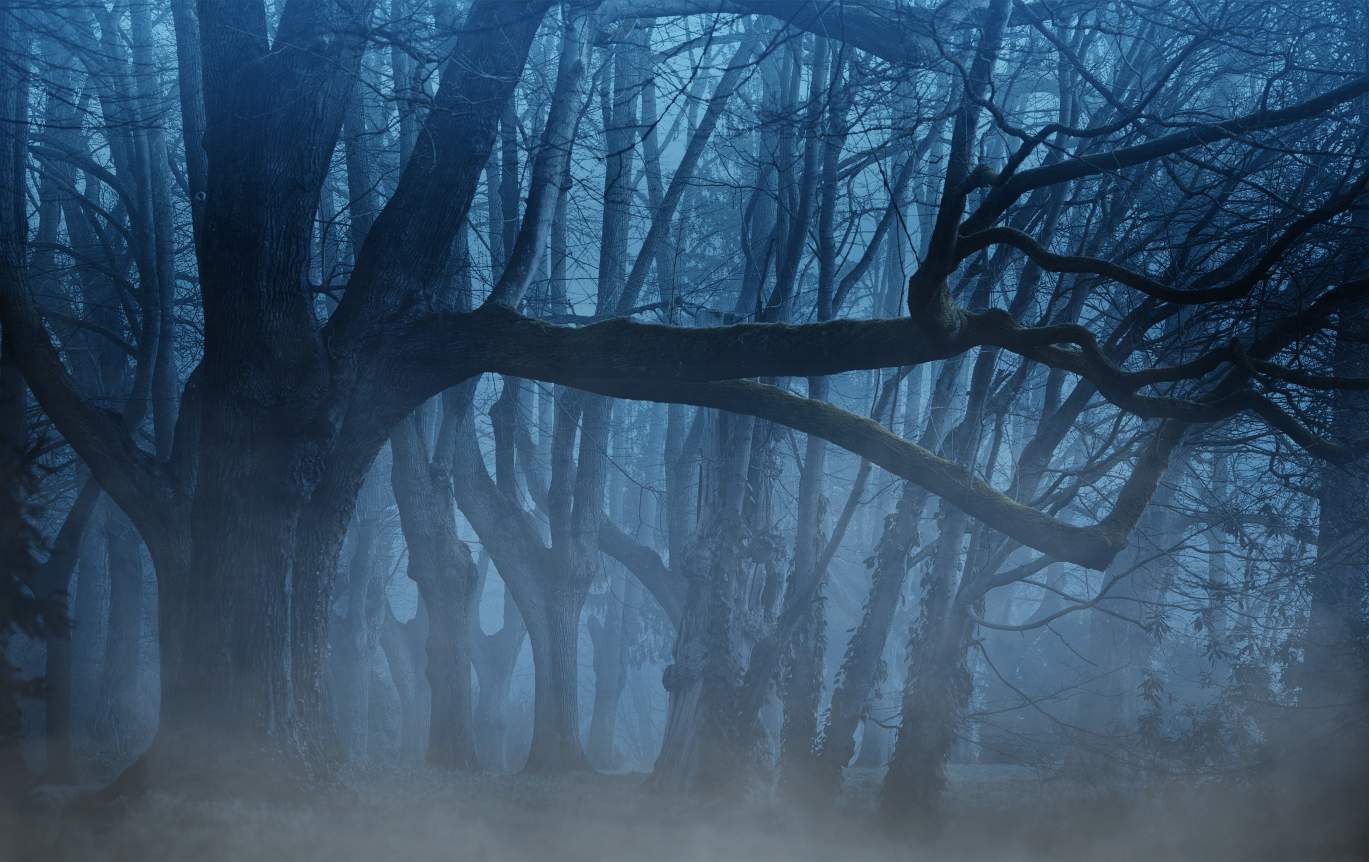
I live in near silence in an old house surrounded by neglected fields and encroaching trees. It was once a farm, supporting life in a number of ways. Now some old plants, descendants of fallen seeds, still tangle together under the advance of wild Queen Anne’s lace and milkweed, dry in the summer sun. The unworked earth hardens and bakes, and the tall thin grasses turn gold, giving off a scent of sweet dust. When I walk over the land, my feet seem to meet the pattern of the earth, while seeds and pollen catch against the loose legs of my jeans.
I am an aging woman, dry as the earth and the grasses, but with no promise of rejuvenation under the rains and the winter snows.
There is no path into the woods. New trees have advanced through the field, covering over the mouth that used to invite our wanderings. My husband and my daughter would not recognize it. There are no longer quail or pheasants, and I rarely see rabbits or butterflies. Now my visitors are creatures of the deeper wood: deer, raccoons, woodchucks.
If I go to the woods, I must sidle in between the trees, barely finding the hint of the path’s opening a dozen trees back. And it is truly just the memory of a trail, muffled in generations of fallen and decaying leaves. It seems to say that it has no need for visitors, and if I stand motionless, gray like tree bark, still like a trunk that has to stretch up among many to find light, I can be quite forgotten. Birds and insects call and whirr around me unconcerned. Unaffected.
In early years, so long ago, if I heard anything, it was my daughter laughing as she stood along a wet edge of our property, gathering blueberries in the sun. Or exclaiming at the thorns catching her sleeves as she picked blackberries. When she walked the land, it was alive. So was I. Even when it was just the two of us, after my husband died. We were enough to keep the house and the yard and all the acres alive.
I deserve the silence. I let my daughter marry a man who betrayed and then killed her. I spoke out too weakly, too late, and he made his escape. I have no idea where he is, and that will be my guilt forever. But it is nothing compared to knowing where my daughter lived, the path she went down, and where that path ended. That is a darkness that swallows everything around me.
So I have become accustomed to silence and to a land that moves on without me. I don’t much care if the fields and the woods creep up to my door.
I was standing one evening, staring at the purple flowers of Joe Pye weed, growing where I once had a flower garden. Bees and butterflies like it, so I just stood, looking at it. A movement in the corner of my eye caught my attention, and I turned my head slightly. I have no fear of the night or the field and the woods. Nothing could happen to me worse than what has already happened.
And it was just a cat. Black. Long and slim. Not overfed, but clearly at peace. It sat on its haunches and studied me.
If I lived in town, I would not be surprised to see a neighboring cat pass by on my property. But there is no house closer than a mile, and that seems a bit far for a cat to roam.
“Welcome.” My voice was as dry as the weeds. The last time I spoke aloud was to say thank you to a clerk at the grocery store, five or six days before.
The cat rose to its feet, put one soft paw down in my direction, and I heard a voice.
A woman’s voice. Five notes. Da, da, da, da, da. So faint I couldn’t make out words.
“You’re walking with your human.”
The cat drew back its paw and retreated with all four feet, one step each.
I raised my voice. “Hello?” I knew no singers along our ridge. A wanderer? Or someone lost? Someone who might not like being on unknown land in the growing darkness.
The cat turned and walked into the woods.
I stood still for a long moment. Carley, my girl, used to love cats. I used to love them, too, though that part of my life is so faint now. But something about the way that animal moved stirred me, and although by this time it must surely be undiscoverable in the black of the underbrush, I followed it into the trees.
It was waiting for me a few yards in. And it led me steadily, a moving shadow among still, lifeless darkness.
It skirted brambles and leapt up to wait for me on fallen logs. We walked several acres across the flat top of our ridge, then dipped down the far side.
By then I knew I was off my own property, but I didn’t expect to be shot by a hunter out of season in the middle of the night. And truly, I didn’t think of it. I would follow the cat till it arrived home, or wherever it was going, then I would walk back up to my place. The night air was cool and the smell of the woods rich and familiar. I had not had an adventure, or even an experience in the true sense of the word, since my loss and despair.
The woods began to thin, and I slowed. I was not about to step onto the back of someone else’s property.
The cat halted, too, and then, sending me a clear glance, turned forward and climbed up over something low in the grass. I approached and saw tumbled stones. An opening broken into a low stone wall. And beyond the wall, untended grasses and tilting stones, white in the pale light of a half-moon.
A graveyard. Not the one where Carley lies. Still, I stood outside and only peered in.
Maybe a dozen stones. A family plot, probably there for over a century. And no longer visited. Souls consigned to a deep, uninterrupted peace.
And the cat leapt onto a low, squat stone. Sat on its very top.
A chill ran down my arms. For the first time I questioned the nature of this cat and our strange little walk.
But the cat sat, still and expectant, eyeing me as only animals can. It would not grow impatient.
So I stepped over the broken wall and picked my way, delicately, respectfully as possible, to its chosen stone.
The etched words were clear:
To the memory of MaryEllen Bridges, beloved daughter. Lost but not forgotten. We seek you everywhere.
Her dates were 1920-1941. The age Carley was when she died. But lifetimes earlier.
And I heard the voice. Five notes and more, fading but clear enough now I recognized the song.
“Down in the valley, valley so low, hang your head over, hear the wind blow.”
A song about love, loss and grief.
The cat dropped from the stone and walked over to another, lying down on its stretch of weeds. The headstone of a woman, Helen Bridges, died in 1943. Beside it the grave of a man, Conrad Bridges, died in 1942. A family destroyed.
And more words came to me, “If you don’t love me, love whom you please. Throw your arms round me. Give my heart ease.”
It was an old song no one sang any more. But it stayed in your heart. Haunting. I would sing the words for the graves, but it was not my voice that was wanted.
When I looked for the cat again, it was gone.
I felt my way up the rise and to my property between the moonlight and the darkness under the trees.
& & &
I woke to the song in the back of my mind. But no cat. Just the blank field, the empty rooms. And now a new sense of something missing.
Against my better judgment, I went into the town on the far incline of the ridge. I have not visited it for some time, since my connections all died with my family years ago.
But I found a woman, Beulah, more ancient than I, who recognized me and invited me in for tea. I asked about the Bridges family.
“Such a tragedy. My mother used to talk about it. They lost their daughter, MaryEllen.” She halted, knowing my story.
“How did she die?”
“No one knows. She disappeared. There was a man.” Again, that pause, to avoid coming too close to comfort.
“He killed her?”
“Everyone thought so. But there was no body. No evidence. He died in the war.”
“And she was never found.” We seek you everywhere.
“Why are you asking?”
“I happened upon the grave.”
“You should be careful up that way. It’s pretty wild.” She poured more tea for herself; mine was untouched.
“Did she sing?”
Beulah raised her eyebrows, then smiled. “My mother said she had the loveliest voice. The whole family was musical. It was something they shared.”
I nodded, drank my tea to be polite, and excused myself.
At the door I heard her warm voice. “You should come to town more.”
& & &
The next night, I sat on my front stoop. The cat appeared just as the sun was sinking.
“Well?” We eyed each other. “Are you alone tonight?”
It didn’t bother to settle on its haunches. The voice came, softly. The words weren’t distinguishable, but I knew what they would be: “Give my heart ease.”
“I’d help if I could.”
The cat turned, walked a few soft steps, and swiveled its head to see if I was following. I picked up the basket I had prepared.
We didn’t head toward the cemetery this time. We walked in the opposite direction, along the ridge out past my farm, and then past another that lay quiet in the growing darkness, with just a faint light in a distant window. I am no trespasser, but I supposed that I could use the cat as an excuse. “Pardon me, I’m just following him.” For a moment it almost made me smile. Except that I had a feeling where he was leading me.
We had to be nearing the far edge of the ridge, before it dips down to houses. But we had one last stretch of dense woods to pass through. Here even the waxing moon had trouble penetrating. A good place for the business we had in mind, I supposed.
The cat led me to what appeared to have once been a small clearing. At least the trees stood back a bit, with just undergrowth. No sturdy roots to fight against.
He stopped beside a moldering log and scratched at the crumbling wood, almost in powder from the work of time and insects, and the leaves that had fallen and banked up against it.
This night I was wearing boots, and I had brought heavy gloves and a trowel. A shovel would have been awkward to carry for a distance, and I did not intend to dig deep and disturb anyone more than necessary.
Still, it took some time to find her. MaryEllen. The first bit of bone, and I knew. I went no further. I had no right.
But I made a cross out of two sticks and a trailing vine. I tore more vines and used them to mark my path back, till I was sure where I’d entered the woods. I would tell the sheriff I’d been hunting mushrooms.
& & &
Some of the townspeople cleaned up the cemetery, so that MaryEllen could be laid to rest by her parents in dignity. A surprising number attended the interment. We sang a few hymns that everyone knew, and no one questioned why I asked that we sing, “Down in the Valley.” We are an old-fashioned group.
I left with everyone else but came back in the night. The cat had requested my presence.
The cemetery was silent, MaryEllen and the hearts that loved her at ease.
I was glad, and yet I could not stop the thought that no voice sings a song for me. I must hope that this means my child is at rest.
But rest is so final. I find myself almost envying those spirits anywhere that still reach for one another, while my darling appears to be done with me.
Yet the cat has stayed. Each night in the shadows, its bright eyes gleam. It, at least, has chosen me.
* * * * THE END * * * *
Copyright R. C. Capasso 2025
Image Source: Darkmoon_Art from Pixabay




James Rumpel did his normal superlative job in crafting this dystopian fiction. I loved the descriptive term, "hive." As part…