
Man Out Of Time by Doug Lane
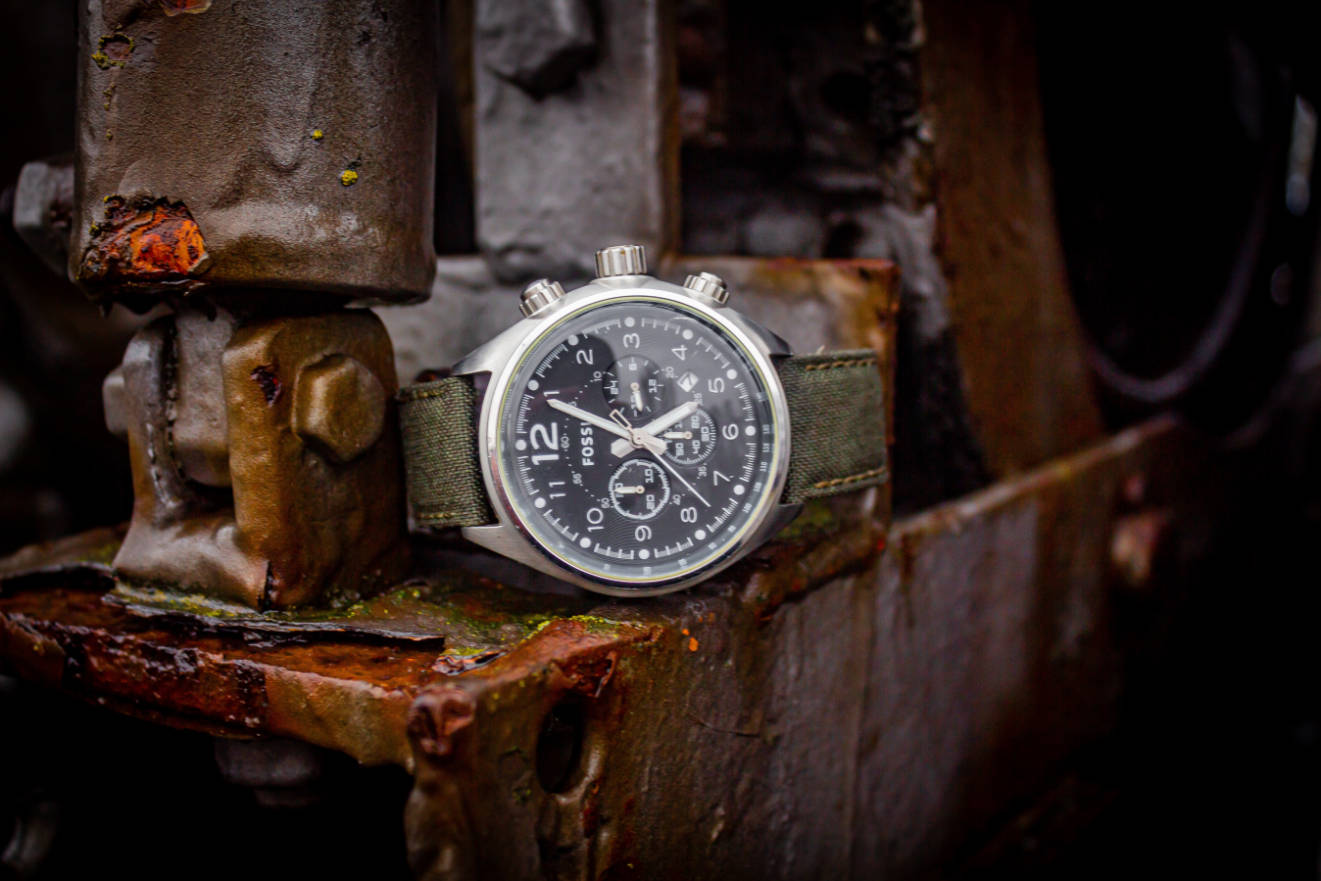
Man Out Of Time by Doug Lane
The banner on the midway invites my step-brothers and me with bright red letters: SEE THE TIME TRAVELER! Below the legend, his image might be ripped from the cover of Amazing Stories or Astounding: suit of tinfoil, shadowy features obscured within a shielded helmet, radiant waves emanating from him like a star.
Hopewell’s traveling show keeps him in his own tent at the end of the sideshow, through the Oddities display, past unnatural skeletons and unfathomables in jars. Two artifacts allegedly taken from him are displayed outside the flap, flypaper for the curious. To the left, a rectangular card with numbers and symbols, a signature, a printed date centuries away. To the right, a three-dimensional image of a dark-haired woman projects like a movie on the air from a flat silver disc. The lady beside me is so startled by it, she crosses herself against the devil. The photo woman’s expression is tender, save for her eyes. Those are cold and deep. There is a sadness to her gaze that carves into my heart.
The barker is cagey when asked about the artifacts. “Perhaps it’s some future form of currency or identification that card. The image, his lost love, stranded waiting somewhere in time. Only this is certain: he comes from an unknown future. What marvels he has seen and what truths he knows he cannot say, for he is trapped in his suit, forever winking in and out of time and space, each trip bringing back a coin with an unknown profile, minted three hundred years hence!”
It costs a second dime to pass through the extra flap.
The traveler resembles the banner, though his suit isn’t as shiny, and his face is discernible within the helmet. He stands in a twelve foot square cage, the whole thing wrapped in poultry net. For our protection, the barker claims—the same pitch he makes about the wolf girl.
When the clock hanging on the tentpole reaches a quarter to three, the air vibrates to a howl. Blue bolts of energy engulf the time traveler. It crackles and dances in arcs along the cage wire to a chorus of gasps. A second later, the traveler vanishes in a flash. The entire tent smells of summer lightning. Eight more seconds tick by with low murmurs before a red marble of light appears within the cage, expands with a whoosh and a cap-gun bang, and the traveler appears again. He staggers, falls to one knee. A lustrous gold coin drops from his hand. The barker retrieves it, shows it to us, touts the far-off minting date on its face, and ushers the crowd outside on a cloud of our own wonder, helpfully telling us the next show is in fifteen minutes.
The crowd breaks up, a dozen debates about how the trick was done and where the strings were, overheard conversation a better banner than any artist could paint. I’m ten years old. I stand in line three more times. I only stop because I run out of dimes.
& & &
The next time we see him, three years later, Hopewell’s has raised the price to a quarter. The carnival pitches its tents in McVittie’s field because old man McVittie is dead and his widow needs the money. The vibrant reds and golds of the canvas banner are more sun-bleached. So are the carneys. The time traveler is exactly the same. His suit hasn’t faded. His face appears no older. He still vanishes in blue fire and reappears shortly after with a gold coin plucked from time. His crowd is bigger.
One of his ‘Coins From The Future’ has joined the artifact display. I ask a carney if it’s real gold. His glare is withering. “He’s dropped one of those every fifteen minutes for the past five years. Does this place look like they’re real gold?”
I linger outside the flap my last time through, stare at the shimmer of the woman’s image above the disk. I wonder if she thinks of him, oblivious in the far future to their business being on display across time. Studying her face, her sadness becomes contagious. It seems to jump away from me with the time traveler when he goes. I wonder after he’s gone why the government hasn’t spirited him away. Maybe belief in him is beneath them. Maybe they’re too busy fighting Hitler and Hirohito. You’d think they’d at least wonder if a time traveler knows something about how the war ends.
& & &
It’s six years before I see him again. Hopewell’s traveling show has gone bust. Crutch Brothers carnival passes through that summer instead, roosting in the next county. Word of the time traveler precedes them on handbills plastered on phone poles and board fences. I’ve got my driver’s license. Four towns over is an easy trip. I don’t expect any of my friends to understand my fascination—they’re focused on sports and girls—so I go alone.
The Crutch Brothers ask a walking liberty half-dollar for a look-see. It’s criminal, but I pay it. The old artifacts no longer travel with him. Crutch Brothers doesn’t even display a coin. I ask about the disc, the projected photo of the woman, but the barker offers only a shrug in reply. Though her sad-eyed visage is etched into my mind, there’s still a pang of loss.
The traveler’s cage has been refreshed with tighter mesh. Within, he’s as unchanging as the stars. He scans the audience, lips moving within his helmet. I don’t know if he’s talking to us or himself. For a moment, right before his clockwork disappearance, our eyes meet. Is there recognition? I can’t tell before he’s swallowed by light and fury.
On the way back to the car, I do the math. He’s jumped every quarter hour for at least eleven years. That’s approaching 400,000 hops through time.
He must be mad as a hatter by now.
& & &
The traveling shows change, dry up, become history. A few continue to circulate with rides and games, but sideshows are passé. I sail my own time stream. College. Marriage. Career. Divorce. Business. The time traveler lives rent-free in the back of my mind the entire time, a grainy dream.
Thirty years after Crutch Brothers and the last half-dollar I spent to see the time traveler, I’m on a business trip to Las Vegas. On the final night, between drinks and gambling, one of our customers pays our way into The Oddity Zone, tucked in the back corner of one of the Fairmont Street casinos: old knockoff Barnum pieces, memorabilia, modern takes on doodads in jars. Some of the bits out front might be vintage; in the very back, behind a lush black drape, the time traveler certainly is.
His cage is smaller now, cylindrical, suspended fifteen feet above the floor and bathed in three colored spotlights. Beneath the cage, a funnel system empties into the top of a pin board. A dozen of us gather around it. A waitress in a skimpy silver dress escaped from a Star Trek episode hands each of us a number. When the time traveler vanishes and reappears, the gold coin drops from his hand through the bottom of the cage. The funnel catches and feeds it into the pin board. It bounces down pachinko-style, finally drops into a numbered slot at the bottom. The guy next to me wins a free drink, gets to keep the coin. He shows it off. It glitters in the casino lights.
On the way out, I ask the ticket booth clerk how the time traveler got there. She’s as cagey as her bygone barker counterparts: an old animatronic gimmick, maybe a leftover prop from a magic act. Who can remember? I wonder how often the traveler has changed hands between Crutch Brothers and now. I resist the compulsion to revisit his new life as a Las Vegas game of chance once more before I fly home, fascinating and degrading in measures as it is.
& & &
I see the traveler one more time. I’m 59 years old.
It’s a long haul to Rapid City, then dusty roads southeast into the Badlands. I make better time than I expect, wind up waiting. The coordinates are precise. I know because I chose them. He’d lost control of the stasis bubble around me when we materialized outside Wichita. Before he could close it again, I input the only coordinates I had, from the assignment card that the Hopewell barker mistook for money or ID so long ago. My class had been geocaching around the Dakotas earlier that day. He didn’t know I knew how the temporal suit worked. I was always studying his jump suit when he wasn’t around, because he told me not to. I was kid. He always underestimated me. After we time-crashed I kicked him forward, the date and time carved in terror in my mind, refreshed from the card.
The time traveler materializes. After he’s whole but before he’s oriented, I drive the wind out of him with thirty-two inches of solid pine baseball bat to the midsection. He folds.
As he struggles to breathe, I program the dance of the loop. I’ve had forever to work out the steps, and it goes quickly. When I initiate, he’ll first jump back to 1935 Wichita, arriving an hour after I first kicked him forward to South Dakota. He’ll spend several seconds in Wichita before returning here, arriving moments after he left. Annoying, but necessary to tie off the one dangling thread in it all.
He’ll remain here for twenty seconds before he returns to his previous jump-off point in 1935 and enters the loop, ten seconds after he left there.
He’ll spend fourteen minutes and fifty seconds there, real-time, before jumping back here, arriving a femtosecond after his last departure, a sliver of time fundamentally imperceptible from the previous arrival, barely a flicker but significantly clear of causing a paradox.
He’ll live those final twenty seconds with me again before he returns to the exact spot he left, eight seconds after leaving. Added to a single-second of vortex time on each side, it knots a loop of travel with a fifteen-minute interval so precise, you can set a watch by it. As Hopewell’s will figure out.
His suit programmed, I smash the input pad. Noose knotted.
I seal the suit. Its stasis inductor, safeguard against rapid aging in the event of temporal accidents, will nourish and preserve him. He’ll feel every passing minute, month, decade, but he’ll only age about a biological month his entire time in the loop. The suit should unlock when it finally runs out of juice. Its isotopic power system easily has another century in it.
I trigger the initial jump.
He stares, confused. Mouths WHY? to the stranger he sees. Vanishes in a flash of blue light. Returns in the span of two heartbeats. I have twenty seconds.
I punch his gut again with the head of the bat. I push the coin I’ve carried my entire life—the one she’ll give me for good luck centuries from now—into his hand. I hear her voice, clear for the first time in decades, anguished, shouting my name, screaming at him as he dragged me out the door. I think about her image, still somewhere in this time and as lost as me, and my heart breaks again.
I lean close so he can hear me through the helmet. “Because you took me away from Mom, you son of a bitch.”
His eyes dance from coin to me to coin again, connect my age to my youth. I step back as arcs of energy envelop his budding awareness, return him to 1935. Six-year-old me is already beyond his reach there, running in the dust of South 135th Street, minutes from Mister Swenson’s spotting me in his headlights, his inquiring after my parents, his invitation to a hot meal when he learns I no longer have any—opening notes to a new life as a found orphan, an adopted son.
I walk to the car, finally leave the time traveler behind. Mom fills the space he vacates as if the silver disc has somehow relocated within my heart. For a moment, I feel her hug. I don’t believe she’d approve of revenge, even for what he did. I also don’t believe she gets a say. She hasn’t even been born yet.
Some time after he returns to 1935, my father will be discovered by Hopewell’s traveling show, vanishing and reappearing, lingering for a quarter hour, vanishing and reappearing. They won’t resist the spectacle. They’ll build a cage and lock him inside, paint a banner with thick red letters and a silver-suited man, and charge an extra dime, at least at first, for the privilege of viewing his impossibleness.
See the time traveler.
He has nowhere to go.
He’ll be headed there the rest of his life.
* * * * THE END * * * *
Copyright Doug Lane 2025
Image Courtesy: kampfmonchichi from Pixabay





Intense story, much of it told as a remembrance of a young child. There was a lot of convincing sci-fi jargon and I was impressed with it. I didn’t quite understand the anger the child held against the Time Traveler, but I’ll read it a second time and figure it out. Good sci-fi!
A hearty congratulations for your Pushcart nomination. I felt it was well-deserved, at the site’s premiere scifi story of the year. Good luck in the balloting.