
Against the Blank Sky by Billy Ramone
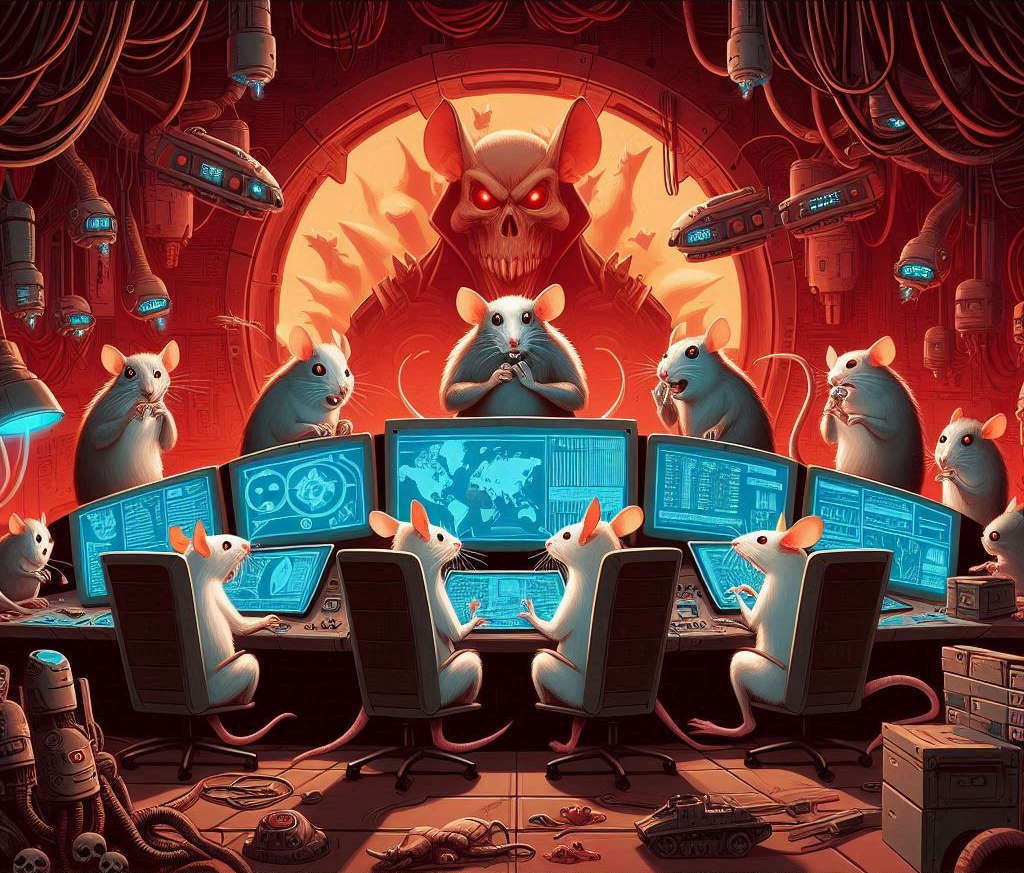
Against the Blank Sky by Billy Ramone
I
“He won’t know you,” Warden Stone said as he led me down the corridor. “He doesn’t know anyone.” The C.O. ahead of us unlocked a door on the right and pushed it open. Stone leaned against the opposite wall and motioned me forward. I followed the guard in. Stone didn’t move. The guard swung the door shut behind me.
Pim was already seated on the other side. Through the barrier, he looked tired and wasted. As I sat down across from him, his fingers tapped at the scarred table in front of him like chickens pecking corn. His eyes flew around the room, lighting momentarily on an object before taking flight again. I didn’t think he saw me at all.
“Pim? Pimlico?”
At the sound of his name, the eyes found mine. Stopped. Clung to my face like leeches.
“Pim, it’s Nix.”
He stared at me hard for a moment. Then his lips parted slightly and he gave a long, low hiss.
“Bastard,” he said. And then he spat. I flinched despite the plexiglass, then watched as the spittle dribbled down the print-smeared surface. He watched too, and the sudden anger drained from his face.
“So many dead,” he said, leaning forward and frowning at me. “Murderer.”
“A lot of innocent people,” I agreed. News footage flashed through my memory: mangled bodies, screaming children.
“It was the rats, wasn’t it?” he said, “you were always going on about those rats.”
“You tell me,” I said. Pim and I had talked about rats a lot after I told him about how the history bots lied, how not all the rats were killed during the starving, and how the government had bred millions for experiments. I’d always thought it was a harmless enough topic. That was, until the day Pim slugged the CDC and mashed a chunk of Atlanta with it.
Pim blinked. “Do you ever really know the guy in the next cubicle?” he asked.
It was a great question. Although I didn’t now, I’d once thought I known Pim. On the first day of seventh grade, this weird kid had busted me drawing a cartoon of our English teacher, Miss Pearson, on the bathroom wall. The nervousness I felt when he said I see what you’re doing faded quickly when he began to laugh at the picture. That was Pim—always observant, always ready with a laugh.
He was also almost as strange as I was. We were both backward, gangly boys who didn’t know how to talk to girls–or anyone else, really. We spent most of our time out of class VR’ing through the most absurd fantasy planet frames we could find. Pim would add subroutes full of shapeshifters and ghouls and other nonsense. I decoded any structure larger than a grass hut and replaced it with one of my big stone Nix the Annihilator! signs. Pim laughed at my monoliths and scratched pictures of naked women or demons on their backs.
In high school, Pim had suddenly sprouted a scrawny, red-haired girlfriend named Minzy whose slouchy shoulders seemed to grow out from under his arm. I was faced with the sudden realization that he was not like me. It turned out he could talk to girls—among others–and had mastered ways of translating the A’s that appeared on our report cards into real-world currency. I held my breath and waited for the ceiling to fall in, but, somehow, my inability to move out of the deep cave of my awkwardness did not bring an end to our friendship. After graduation Pim got a job at McGruder. It was with Domestic Tranquility. He could not talk about what he did, so he said he was designing monsters.
Minzy left and was replaced by Chia. Strangely, she didn’t seem to mind me any more than Minzy had. It was a mystery to me what either of them thought of me: tall, scrawny, morose. Their weird boyfriend’s weirder friend who never spoke and ate nothing but canned pasta. But then, this mystery was just part of a puzzling whole: as a rule, I’ve never understood people. At best they’re confusing. At worst nasty and destructive. At least three-quarters the time I didn’t mind going unnoticed.
Eleven months later Pim had enough pull to get me hired at McGruder, too. Not quite sure what to make of me, management did the only thing they could: they teamed me up with Pim. I discovered that instead of designing monsters he was busy destroying them. That’s how we ended up jammed together eight or ten hours a day five days a week working the EM slugger. We were quiet and efficient and could crank through twenty-five targets a day. There were times where we would work through our entire list and had to punch into out-of-work while the admins scrounged up more. We knocked them out together, Pim and I.
“All this time, you were the threat,” he said. His voice brought me back to the visiting room. “That’s what it was all about, right? Eliminating threats?” His laugh sounded like the yelp of a wounded dog.
“Right,” I said. “Right.” I felt an ironic laugh bubbling in my own throat. I swallowed it. I had always thought about what we did in those terms. Somehow, Nix the Annihilator was doubling, thanks to McGrudder and Domestic Tranquility, as Nix the Protector. After all, that’s what the slugger was all about. We live in a frightening world full of losers who love to make Americans bleed. Some asshole dictator or hyped-up warlord who needs squashed. Some nut-job mystic in a cave who needs a mountain to fall on him. The slugger was old, sure, but it could still level an entire city block with a few keystrokes. And if it didn’t do it with the yeah-I’m-beating-down-your-door-motherfucker precision of later models, it did well enough to keep collateral quality within parameters if you followed proper procedures.
Pim hadn’t followed proper procedures.
“Why’d you do it?” I asked him after a long silence, knowing it was a stupid question.
“I didn’t do anything,” he said. It wasn’t exactly the response I expected, even though I’d been told he was still maintaining his innocence.
“Pim,” I said as gently as I could, “it was your system account that entered the coordinates for Atlanta and initiated the strike.”
“You know as well as I do that you monkeyed with my retinal id.”
“There’s video. As soon as I went to the restroom you entered new coordinates–“
“You shopped out the vid. Everyone knows that.”
I thought back to his trial: broad accusations of a conspiracy and frame up with no evidence to support the claims. Now I had become the focus of his excuses and evasions. That stung, even though I tried not to take it personally. Friend or not, I was convenient.
It struck me that he was better off deluded. Pim’s psychosis could not cause any more pain to the thousands he’d killed, nor would curing it heal them. And none of it, clearly, could save him. His fate was already sealed. I wondered why, after all, I had come. Had I expected to learn something? To teach? Or was I just lonely? I took one last look into my only friend’s eyes, stood, and turned away.
The guard reached for the bundle of keys at his waist, then paused and stared at me. His small, black eyes were bright and humorless. When he unlocked the door, Warden Stone was still leaning in the corridor. He walked with me back to his office.
Two weeks later, the government executed Pimlico Jones for the premeditated murder of the 22,862 men, women, and children killed in the Atlanta terror attack. His sedated body was placed in an anaerobic chamber, and he died uneventfully five minutes and fifty-three seconds after the deoxygenation units were activated.
II
I’m not sure what woke me up. The solar grid had bugged out, and the aerator had shut down. Maybe it was the heat. Maybe it was too quiet without the fans. Or maybe it was that sound.
That’s not likely, because I didn’t hear it at first. I lay there in the dark, enjoying the comfort of my bed. I did not want to move, even though I knew I had to reboot the panel. I should probably grab the manual ox unit as well since I could feel the air already starting to thicken around me. Then I heard it: a low shuffling sound, like an old man in slippers scuffling along the hall. But there was no one in the apartment except me. I listened and tried to place the source of the sound. The thought of getting out of bed now seemed more than just uncomfortable. If I had an intruder, I would be wiser to contact security first. But that of course required at least enough power to raise Soya.
I fished the fob off the nightstand and tried to reboot the panel from there. Its yellow diode told me the fob still had some power, but I got no result. I tried it a second time, but still nothing. I held my breath. I could still hear the strange scuffling, and it sent a shiver over me. I strained my eyes toward the door, trying to pierce the dark of the hallway. The air seemed to grow even heavier and more humid. Finally, I took a deep breath and said, as clearly as I could, “Soya.”
My voice seemed unnaturally loud in the darkened room, but my call did not activate the hub. After my voice, the silence seemed more ominous and empty—especially since the swish swish from the darkness outside my room came to a sudden halt. Clearly, the residual charge left in the tank was not even sufficient to drive communications, let alone launch a reboot. Or power an alarm, which was really what I wanted most at the moment. I fumbled for the nightstand drawer and fished out a taze-net before I stood up.
When I got to the doorway, I tried without success to see who, or what, was in the hall. The darkness was too deep. I realized that I was holding my breath and exhaled gradually, then forced myself to take several long, slow breaths. The pounding of my heart became less violent. I twisted the two halves of the taze and felt it shift in my hands. With my thumb poised carefully over the activator, I started down the corridor. I encountered no one. Perhaps whoever had been there had heard me try the com and fled.
Or perhaps they were waiting for me in the dark.
I held the net higher and felt it expand slightly as I moved into the living room. My eyes could still not penetrate the darkness, but the abrupt cough that came from before me was clear enough. In the brief burst of light generated by the taze’s sparks as it deployed, I had a fleeting glimpse of a dark face surrounded by a tangle of long hair and sinewy hands stretching toward me. Despite the fact that the intruder was directly in front of me and in the net’s path, he managed somehow to avoid it. The mesh of electrodes fell to the floor, sparked momentarily, then fizzled. The man before me erupted into a storm of coughing fueled by long, wheezy inhalations that suggested, even more than the coughing itself, deep pulmonary distress. Thinking I deployed the taze-net from too great a distance I sprang forward with a mighty roundhouse which connected with absolutely nothing. I struggled to regain my balance and regroup my thoughts.
“Stop it, Nixy,” a man’s voice rasped at me. He was puffing so hard he could barely speak. “I need to sit. Perhaps you could see about that aerator.”
“ What the—who?” My own breathing, I realized, was becoming labored.
“The grid,” the voice croaked.
I stumbled to the access panel and managed a jump boot from the pad. Soya arrived and I asked her to relaunch the grid, bring up some lights, and see to the aerator. Then I turned back to my mystery guest. I dropped into a chair when I saw that my visitor was the recently deceased Pimlico Jones.
My brain scrambled to put it together. Somehow, the feds had managed to botch the execution, and Pim had taken advantage of their incompetence to escape. He blamed me for framing him, so he’d come for revenge.
“Soya, phone,” I said.
“Your call?” she asked.
“Don’t,” said Pim. “What? Are you going to tell the police that a dead man broke into your house?” Dry rattling erupted from him. More coughing, I thought, until I realized he was laughing. I stared at the loose skin on his sunken cheeks, his bluish lips. “Because I am, you know,” he added.
“What?” He’d lost me.
“Dead. Don’t you watch the news?”
“Your call?” Soya asked again.
“Cancel,” said Pim.
“You’re crazy,” I said.
“Sane as a judge, Nix. And dead as a doornail. Whatever the fuck that means. Weird saying, right?” His staccato laugh came again.
“How did you escape?”
“Esssss – CAPE!” His laugh was a bark this time. “Through the big final exit, man. Only escape that counts.” He stood up and stretched his arms over his head, pirouetted.
“You’re alive,” I countered.
“I guess it seems that way,” he said. Then his twisting body disappeared. “But it’s rather an illusion,” his voice said in my ear, and I jumped when he reappeared right next to me. I jerked away from him and slid off the chair. He shook his head at me. “Get ahold of yourself.”
“It’s a lot to process.”
“You should see it from my end. I’ve been learning a lot.”
“How the fuck—?”
“I should know? I died. I woke up. ” He shrugged.
“What do you know?”
“I know you’re in trouble, that’s what I know.”
“I am?”
“Why you think I’m here, kemosabe? It ain’t your winning personality.”
“You’re here to haunt me. You blame me for Atlanta.”
“I’ve learned better. You didn’t program that attack on Atlanta any more than I did.”
We stared at each other for a moment. He was like the old Pim. Smart and full of vinegar. It felt good to have him back.
“But now I know who did it.”
A chill ran over me. “Who?”
He told me. The chill grew and stayed.
III
John and Ellen Gordon had the whole warehouse, inside and out, under camera surveillance. It was just the two of them, Pim said. No one else knew where they were holed up. They were loners, convinced that government agents had infiltrated the larger organizations with which they maintained loose contact. They lived on the outer rim of the lunatic fringe. I hunkered quietly in the van a block away from the warehouse, watching and waiting for Pim’s signal.
The place looked deserted, but I guess that was the idea. I, for one, would have never dreamed otherwise. But Pim had ways of finding things out. He knew why the Gordons had executed the Atlanta attack and how it fit into their larger plan. He knew about the warehouse and their security arrangements. He even had a plan to stop them. The problem was that even though he knew it all, he couldn’t do anything. He could walk through any door he wanted to, but he couldn’t open one. His hand would pass right through the doorknob. He couldn’t fire a gun or throttle a man or set the timer on an incendiary device.
That’s where I came in.
It was dark at three a.m. in that miserable corner of New York City. Whatever streetlights that had been there had died, or had been shot out, ages ago. No one was around, at least no one who wanted to be seen. I sank deeper into my coat and cursed the cold.
Once Pim had a reconnoitered, he’d let me know if we were good to move forward. It was a good plan, but I was scared. I’d tried more than once to talk Pim into enlisting more help, but he didn’t trust anyone except me. Or so he said. Really, I think he just wanted it to be us. Some kind of old time’s sake thing. I appreciated that. Plus, if I were practical about it, I had to admit I had no idea who we might ask to help. Still, it was easy for Pim to be nonchalant about walking into the hideout of a couple of mass murders. He was already dead.
“What if I get killed, too?” I’d asked him one day. “What happens then.”
He’d smiled. “Then everything’s fucked,” he said. “And you and me go off stomping around like old times, two ghosts into the sunset.”
Pim had decided to move in tonight and take them out. It was April sixteenth, a couple of days ahead of our original plan. We knew the Gordons would release the plague rats on the nineteenth, but Pim did not want to wait until the last minute. He figured the Gordons were deeply paranoid and that they just might get itchy and decide to pop the cork early. To white nationalist trash like the Gordons, the nineteenth is a special day, a day to stick it to the government and anyone who happens to think differently than they do. But some things are more important than symbolism, and if Domestic Tranquility moved in and shut them down on the eighteenth they’d look like idiots. The Gordon’s were twisted, sad excuses for human beings with atrocious beliefs and warped values, but they weren’t particularly stupid. We had to assume they realized that the destruction and confusion of the Atlanta slugging had not entirely blinded the government to their theft of the rats, or to the disappearance of those 2,500 doses of vaccine that had been spirited out of the CDC by their contacts in the weeks prior to the attack. The Gordon’s timeline said the last of the vaccines would be distributed and administer across their network by the seventeenth. Pim figured it wasn’t safe to wait any later than that.
I was getting tired of sitting the cold. A few snow flurries drifted across the windshield. I blew into my gloves. The warmth of my breath helped take some of the sting out of my fingertips.
Even though he came and went without making a sound, I’d come to recognize when Pim was near. I knew he was there even before his face appeared faintly in the dark at my shoulder.
“We’re good to go,” he said. “Ellen’s asleep. John’s sitting by the monitors. The rat cages are all still in the middle room. I’m going make a ruckus and draw John to the far end of the building. Get ready to move.”
He was gone as quietly as he’d come. I grabbed my rifle, climbed out of the van, and strolled toward the building. I hurried across the parking lot, hoping Pim’s diversion had done the trick. When I came to the office door, I hammered its knob off with the rifle butt and shouldered my way in. It sounded incredibly loud in the early-morning quiet. Inside was as black as a tomb. I switched on my see-ems. I blinked a few times to adjust to the image: a rundown office, complete with a lopsided desk that had long since been ransacked, and a row of rusted-out file cabinets along the back wall. I crossed room to the open doorway and looked down the corridor beyond. After a couple of seconds, the image of the first section came in sync for me and I could see the first thirty feet or so. Beyond that the grid was a black hole. From the far darkness I heard shouts and laughter—Pim’s diversion. Ahead, there were open doorways, one left and one right. John would have left the room on the right to investigate the noise. I wondered if Ellen had vacated the room on the left to join him or was disciplined enough to stay back and mind the rats. I had no idea what to expect: to me, both of the Gordons seemed like bat-shit-crazy fanatics who were incapable of coherent thought, but I knew that wasn’t true. They had devised and executed a plan that had them within a few days of effectively wiping out most of the population of North America, if not the world. I generally didn’t get people, and I especially didn’t get the Gordons. Pim told me simply to assume the worst.
I didn’t, however, want to assume anything, so instead I’d invested the extra three grand for the bio registers and infrared routines for the see-ums. I hit the switch and the room beyond the wall sprang to life before me. At first, a swirling red and orange mass filled my field of vision. It was several seconds before the sensors sorted the outline of a human figure in the midst of it. Just my luck: tactically, Ellen Gordon was right where she should be—shouldered in behind a low wall with a clear view of the room’s entrance. It took the bioware a bit longer to parse the rest of the visual lava, which resolved into hundreds of ugly, thick-furred rats gathered into a dozen cages lined along that same low wall. Although petite, Ellen didn’t appear to have any trouble wrangling the fifty-caliber sleeve cannon she had trussed to her right arm. I saw I had one thing going for me, however: she wasn’t wearing a mask.
I’d linked a roller of neuro to the see-ums earlier. Now I dropped it and blinked in the target. It cruised the hall and cut a sharp left into the room. She saw it, of course, and unloaded on it, but she was a fraction late. It had already started to deploy. I knew the sound of gunfire would draw her husband our way, so I only waited a quick three before I charged through the hall and hit the doorway. I was surprised to see she wasn’t down, and as her fifties hammered my chest and knocked me on my ass, I saw why. She was wearing a mesh respirator—virtually invisible but functional enough to clear the neurotoxins. Pim was right: these Gordons were serious business, and just then I was getting the worst of it.
Ellen was on her feet closing on me, screaming about incoming. Down the hall, I heard John shouting something in response. She hardly glanced at me as she went by, content with the slugs I’d taken and intent on seeing how many more commandos would come in my wake. Her mistake was all I needed, and before she could turn back I was on her from behind, a length of diamond wire that unspooled from my wristlet cutting a red valley through her throat. It was only a few seconds before she stopped thrashing.
I expected to feel nothing but relief as her body dropped to the floor. And yet an unfamiliar disgust filled me as I stepped away from her body. It struck me that hand-to-hand combat has a different psychological weight than a remote post, even one as potent as the EM.
I didn’t, however, have time to reflect. I wiped the blood from my hands, but they still felt sticky. Despite Pim’s howls, I could hear a decisively undiverted John Gordon thundering down the corridor in my direction. My chest hurt like hell. Perhaps one or more of the fifties and penetrated my armor, or maybe the pain was just from the impacts. I didn’t have time to triage. I reached for the holster under might left arm, but before I could extract the blazer, a bright flash of light erupted in the doorway before me, and a blast knocked me backward.
My back of my shoulders and skull connected hard with something as I fell. When my vision cleared I saw John Gordon, pistol in hand, stepping through the doorway and over his wife’s body. He leveled the barrel at me, but before he could pull the trigger, there was a piercing shriek and a whirl of motion to his right. Gordon pivoted and opened fire. Blinking, still dazed, I wrestled the blazer from my shoulder holster and flayed him. He fell like a sack of wet cement.
I slid my hand inside my coat. My chest and shoulder felt like hell, but my hand came away dry. The body armor had done the trick. I was just starting to congratulate myself when a terrible pain ripped through my left ear. I screamed and punched, connecting with muscled fur. Scrambling needles gouged at the back of my neck. When I looked back, I knew I was a dead man.
I had fallen against the front of a rat cage, and it hadn’t taken the beasts long to move in on me. Several of the biggest of them, fat and rancid, had come forward. The fattest was busy swallowing a piece of my earlobe.
“Shit.”
Pim was next to me, shaking his head.
“So much for that,” I said.
Pim didn’t say anything for a while; then he said, “You need to bring the gelpaks.”
I turned and walked past the cages, past what was left of John and Ellen Gordon, through the corridor and the dark expanse of empty warehouse. I didn’t stop until I was back outside, staring into the night sky. A grimy coat of smog and cloud hung there. The moon, the only light, was only a paler patch of filth in the filthy darkness. I knew there were stars. I’d seen pictures of them. People still wrote horoscopes and predicted futures based on them, even though they could no longer be seen.
As for me, I didn’t have a future. I didn’t need stars to know that. I was a dead man walking, ahead of schedule in a dying world.
I don’t know how long I stood there. Eventually Pim was standing next to me. “If you don’t finish this,” he told me, “millions of people will die.”
I nodded. After a moment, I said, “Maybe that’s for the best.”
Pim grunted.
“Maybe it’s time,” I said. “None of it really matters anymore.”
Pim chuckled. “That’s the thing you never figured out, dude. None of it ever mattered in the first place. Not really.”
We stood quietly for a while. I was weighing it. Finally, he said, “But then I think of those vaccinations. Do you really want people like the Gordon’s to be the seeds of the new human society?”
In that moment, my friend seemed older than the earth and more exhausted than the unsleeping, ever-shifting tides. I stared into the blank sky and wondered how long being a ghost might last and what happens to ghosts when the world they haunt dies. When I looked back down, Pim was gone.
I walked to the van and drove it back to the warehouse. I pulled the combustion gels out of the back and carried them inside and deployed the packs around the cages just like we’d planned. While I worked, the rats eyed me in a way that I tried not to think of as hungrily. I wondered how long I had, but it didn’t matter. I had more than enough time to do what was needed. After the packs were in place, I dragged the bodies of the Gordon’s into the hot zone along with any of their gear I could find. It was unnecessary. We had three times the goo we needed to melt the entire warehouse. We weren’t leaving things to chance. Everything needed to be incinerated to prevent an outbreak. And now everything included me.
The rats shuffled aimlessly about their cages. I called Pim’s name, once, twice, but he didn’t show. Maybe he was lying low. Maybe he was really gone. Had he ever really been there? Had I?
No one would ever really know. But I knew. That was what mattered.
My thumb sought out the detonator’s red button, but then I paused. I ripped the back off John Gordon’s blood-soaked shirt and wrote a big crimson NIX! on the wall above his ruined corpse. A smile crept across my face. I was still smiling when my thumb ground down on the red plastic nub. As the blistering wall of destruction flashed toward me, I thought that if through ill luck something of the building managed to survive the conflagration, perhaps witnesses would see my sign.
Maybe they’d take it as a warning.
* * * * THE END * * * *
Copyright Billy Ramone 2025


Busy, busy story with a lot of effective action. A lot remained unexplained: Pim’s apparent quasi-reanimation, for one thing. There is a lot of backstory, but maybe not enough.The MCs come full circle, using the hobbies of their young to literally save the world. And what became of Pim and what would happen to Nix? Good fiction asks more questions than it answers.