
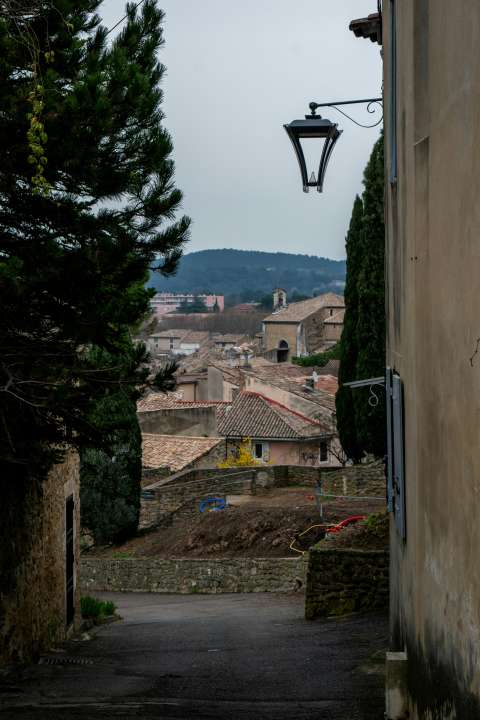
The Sleeping Man by James W. Morris
I was such a callow youth when hired in the 1930’s as a constable on our rainy little North Atlantic island that I shaved only twice in a week, and truthfully, even that was mostly just for show. What employable characteristics the Council identified in me besides a willingness to survive on a laughably low wage and a penchant for sticking my nose into the personal business of others is something I’ve yet to discover. Luckily, there was little serious criminality for me to confront on my patch—all these years now passed, and I’ve yet to come across a murderer or molester, praise be. No, most transgressions on Uncanny Island were of the trivial, everyday type—little scrotes skiving off school, theft from shops, wide-boys conning the credulous, public drunkenness, and suchlike. This meant I enjoyed abundant time to acquaint myself with the private doings of those I policed and make certain I was well up on local gossip. Of course, for such a strategy to bear fruit, I needed to spend most of my working hours either wandering the cobbled streets of Old Town (where I’d initiate conversations with passers-by), or perched on a barstool nursing a pint of wallop in the pub, inconspicuously harking to the whispered palaver of my fellows.
I soon realised, however, that one of the best skills I needed to develop as a fledgling constable on my patch was the capacity to recognise the important difference between a disturbing incident whose source was wayward human activity of a type I could police, and one whose cause was traceable to something actually supernormal in nature. We inhabited Uncanny Island after all, the isolated locale known for its strange happenings.
For example: the sleeping man.
& & &
I was nestled rather comfortably on a half-collapsed stone wall outside Leander’s Bakery one Monday morning, enjoying a brief bask in an aurate beam of unfiltered sunshine (an especial treat after the rainy week we’d just endured), when young Xan from the Pappas place came charging up to me, breathless. His neighbour, Miss Purdy, had sent him urgently to locate me in order to report, he said, ‘that she had a man in her bed.’
Well. Since I knew of Miss Purdy’s reputation, I hardly felt the announcement newsworthy. But why tattle on herself and share such an intimate detail with innocent, wide-eyed young Xan? And why require him to turn about and recount the situation to me, for that matter? I could only think the poor little lad must have miscomprehended the message somehow.
I sent Xan on his way without bothering to interrogate him as to why he was not attending school that day—those with small holdings often held back even their youngest children from classes when the number of undone chores had accumulated past a certain point. Anyway, it was a rather pleasant amble out to Miss Purdy’s little property at the edge of town, and I rather enjoyed it, though I found myself pressing my pace a bit when I saw her ahead of me leaning expectantly in the doorway of her tiny cottage, arms folded.
Even taking her uninviting body language into account, I was reminded anew what an appealingly handsome woman Miss Purdy was. She must indeed have been a true vision of blooming loveliness in the prime of her youth, which I was unfortunately born too late to witness. I speculated briefly—not that it was any of my business—why she’d never married.
As I made my way up the stony overgrown path to the cottage, Miss Purdy stepped hastily out of the doorway, then pointed inside, at the rear of the large single room which made up the entirety of her living space. She said not a word. Once my eyes had adjusted to the dimness of the structure’s interior, I noticed that she’d formed a sort of private bedchamber for herself by shielding off a corner of the room with tall ivory screens adorned by lovely descending lines of swooping oriental characters. I wondered what message, if any, the characters on the screen would convey if translated into English. (This, I’m a bit chagrined to state, is my way, my habit —I’m forever speculating about issues far afield from the matter at hand.)
Stepping past the screen, I saw that yes, there was a man in Miss Purdy’s bed all right, or to be precise, there was a fella sprawled indecorously, half-on and half-off, her narrow straw mattress. Sound asleep.
He was fair-haired, lengthy, and perhaps middle-aged, though his face appeared quite free from the fine network of worry lines most of us accumulate by that stage of life. The fella was a stranger to me, which was a bit of strangeness in itself—I tend to know those populating my patch. Someone from the far side of the island then? Or a mislaid visitor to one of Miss Purdy’s neighbours? Or even a new immigrant to Uncanny Island whom I’d yet to encounter? Whoever he was, his slumber appeared as peacefully untroubled as a newborn babe’s.
‘What’s his name?’ I asked Miss Purdy.
‘I’ve no idea.’
I turned to face her then, and must have raised an eyebrow.
‘He’s no guest of mine. I never saw him before,’ she explained. ‘All I did was venture down the road to borrow some heavy cream from my sister-in-law—not an hour ago—and found this stupid beggar here snoozing in my bed when I returned.’
‘Ah, I see. Sorry.’ I did not bother to enquire as to whether she’d secured her property when exiting the cottage, as people on Uncanny Island rarely bother to snib their windows or lock their doors. It was, generally, not a secure-your-premises sort of place.
‘Well, let’s rouse the fella, shall we? Find out what his story is.’ I pivoted back to the sleeping man and shook him by the shoulder.
‘Tried that,’ Miss Purdy said.
The snoozer failed to awaken at my touch, so I shook him at the shoulder again, much harder. Outside of a short, snuffly, mildly complaining noise, however, he generated no meaningful response to my action. I then did an examination of the sleeping man from top-to-toe and noted he was dressed in standard working man’s togs, though he was unshod. The feet jutting over the edge of the bed were bare and a bit muddy.
I turned to Miss Purdy. ‘I’ve known a fella now and again in my time to make his way through the wrong doorway at night after having a skinful at the pub, but I’ve yet to encounter anyone doing such a thing on a bright Monday morning.’
I rifled through the sleeping man’s narrow pockets and discovered nothing. Nary a penny nor scrap of paper. I got to my feet and stood over him for a few moments then, pondering the best way to proceed.
Miss Purdy stepped forward. ‘I want him out of here,’ she said.
‘Of course,’ I said. ‘Well, he’s too large for me to carry, at least very far. I suppose I could borrow a wheelbarrow from Pappas next door.’
The human face is a wonderful thing, isn’t it, capable of transmitting even the most ambivalent, complex feelings through minute signals sent out to those inclined to read them. Somehow Miss Purdy’s face transmitted to me her horror at the thought of the local constable pulling an unconscious man from her bed and wheeling him in a barrow down the road past her neighbours. She knew very well the sort of gossip such a tableau would generate. Yet she must not have had a better idea, because she stayed shtum.
It wasn’t until all this rigmarole was accomplished—a barrow borrowed, the snoozy man dragged by Miss Purdy and myself to her doorway, the fella dumped unceremoniously in the tray, and me setting off with my cargo—that I realized I had no idea where I was meant to be taking him.
& & &
The logical course of action, I decided, was to have the sleeping man examined by a doctor to determine if he was suffering some sort of medical crisis. The problem was that the trek to Doctor Po’s surgery was a longish one, over streets alternately cobbled or festooned with deep puddles and muddy ruts, and I was having difficulty imagining being able to barrow the weight of the sleeping man that far. A better choice would be for me to convey my slumping cargo to my office on The High Street and have the doctor visit him there.
Near the shops, there were only a few people about, since it was still quite early. I attempted to pass through that part of town nonchalantly, as nonchalantly as a man pushing another obviously unconscious man along in a wheelbarrow in The High Street can be first thing Monday morning. A few people did notice me and showed curious looks, but most ‘paid me no nevermind,’ to borrow a phrase of my Mother’s. Unfortunately, it was at this point that I struck a deep rut in the road with the front wheel of the barrow. The resulting jolt threw me violently off-balance, and I toppled awkwardly—perhaps comically—sideways into the muddy street; the barrow tipped forward and sleeping man’s inert body tumbled headfirst from the tray into a wide brown puddle. I flailed about a bit in the gluey muck trying to right myself, and when I finally regained my feet, I noticed an interested knot of people beginning to gather nearby. Some were smiling.
I knew that I had to assert my authority then, or risk losing it. I pointed out two of the larger fellas standing about, Rafe and Sean. ‘You, and you,’ I said, rather sternly, ‘pick up this fella, put him back in the barrow, and roll him down to my office.’ The smiles disappeared—the citizens of Old Town were certainly not accustomed to hearing a stern tone emanating from my mouth—and the fellas complied. I wonder now what I would have done if they hadn’t.
& & &
Earlier, I referred to the modest structure I was required to abide in to process my customary paperwork as an ‘office,’ but that was really an unparalleled example of grand overstatement on my part. It was only a rotting shed, containing just space enough for the battered desk where I shuffled my papers and the broken-legged settee upon which I stretched out to do my deepest thinking. These items were pushed up hard against opposite walls, leaving a narrow aisle where I was wont to pace. The lino there was worn to shreds. I’d provided the Tilly lamp myself.
Rafe and Sean carefully arranged the sleeping man on the slightly-askew settee without much comment, then volunteered to take the barrow—which they recognised—back to the Pappas place. They were good lads, really.
‘Ta-ra. Thanks, fellas,’ I said. ‘Might see you later in the pub.’
So then I spent a few minutes perched on the corner of my desk, contemplating the sleeping man’s serenely composed and motionless figure. Something about this mysterious stranger’s appearance aroused in me a strong feeling, and it took a while to realise what it was—an odd, unbridled sort of envy, the envy experienced when encountering someone who’d managed to find a means to be completely at peace with the world.
I’d sent a message to Doctor Po and he appeared, his stereotypically battered black bag in hand, at my office sooner than I would have expected. He gave a brief, side-eyed once-over to the patient whilst I explained the situation, then knelt by the sleeping man’s side so he could slap the fella hard in the face. The action was sudden and violent enough to make me flinch. Doctor Po then extracted a short silver needle from his bag and jabbed his patient sharply in each thigh. The sleeping man grunted gutturally, but made no exaggerated movement in response I could detect.
Doctor Po then stripped his patient and did a more detailed examination, narrating his actions, I think, as much for himself as for me. ‘What we have here,’ he said, ‘is a—somewhat muddy—Caucasian, middle-aged, well-nourished male in a state of unconsciousness. There are no obvious external signs of injection marks, bruising, stroke, or head trauma. His reflexes appear normal. His respiration is regular and unobstructed. His pulse is steady and strong, though perhaps a bit slow. The root cause of this patient’s persistent unconsciousness is not readily apparent.’
The doctor stood.
‘Well, what’s your diagnosis?’ I asked.
‘He’s asleep. Or in what they used to call a soporous state. In other words, a coma.’
‘What’s the difference between a person who’s in a coma and one who’s just asleep?’
‘A person who is asleep eventually wakes up.’
He closed up his bag and made as if to leave.
‘Hang on,’ I said. ‘What are we to do with him?’
‘He’ll be all right here for a bit. As you know, Uncanny Island doesn’t have the resources to support a hospital or nursing home.’ Doctor Po shrugged his shoulders. ‘From time to time, we are able to ship long-term chronic cases to Europe or the Americas, where they can receive more sophisticated care. But ships equipped to take on such a patient are few and far between, and the journey would be a treacherous one. This fella—if he doesn’t wake soon—will probably be dead before we could arrange something like that.’
‘Dead?’
‘Starvation. Or, more likely, he’ll die of thirst. Only takes a few days.’
Doctor Po made his way to the door. ‘I’ll be back tomorrow to check on him,’ he said.
& & &
I arrived next morning in my office earlier than usual, in fact, two hours earlier. Feeling half-sure I’d discover a dead body on my settee, I saw instead that the sleeping man looked quite comfortable and was breathing fine. It was then, when giving him the once-over on that morning, that I noticed for the first time—and I’ll concede I may have been imagining it—a slight, satisfied little grin on the man’s face.
Doctor Po arrived shortly after I did, and pronounced the patient’s condition—surprisingly—unchanged. He then extracted from his bag a sort of Rube Goldberg contraption he’d apparently rigged up himself, a couple of heavy glass jars held together with twisted clamps and a dangling, pale red rubber hose attached, which he meant to force down the sleeping man’s throat in order to feed him water. This procedure he attempted to complete for at least half an hour, whilst I held the jars aloft at a specified angle, my shoulders aching. The water that made it through the hose dribbled out of the man’s mouth and ended up all over the settee and lino, however.
‘No,’ Doctor Po said, rising. ‘He’s not getting anything. It’s as if his oesophagus is closed off. I’ll have a good long think about it overnight, see if I can come up with something else that might work. Any change, let me know. Otherwise see you tomorrow.’
This frustrating sequence repeated itself for an unnumbered succession of days—Doctor Po appearing in the morning with some new strategy or contraption to try on his patient and failing with it, whilst the sleeping man still showed no signs of decline, seeming to be completely unaffected and unchanged. One day, Doctor Po felt moved to remark on the mysterious patient’s extraordinary endurance. He said, ‘This man has no discernible metabolic or excretory functions, and neither his fingernails nor his beard have shown any visible growth over a long period of days. Yet he is very much alive. I cannot explain it.’
Finally, a morning came when—perhaps disheartened about his repeated failures or just having run through the gamut of plausible strategies—Doctor Po failed to appear at my office. I’d gotten somewhat inured to the sleeping man’s quietly calm presence there by then, but realised circumstances meant it was up to me to decide what to do with the fella long-term. Perhaps it was selfish, but I wanted to be able to use my settee again.
Uncanny Island received a postal shipment about that time—the international mail to our isolated locale came in only irregularly, and when it did it arrived in large amounts. Most of the mail was then sorted and delivered by a small cadre of put-upon postmen, but some legal correspondence was required to be hand-delivered by me as part of my remit. Looking through those freshly-arrived documents, I noticed one intended for Miss Purdy. It stated that an aunt of hers who’d died the year previous had left her the sum of 140,000 Irish pounds.
I was quite glad for the lady, glad to know there was good news likely to improve her circumstances and outlook, as the local gossip she’d feared would be demonising her had indeed done just that. The joking story making the rounds was that she was in one of her typically lustful moods one morning, saw an innocent stranger passing by on the road, forced him into her bed, and so exhausted him with her exotic and acrobatic lovemaking that he’d lapsed into a coma and had to be wheeled away in a barrow. If the sleeping man died, it was said, Miss Purdy was going to be charged with the exceedingly rare crime of ‘hussy homicide.’ Of course, I quashed this moronic narrative wherever and whenever I encountered it (mostly in the pub) but it did seem to persist.
I gathered the necessary papers together, stood, and made my way to the door, intending to deliver the happy news of her benefaction to the lady. But then I halted. It was, I suppose, a bit of a lightning-bolt moment, one of those rare instances in one’s life when the abstruse machinations of the universe—for a short span, at least—reveal themselves to make a kind of sense.
An hour later, a clump of people began gathering around me to scan the large notice I was erecting in the town square before I’d even completed nailing it to the post I used for that purpose. It read:
Since it appears that the mysterious stranger known as the sleeping man will be with us for the foreseeable future, it is only right that the benefits his presence provides to those who host him be shared with as many inhabitants of Old Town as possible. Therefore, a rota will be set up, and any family taking him into their household will be strictly limited to a period of ten days, whether they immediately receive the benefit or not. If your circumstances are such that your needs are pressing, see Constable Reardon to determine if you are eligible to have your name moved up the list.
I then stalked off without comment and made my way to Miss Purdy’s cottage.
The lady had known of her aunt’s passing, but had been unaware such a large legacy was coming her way. She was, of course, mightily pleased to hear of this windfall, so pleased she clutched me and kissed me on the cheek, a gift bestowed with such tenderness and warmth that I blushed like a schoolboy.
& & &
Word got around about Miss Purdy’s inheritance just as the decree I’d posted was being generally discussed, and soon the two disparate events were related in a presumptive cause-and-effect manner in the public’s mind. In other words, it became a widely accepted idea that the presence of the mysterious sleeping man in one’s house might actually be a harbinger of good fortune.
In truth, I thought only a few of the most unsophisticated and credulous members of the public would fall for my ploy and take me up on the questionable offer. I was therefore not fully prepared for the clamouring throng that met me at my office next morning to get their names on the rota. Those were penurious times on the island, and I suppose many householders decided it wouldn’t hurt to invite a little luck into their lives.
I required each prospective host to sign a form I’d created which promised the following:
–they would immediately contact Doctor Po if they observed any change in the sleeping man’s condition, and
–they would arrange to transport the sleeping man to his next place of residence without complaint when the ten-day time period had run its course, and
–they would always treat the physical person of the sleeping man with the utmost respect.
I certainly needn’t have worried overmuch regarding that final point, as the body was consistently well-tended, kept clean, and placed in the most amenable spot available in every household he visited. In fact, it would not be inaccurate to state that over the decades that he was with us, the sleeping man was eventually regarded with something approaching veneration. It became a common sight to observe the slow ritual of him being conveyed from one resting place to another in Old Town in a pale silken hammock, always hand-carried by at least six sober and sombre men trudging along in respectful silence. Passers-by often halted in their tracks and a few even theatrically doffed their caps. Somewhere along the line, one of his hosts had removed the sleeping man’s ragged working togs and draped him in a pristine white robe, which no doubt added to the effect.
& & &
So—did the sleeping man deliver the good luck promised? Well—sometimes. I recall no other benefactions as large as Miss Purdy’s, but Rafe gave at least partial credit to the fella endlessly snoozing in his parlour for his own surprising run of wins in our monthly Aunt Sally tournaments, and Ben Kryzlyk could never be dissuaded from repeatedly relating to others in the pub how, just moments after installing the sleeping man in his house, he ventured outside and saw shining in a hedge the handsaw he’d misplaced ten years previous. These were piddly, minor sorts of miracles, you might say—but even minor miracles are most welcome in tough times.
For myself, I was simply glad to have the use of my sloping settee back. I spent many of my afternoons there in the years that followed, doing my best thinking, perhaps emitting the occasional snore.
* * * * THE END * * * *
Copyright James W. Morris 2026
Image Source: Ahmed Slimene from Unsplash.com
Very clever absurdist fiction, a cross between “The Man Who Came to Dinner” and “Rip Van Winkle” and perhaps “Sleeper.” Tongue in cheek narration well suited to the narrative.