
Penumbra by Emily Gennis

Penumbra by Emily Gennis
Act I: In which two old friends share an otherworldly libation.
On the morning of Tuesday, the fifteenth of March in the Year of Our Lord, one thousand eight hundred eighty-two, Morris LeClair awoke with a slight headache and a belly aflutter with nerves.
Having overindulged in the pre-opening night frivolities of the previous evening, he was now faced with the demands of the day ahead. As he made his way through the city streets, he noticed a hunched figure hovering in the doorway of a brothel. While Morris shivered in his greatcoat, this poor soul had nothing but a green, threadbare shawl to protect themself from the chill. Feeling foolish for his own trivial worries, he fished a coin from his pocket and tossed it to the Luxy, who bowed gratefully, glowing with periwinkle light.
Congratulating himself on his own generosity, Morris was about to be on his way when he heard a commotion behind him. The Luxy, no doubt eager to spend the coin, had rushed into the street and collided with none other than Constable Barratek.
With rage in his eye, the constable pushed his accidental assailant to the ground and began to make liberal use of his nightstick, shouting that he would teach the “dirty vermin” a lesson. Even from where he stood, Morris could see the rain of spit that flew from the constable’s mandibles. Beneath him, the Luxy writhed, glowing maroon, then violet, then blinding white.
Telling himself that the prejudices of others were not his concern, Morris hurried away, trying to ignore the sick feeling in his gut. The incident left him even more rattled than he had already been. Although he was expected at the theater, he needed something to calm his nerves, and so he decided a brief sojourn was in order.
Given the early hour, only a smattering of stalwart regulars occupied the rickety stools along the bar of the Hen and Cock. Morris spotted his dear friend Karrekek and took the seat beside him, nodding at Casey, who hovered behind the bar, wiping the wood with a towel in long, gentle strokes.
“I say, Morris old boy, you’re looking rather fretful,” remarked Karrekek. “Is everything alright?”
“I certainly hope it will be,” he replied. “Tonight is the big night.”
Karrekek’s eye widened. “Of course — the play! Why, this calls for celebration!” He rapped loudly on the bar with a claw, denting the gleaming wood. “I say!” he shouted, raising his glass at Casey. “Another one of these for Morris. On the double!”
The barkeeper reached behind the bar and produced a small bottle. As they poured the liquid into a tumbler with one arm, they stirred in a lump of sugar with another. With a third arm, they poured a few drops of bitters into the vortex and with a fourth, they twisted a lemon peel and placed it on the rim of the glass.
As a connoisseur who had researched the topic extensively, Morris could say with the utmost confidence that Casey was the best barkeeper in the city. But given that Casey was a Luxy, Morris would never have uttered such an unconventional notion aloud.
Casey slid the drink across the bar, then busied themself with wiping out glasses, their dozens of idle arms undulating like seaweed beneath the waves.
“What is this delightful concoction?” asked Morris, tasting the strange drink, which tickled his tongue pleasantly.
“It’s a delicacy from back home known as…” Karrekek held up his two front claws and snapped them like the castanets of a Spanish dancer. “Sadly, there is no word for it in any of the Earth languages. I had a few cases brought over on my latest trade ship and thought I’d sample the goods. The Luxy here managed to prepare it with passable competence.”
“From across the galaxy to my very lips,” mused Morris, taking another long sip. “How miraculous it must be to travel to another world. I’m sure I shall never be so fortunate.”
“Never say never, old boy. Now drink up.”
Morris complied. “I’ll need a bit of Dutch courage. Viscount Rotekek shall be in the front row tonight.”
“From the Tarrekian delegation?” Karrekek’s eye widened again, and Morris could see his reflection in its huge onyx lens. “My, my. We are moving up in the world.”
“He’s a prolific patron of the arts on Tarrek as well as Earth. If I gain his favor, every man, woman, Luxy and Tarrekian will know my name. But if I fail, my career will be as dead as the Bard himself.” Morris threw his head back and drained his glass.
“Remind me, what’s the show again?” asked Karrekek.
“It’s called The Merchant of Venice.”
“A merchant? Like myself?” Karrekek’s mandibles clicked as he chortled. “Don’t get me wrong, old boy, I love my work. But surely, you’re not putting on a play about imports and exports.”
“Not quite. It is a tale of love, lies and trickery. And above all, revenge.”
Karrekek’s antennae whirled in approval. “Sounds delightful! Perhaps I shall purchase a ticket, if there are any left. And what of the writer? Is he any good?”
“He’s had a few hits.”
“Well then,” Karrekek raised his glass. “Chin chin, old boy! Break a leg!”
Act 2: In which Morris finds himself in an unexpected predicament.
Having departed the Hen and Cock a good deal later than he had intended, Morris was nonetheless bolstered by drink and Karrekek’s well wishes. He jauntily made his way down the avenue toward the theater, which was located on the edge of Luxtown.
As ever, the streets were brimming with life in all its glory and deprivation. Vendors hawked their wares in a multitude of verbal, chromatic and percussive dialects. A pair of soot-covered children nearly knocked him off his feet as they chased each other, one of them giggling and clapping her hands, the other hovering inches above the ground and glowing ruby red. Morris smiled as he passed an enterprising Luxy playing six simultaneous games of chess against six human opponents, all of them in apparent states of befuddlement.
Miles above the tenement rooftops, the massive ship that had ferried the Tarrekian delegation across the galaxy loomed, casting much of the city in shadow. Morris marveled that only a score and six years ago, such a spectacle would have driven him and any other human to hysteria. Now, no one bat an eyelash at the crab-like Tarrekians with their black, dinner-plate sized eyes, who traded the flora and fauna of Earth for technologies of far-off worlds. Nor to the Luxies, the Tarrekians’ silent, many-limbed servants whose oblong bodies floated about the city, glowing with light that changed color with the shifting of their moods. Both had become as commonplace as the hansom cabs that flitted across the sky.
With increasing trepidation, Morris made his way across the bustling street, ascended the steps of the Gold Theater and entered a tempest of chaos.
Herschel White was standing at center stage, loudly butchering Shylock’s pivotal speech, which Morris found particularly offensive as Herschel had been cast in the non-speaking role of Servant Number Three.
“If you prick us,” Herschel bellowed. “Do we not… Line?”
“Morris!” Isaac Gold emerged from backstage looking even more harried than usual. “Sent a telegram but couldn’t get a hold of you. Had to take matters into his own hands. Bit of a reshuffle, as you see. Mr. Lefkowitz will now take the role of Antonio and Mr. White here will be playing Shylock.”
“Absolutely not!” Morris shouted. “The roles shall remain as I assigned them. What prompted this madness?”
“Oh, it’s bad, Morris,” said Isaac, smoothing down the few white tufts of hair that remained on his head. “It’s very, very bad. He’s gone, you see. Vanished into thin air. Poof!” For a theater owner with no background in acting, he certainly had a flair for the dramatic.
“Who?”
“Walter Hargrove! Our Antonio! The play’s protagonist has disappeared!”
“He didn’t show up to the final wardrobe fitting this morning,” explained Celia Applebaum, whose affections for Walter were as passionate as they were one-sided.
“Apparently, he rented a room at one of those awful boarding houses,” added Florence Gold, who had procured her role by virtue of being Isaac’s niece, as opposed to possessing any actual talent.
“We went to look for him, but his room was empty. The place was a dump!” exclaimed Freddy Lynch.
“Sure was,” added Frank Lynch. “Stunk worse than the back of Freddy’s pantaloons on a hot day.”
The brothers had worked with Morris on several productions. Despite having the decorum of six-year-olds, they were as loyal as any could hope to find in this business.
“The landlady hadn’t seen him in over a month. Said he owed her six weeks’ rent,” Herschel chimed in. “I always knew there was something off about Walter.”
“I still say he’ll turn up,” said Abe Lefkowitz, a veteran of the stage who had seen too many last minute upsets to pay this one much heed.
“Maybe so, but maybe not,” sighed Isaac. “In either case, we’re on in,” he paused to check his pocket watch. “Less than three hours. What say you, Morris? What are we to do?”
Morris paced back and forth, gathering his thoughts. “Where else did you look besides the boarding house?”
They stared back at him dumbly.
“Nowhere,” said Herschel. “There wasn’t time. We had to get back and learn our new lines.”
Morris turned on his heel and strode up the aisle.
“Morris!” shouted Isaac. “Where are you going?”
“To the first place you should have looked,” he called over his shoulder. “The brothels!”
Act 3: In which Morris visits a house of ill repute.
A gentleman would never disclose if or indeed how often he had frequented an establishment where carnal pleasures were bought and sold. But suffice it to say that Morris knew his way around Luxtown’s red light district.
While most of the brothels were hours away from opening their doors, he knew of one that operated around the clock. He arrived just in time to witness a partially naked man being roughly escorted from the premises by two Luxies. One carried a number of leather whips, while the other wielded a feather duster. Both glowed a deep violet.
“Good evening, Blake. Evening Riley,” said Morris, doffing his cap as he stepped around the naked man, who was crying and nursing a bloody nose. “I’ve no need for my usual room tonight. Might I speak with the madam of the house?”
They floated aside to let him pass and he stepped inside the lavishly decorated foyer.
There was nothing on Earth quite like a Luxy brothel. With no concept of gender or tiresome sense of propriety, the Luxies were a far cry from the buttoned-up Tarrekians, for whom the act of procreation was a purely administrative affair. Indeed, most Luxies considered an orgy to be a perfectly pleasant way to spend an afternoon. Their bodies were covered in hundreds of erogenous zones, and one could not comprehend the limitations of having only four limbs until one experienced what several dozen could do.
Along with domestic work and the tending of saloons, brothels offered an alternative for Luxies who had managed to buy their way out of Tarrekian servitude. Despite the oldest profession’s unsavory requirements, the brothel was the only place where Luxies could set their own rules. And they did not take kindly to any who should break them.
Morris strode down the long, dimly lit corridor, passing dozens of locked doors where cries of ecstasy could be heard from the other side, until he reached the study where he found the brothel’s proprietress.
Hetty Rosenstein reclined on a chaise lounge, smoking a cigarillo and studying a ledger. Morris settled into a plush armchair and waited for her to acknowledge his presence, which did not occur for some minutes.
Finally, between puffs, she croaked “He isn’t here, Morris.”
He was surprised by her directness. “You know about Walter?”
“I know a lot of things,” she quipped, blowing rings into the smokey air. “I knew you back when you were little Morrie Horowitz, teaching all the other street urchins how to cry on cue. The tender-hearted society ladies couldn’t help but scrape the bottoms of their purses.”
“Ah, my directorial debut. I fear my latest production won’t be nearly as lucrative. But tell me, Hetty, what do you know of Walter?”
“He’s been showing up every night. Took a liking to Avery, one of my most talented assets. I’d have put a stop to it if he hadn’t been paying double. Poor fool. But what can I say? It must be true love.” She leaned forward and expectorated into a spittoon. “I heard him mention he was in one of your little plays, so I figured you’d be coming around sooner or later.”
“When did you last see him?”
“This morning. Avery got themself roughed up by some cop. When Walter saw the damage, he went berserk. He kept shouting that it was time to ‘rise up and fight.’ The two of them took off hours ago and I haven’t seen them since.”
“Any idea where they might have gone?”
“Your guess is as good as mine,” she said, flipping the page on her ledger.
Morris rubbed at his temples. It seemed it was Walter’s heart, rather than his loins, that was keeping him from the theater. “Might I see Avery’s room? Perhaps the lovers left some clue as to their whereabouts.”
Hetty shrugged, heaved herself up and led him back down the hallway to the only door behind which there were no sounds of screaming, slapping or squelching. She unlocked it and leaned against the frame, eyeing him as if he might try and steal something.
But even if he’d had the inclination, there was nothing in the room except for a dressing table with a small washbasin, a laundry basket and a bed (for the human clients, of course, as Luxies had no need for them). He inspected the table and opened the drawers, finding nothing but clean washcloths and a few bottles of cheap perfume.
“They’re a strange one, that Avery,” mused Hetty. “It’s funny to call a Luxy quiet, since none of them can talk. But somehow, Avery’s quieter than the rest. Stays blue or green most of the time. Keeps to themself.”
Morris was about to give up and make his way back to the theater when something in the laundry basket caught his eye. He picked up the crumpled piece of paper, smoothing it against his thigh, and read it silently.
FRIENDS OF THE LUXY
UNITE!
For far too long, the gentle Luxy has SUFFERED between the Tarrekian’s
BRUTAL CLAWS
while men stand by and watch like COWARDS!
Will you continue to stand by?
Or will you RISE UP AND FIGHT?
There was an address on the back of the pamphlet, along with today’s date and the words ‘six o’clock’ typed in block letters. Checking his pocket watch, he saw that it was already ten minutes past six.
He brushed past Hetty and hurried down the hallway. As he reached the street, he heard her call after him.
“If you find them, tell Avery to get their ass back here. They’ve got clients!”
Act IV: In which Morris goes in search of his Antonio, but finds Shylock instead.
Had he traveled by foot, he would never have made it back to the theater in time, so Morris hailed down the first hansom cab he saw.
The driver was red faced and sweating, despite the cool evening air. As soon as he growled “Where to?” Morris could smell the whiskey on his breath. But fearing there was no time to find another hansom, he reluctantly climbed in.
“East Thirty-Sixth and Third, if you please,” he said, to which the driver responded with a belch.
The hansom rose skyward in lurches and dips, and Morris was grateful he had nothing in his stomach.
As they climbed above the rooftops and joined the other vehicles swarming beneath the clouds, Morris wondered if he might be exceeding his purview as a theater director. But he quickly dispelled the thought. He simply had to find out what Walter had got himself mixed up in. From the moment Morris first saw those sad, gray eyes of his, he’d known the boy was the kind of hopeless romantic the world would chew up and spit back out onto the cobblestones.
The hansom came to a sudden halt, as did Morris’ train of thought. His driver exchanged a barrage of profanity with the driver of a trolley, whose passengers looked on helplessly. Had they not been roughly a mile above the ground, the two might have come to blows. Thankfully, they soon swerved away with only a few parting hand gestures. Moments later, the hansom reunited with the ground in a clumsy thud.
After he’d paid his fare and climbed out, Morris checked the pamphlet to ensure he was in the right place. Before him stood the tall wooden doors of a defunct stable, unused these last two decades since the horses it housed had become obsolete.
He knocked on the door and waited. For a long moment, there was no response. But just as he was scanning the sky for another hansom, the door opened a crack.
“State your business, friend,” said a fellow of about twenty, whose face was covered in pockmarks.
“I — I’ve come for the meeting,” Morris stammered, holding out the pamphlet.
The pockmarked fellow glanced at it and swung the door open, stepping aside. “Welcome, friend. Glad to have you with us.”
A group of Luxies hovered together in one of the stalls, silently conversing in their vivid language. Morris spotted one wearing a green, threadbare shawl and recognized them as the unfortunate Luxy that Constable Barratek had attacked earlier that day. Could this be Walter’s beloved Avery? Several of their arms were bent at odd angles and their light was dimmed by opalescent blotches where they had been struck.
A crowd of well-dressed gentlemen was assembled at the back of the stable, peering reverently up at a young man standing atop a mounting block. As he drew closer, Morris recognized a familiar pair of sad, gray eyes.
“Friends, our moment has finally arrived. Never again shall a Tarrekian raise a claw against a Luxy, lest it be to doff his cap.
“The Tarrekians thought they could buy our loyalty with gadgetry that defies the laws of nature. They thought we would allow them to continue subjugating the Luxies and treating them as second class citizens. But who is to say they would not one day do the same thing to us?
“We have an obligation to the Luxies, who are too gentle and simpleminded to stand up for themselves. They are like babes in Eden, untainted by knowledge. They must be ruled over with benevolence, not brutality.
“Tonight, our long months of planning will come to fruition. Viscount Rotekek is one of the most powerful members of the Tarrekian government. His assassination shall be the spark we need to ignite an all-out war between Tarrek and Earth.”
Morris glanced at the Luxies, who continued conversing in rapid shifts of color.
“We are the rightful rulers of this planet. They may have technology we do not understand. But nothing is more powerful than the human spirit. We shall be victorious!”
The crowd erupted in cries of “Huzzah! Huzzah!”
Walter hopped down, grinning as his followers patted him on the back. When he spotted Morris, he blanched, but the smile did not fall from his lips.
“I’m glad you heard my speech, Morris. My delivery was much improved for having learned to project my voice. It’s good to know all those hours at the theater weren’t a complete waste of time.”
Morris was dumbstruck. The Walter Hargrove who stood before him was nothing at all like the doe-eyed boy he knew. Walter had played his role flawlessly, and Morris almost lamented that he would cease to be a member of the theater company.
“You fool,” Morris spat, once he’d recovered his senses. “The Tarrekians could destroy this planet thrice over! You’re not doing this for Avery or any other Luxy. You’re doing it for your own bloated ego!”
Walter waved a dismissive hand at him. “Humans have always been the dominant race on this planet. My friends and I are simply restoring the natural order. Once we’ve rid Earth of every last Tarrekian, we shall reclaim our supremacy. Now,” he checked his pocket watch. “We had better get going if we’re to make it back to the theater in time.”
“Surely, you don’t still intend to —”
“Play Antonio? Of course I do. Tonight must be perfect, Morris. That is, until Shylock delivers his speech at the beginning of Act Three. That’s when we will take our pound of flesh. Now come. I’ve got a hansom waiting outside.”
Morris felt the icy chill of hopelessness flood his veins. Surely all was lost. What could he, a simple theater director, possibly do to forestall an interplanetary war?
Then it came to him. He would do the only thing he could.
He would direct.
Act V: In which the curtain goes up and the house lights come down.
In spite of Walter’s scheming, or perhaps because of it, the play began without a hitch. There was a full house and everyone, cast and crew, was eager to show the audience the product of their labor.
Morris was glad to see Karrakek in the audience. He had never expressed much interest in the theater and was no doubt only there to finagle some new trade deal. Still, it was good to see a friendly face.
A few rows away, Viscount Rotekek sat flanked by a coterie of dukes and vassals as well as Constable Barratek, who appeared to be acting as their bodyguard for the evening. They all wore the traditional tunics of Tarrekian nobility, woven in the vibrant, intricate patterns that only Luxy tailors could produce.
Far behind them at the back of the theater, several dozen Luxies hovered, ready to cater to the whims of their Tarrekian lords.
The first two acts came and went largely without incident. The players were at their best, and even Florence forgot only a few lines. As the crew prepared for Act Three, Herschel hurried toward Morris from the dressing room, sweating and smelling of smoke.
“Is it done?” Morris asked.
Herschel nodded.
“Did anyone see you?”
“Only Celia. I told her some story about being sore for not getting a bigger part.”
Morris cursed his carelessness. Surely Celia’s infatuation with Walter would compel her to tell him what she’d seen. He could only pray to the Goddess of the Stage that his plan played out before Walter could stop it.
He beckoned Florence over to him. “It’s time. Do you remember what I told you?”
“Yes, Morris,” she replied, with the gleam of impending stardom in her eyes.
“My dear,” he said gravely. “This is the role of a lifetime. Are you sure you’re up to the task?”
She nodded.
“Then go forth. And remember: A great actor never acts. A great actor becomes.”
As he looked out at the audience from behind the curtain, a glint caught his eye from one of the box seats. Morris recognized the pockmarked face of the fellow who had greeted him at the stable. The man was resting one hand on the velvet rail and in it, Morris could make out the gleaming silver barrel of a pistol.
Freddy and Frank strode onstage, glancing at him one last time to confirm what he had asked them to do. Morris nodded, knowing that it would mean the end of his career, but the salvation of Earth itself, which ostensibly took precedence.
The applause died down and the brothers took their places, but neither of them uttered a word.
The seconds passed excruciatingly. A cough echoed from the mezzanine. Someone from the back row shouted “Come on! Say something!” But the brothers remained silent. There were murmurs of “I paid good money for this,” and “Could be at the saloon right now.” Freddy and Frank pleaded with their eyes for Morris to give the signal to carry on with the scene. But he shook his head and held a finger to his lips.
“What the devil are those numbskulls doing?” Isaac hissed into his ear. “Why aren’t they speaking?”
“I must go on,” Abe said, gravely. “Someone must end this calamity.”
“No!” Morris whispered, placing a hand on his shoulder. He wished he could explain that it was all part of his plan. But he didn’t know who else could be colluding with Walter. He could only trust the members of the cast who were either too loyal or too dimwitted to ask questions.
In his many years on the stage and behind it, he knew of only two catastrophes that were sure to get an audience to leave a show early. One was a long, uncomfortable silence. And the other…
“Fire!”
Florence burst onto the stage, screaming and coughing. Her face was covered in soot, and her hair was a mess of tangles. Her dress had been artfully ripped to reveal a scandalous expanse of leg and bosom.
Immediately, the audience began scrambling for the exits. “I smell smoke!” someone shouted. Up in the box seat, the pockmarked fellow had lowered his gun and was looking around in confusion.
“Oh, how the flesh melts from my bones!” Florence shrieked, falling to her knees and rolling across the stage, trying to smother the imaginary flames. “The pain is unbearable! My beauty has been sullied by flame! Oh torment! Oh lamentation!”
It was perhaps the worst performance Morris had ever witnessed.
And yet, it was working.
The audience pushed and shoved as they tried to reach the exits. Rotekek and his coterie were scuttling down the aisle, snapping their claws at one another.
He had done it, Morris thought, feeling the knot in his stomach begin to unravel.
“Tell me, you misbeliever, you cutthroat dog,” Walter bellowed from the stage, where he stood, glaring at Morris. “If I am forfeit, wilt thou still take my flesh? What’s that good for?”
Behind him, in the shadows of Stage Left, Celia stood holding the smoking wastebasket where Herschel had burned his copy of — Bard forgive him! — the script.
Before Morris could stop him, Abe strode onstage and roared the first line of Shylock’s speech.
“To bait fish withal, if it feed nothing else, it will feed my revenge!”
Hearing the signal to shoot, the pockmarked fellow raised his pistol and took aim at Rotekek.
Morris froze, unable to think of a way to avert disaster. He was in such a stupor that at first he did not notice a hunched figure entering from Stage Right, wrapped in a green, threadbare shawl.
Avery hovered beside Abe, who, ever the professional, continued as if nothing were amiss. As he spoke, Avery’s light began rapidly shifting from color to color, growing brighter with each shift. At the back of the theater, the other Luxies were also glowing brighter, mirroring Avery’s colors with only a split second’s delay.
“He hath disgraced me and hindered me half a million, laughed at my losses, mocked at my gains, scorned my nation!”
Abe took a few steps forward, and Avery hovered forward too. That was when Morris realized what was occurring. Avery was translating Shylock’s speech into the language of their fellow Luxies.
“Hath not a Jew eyes? Hath not a Jew hands, organs, dimensions, senses, affections, passions?”
As Shylock’s rage intensified, Avery’s light brightened, as did that of the other Luxies. Soon, they were so bright that Morris had to look away.
Squinting up at the box seat, he could barely make out the shape of the pockmarked fellow, struggling to aim his pistol with one hand while shielding his eyes with the other.
“If you prick us, do we not bleed? If you tickle us, do we not laugh? If you poison us, do we not die?” Abe held up his arms with both fists clenched, and likewise, Avery held up all of their arms. “And if you wrong us, shall we not revenge?!”
There was an explosion of blazing light. Morris’ eyes burned as if they had been seared by a poker. There were screams from the audience and the rumble of bodies stumbling blindly over one another. The noise was so overwhelming that had he not been listening for it, Morris would not have heard the gunshot.
Epilogue
To some, it would seem that Morris LeClair’s one-night-only production of The Merchant of Venice was a complete and utter disaster. The evening was rife with forgotten lines, backstage mishaps and ultimately culminated in the death of one audience member.
Morris, on the other hand, viewed the night as a triumph.
In the moments before Shylock’s speech reached its blinding climax, Constable Barratek was racing up the theater stairs to the box seat where he had spotted someone holding a pistol. By the time Morris recovered his sight, Barratek had his claws around the fellow’s neck.
Viscount Rotekek suffered only a superficial wound to his carapace, having been grazed by the bullet which embedded itself in the seat behind him.
The pockmarked fellow did not fare so well. He was hanged that very night.
The papers hailed Constable Barratek as a hero, having single-clawedly foiled the plot of a gang of anarchists, who were all apprehended and summarily executed in the days that followed. No mention was made of Avery and their enlightening performance.
Morris gleaned these facts piecemeal, translated from the rare news bulletins he got onboard the ship. At present, it took over a week to receive a message all the way from Earth. Once he reached Tarrek, it would take more than a month.
When Viscount Rotekek learned that Morris had sabotaged his own play to save his life, the viscount was eager to find some way to repay him. As soon as Morris mentioned that he had always wanted to see Tarrek for himself, Rotekek snapped his claws and that was that. The next day, Morris found passage aboard one of Karrakek’s trade ships, which was laden with trees, beehives and other useless Earthly adornments.
When he arrived, he would have the exclusive use of Rotekek’s own playhouse, with a cast and crew of his choosing. Perhaps, he thought, he would try his hand at The Scottish Play for his Tarrekian debut. Avery, who had kindly agreed to accompany him, would play the leading role beautifully.
Morris had heard that a Luxy had never appeared on a Tarrekian stage, except to clean it. But, he supposed, there was a first time for everything.
* * * * THE END * * * *
Copyright Emily Gennis 2025
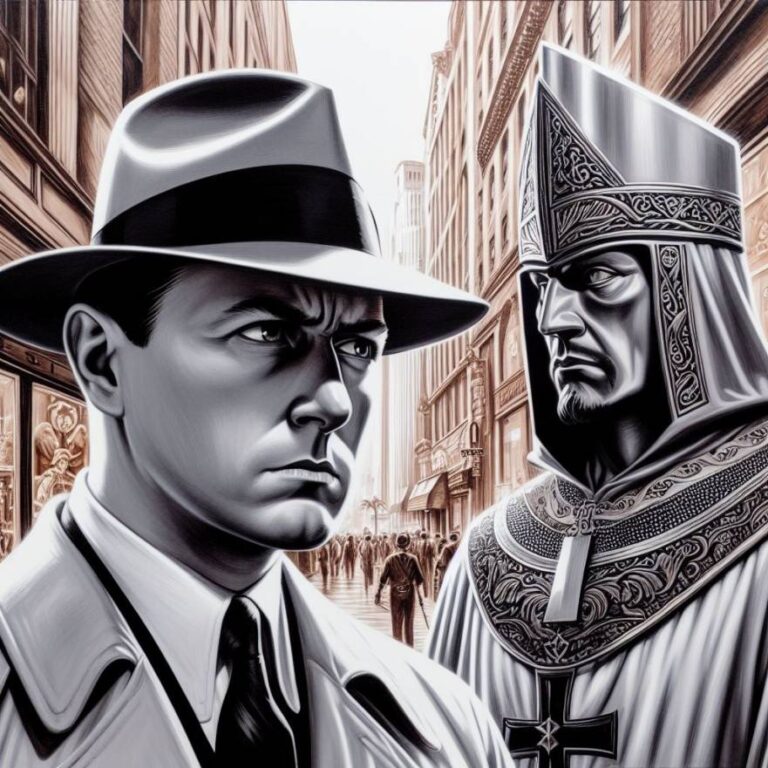
Image Source: r-q from Pixabay





Well crafted and beautifully written story that gave the reader a different perspective of the importance of the theatre to society and creatures. The quote “ rule over with benevolent and not brutality” has relevance to our current predicament.
This outwardly wistful story addressed age-old, serious societal problems: caste, violence against an underclass and the apparent essential nature of damnable international–here intergalactic–business intercourse. This fiction was, I thought, carefully and wonderfully conceived and written, in a theatre motif. My favorite line was the winsome, “he papers hailed Constable Barratek as a hero, having single-clawedly foiled the plot…”Wonderful performance, Emilie; please, an encore. You are a really terrific writer!