
Reservoir by Nick Di Carlo
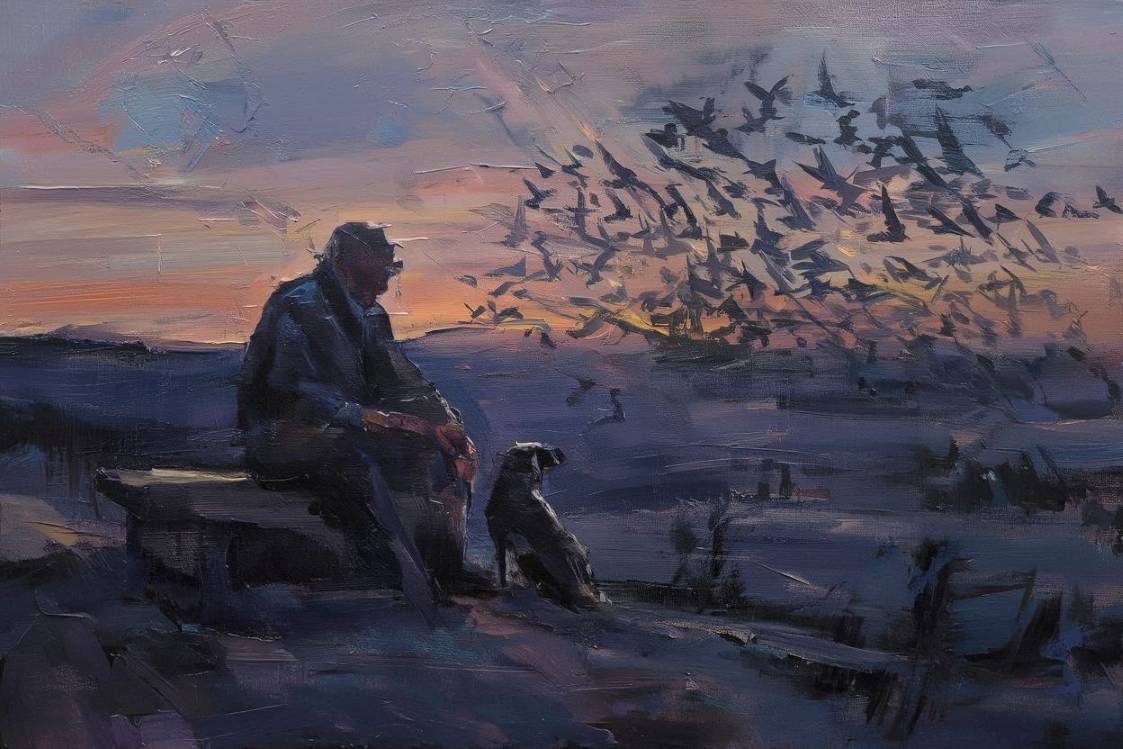
Reservoir by Nick Di Carlo
Mom’s passing left Pops at loose ends. They got hitched a month after he came home from Vietnam, forty-four years earlier. She’d been gone three years, but Pops hadn’t bounced back. I understood that he’d continued to grieve, but I saw something else going on. He wasn’t right. Physically, I mean. He seemed chronically tired. He seemed to never travel any farther than the grocery or hardware stores and back. Like he never wanted to be away from the house for more than twenty minutes.
On a Saturday morning, in late May, I picked up some pastry at his favorite bakery and stopped by to see Pops for coffee and a bit of b.s. After our second cup, he hit the head to empty his bladder. Took a while, but I didn’t think about it. As we talked, I found an opening to ask, “Pops? You sleeping okay?”
“I guess.”
“You guess?”
“I wake up a lot.”
“What? Bad dreams. Missing mom beside you?”
“Have to pee four, five times at night. I go before I hit the sack, then I’m up again every hour or so.”
“Have you seen a doctor?”
“Yeah. She prescribed pills a couple years ago. Don’t seem to help much, but…. Your Moms always said I have a bladder the size of a pea.”
“Sounds like a prostate the size of a coconut.”
“Bullshit.”
“When do you see her next?”
“Got my yearly in four months.”
“You can’t see her sooner?”
“You know how the VA is. Takes forever to get an appointment. Four months is as soon as she’ll see me again.”
We talked for a long time afterward, and I convinced Pops to get out more and workout with me at the gym. Pops made progress. Looked better. Felt better. He enjoyed his workouts, and I enjoyed being with him. So, I nagged him until he agreed to join me on my three-mile jog along the reservoir. I bought him a pair of knee sleeves, and we started slow and easy, and by August we ran together almost daily. Still, Pops needed a few port-a-potty pit stops along the way.
While running, Pops didn’t talk much. He’d always been close-mouthed, but now, except for me, he never socialized. I worried about that. One day, I asked, “Why don’t you talk to me as we run? What goes on in that head?”
“Those old guys we pass, they hobble along so slow, their tiny dogs with short legs churning a mile a minute alongside. Sometimes, the men carry the dogs like babies. I’m their age. I feel sorry for those guys. They seem lonely. Their health seems to be failing. If not for those dogs—and ya gotta feel sorry for the dogs, right?”
“Don’t you ever want company? A companion? A co-conversationalist?”
“What’s to talk about.”
The next Saturday I said, “Pops, take a ride with me while I run an errand.”
As I drove, he asked, “Where in hell are we going?”
“You’ll see. Hold your water.”
“That’s what I mean. I’ve got to pee again.”
I pulled into the animal shelter lot. “There’s a men’s room in here.”
When he finished, I walked him back to the dog kennels where I’d seen a rescued mutt I wanted to adopt. Maybe Pops would take the hint.
I left with a young Spitz named Skippy. Dad shook his head all the way to the car.
Skippy joined our runs and kept up just fine. Still, seemed like every fifteen minutes, Pops had to piss.
One day after working out, Pops checked himself in the mirror. “I’m feeling weaker and I’m losing muscle.”
“And you pee every time I blink. When’s your appointment?”
His doctor put in a “consult” for urology. They scheduled that appointment for six months away.
It’d been a dry summer, and one day Pops commented about the reservoir’s low water level and how far the shore ran out. “I’m feeling like my body’s reserves are running dry.”
He stopped, turned, “Look at those old bastards—and those tiny, tortured dogs, their eyes bulging, tongues hanging. Why do they do it?”
“Those dogs and men love each other. The dogs’ll run as long as they can, then the men will carry them.”
“So, they take turns carrying each other.”
“That’s how it works. We need something to care about, something to care for.”
Finally, he saw the urologist. Went for tests and scans, then back to the urologist who said, “Stage Five. Why did you wait so long?”
“Took a year to get an appointment.”
I drove home. Pops told me, “The doc said this ain’t a death sentence. She says it’s ‘treatable.’ But, you know, when anybody says, ‘stage five,’ they get this funny look and stare at their feet.”
Pops wasn’t a fool, so he knew the difference between “treatable” and “beatable.” First, they’d put him on hormones and meds to lower his testosterone and PSA. Then a couple months of radiation therapy, followed by at least two more years on the meds. If he was lucky, that might do the trick. Unless X, Y or Z happened. The radiation oncologist told him, “I’m treating to cure you,” suggesting that radiation could kill the cells, cure the cancer. In reality, things didn’t work like that.
A cure? I’d heard too many news reports about actors and athletes, rich men who have died “after a long battle with prostate cancer.” So, what were Pops’ chances? And what kind of battle? What kind of life?
“Never felt so lost, kid” Pops said. “Just that fast: No health. No friends. No dog. My reservoir’s gone dry.”
“Ya still got me, Pops. We’ll figure a way to beat hell out of this thing. First, let’s grab some lunch, someplace lively, lots of people. Next, we’ll find you a dog—one with long legs, long enough to keep up with us. We’ll get you active again. Then, we’ll refill your reservoir. Drop by drop.”
* * * * THE END * * * *
Copyright Nick Di Carlo 2026
Image Source: Dey from Fictom.com




I thought this was very well-written, what there was of it.. The conclusiion was very sketchy. I was unsure if Pops was living with a death sentence or if he would have additional, better years ahead of him. I adore stories which leave you with questions; well done!