Ghosts by James C. Clar
Ghosts by James C. Clar
Honolulu, 1947
I liked Honolulu best after it rained. The palms dripped silver, the streets glistened like polished obsidian and the scent of plumeria elbowed past the diesel belching from Navy trucks that barreled their way out toward Pearl. The war was over but it still cast its long shadow over just about everything: sailors still swaggered, young woman with hibiscus in their hair still flirted and politicians were talking, some more loudly than others, about statehood. Over at Smitty’s, my favorite watering hole, barroom blowhards went on about how the unions were crawling with Reds. The whole town was jumpy, like a watchdog when it hears footsteps it doesn’t recognize.
My office is one flight above a pawn shop on Hotel Street. One afternoon, I had my feet up on my desk and was watching the ceiling fan struggle with the early August heat and humidity. I was also debating whether it was still too early to have a drink from the bottle in my bottom drawer. The debate was over quickly and, as I reached down to pour myself a belt, she walked in.
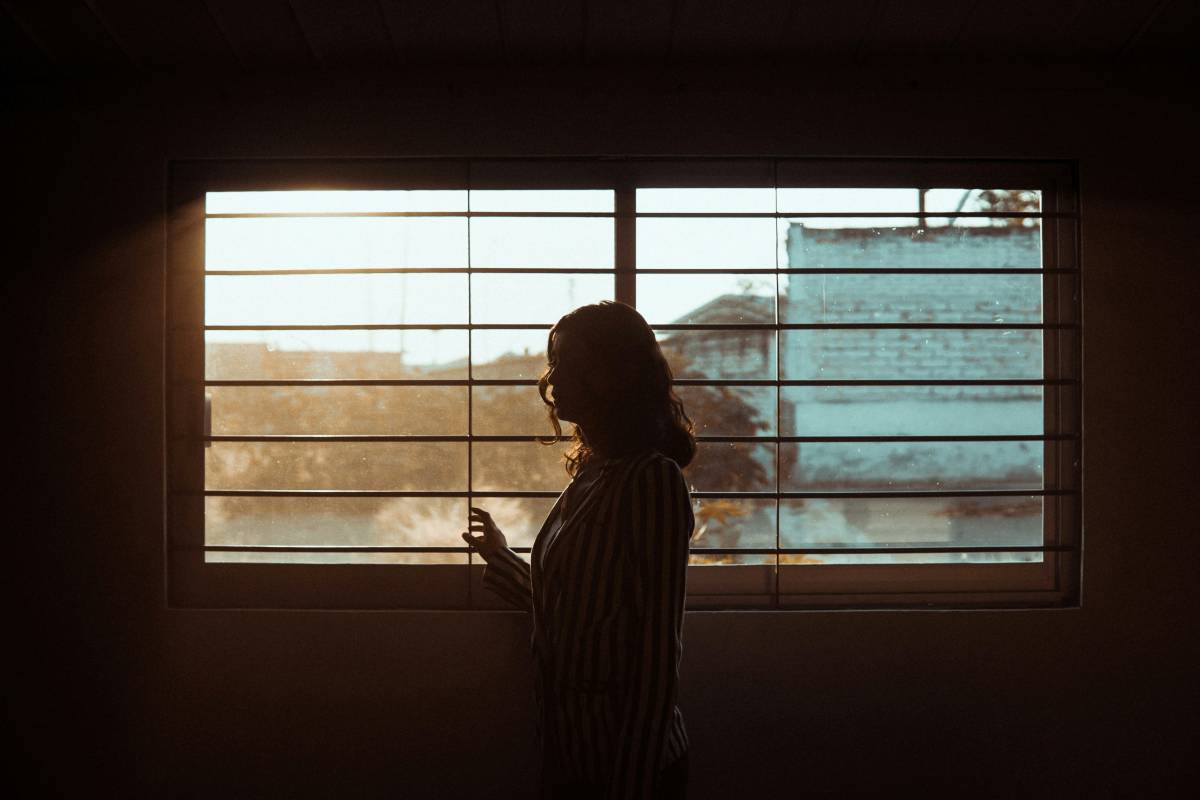
Tall, pretty in that melting pot kind of way that young island women often have. Her hair was pinned up neat, but trembling at the edges. It looked to me like she had practiced holding herself together in front of a mirror, just for this occasion.
I got up, went around to the other side of my desk and pulled the chair out for her. She sat down and immediately launched into it.
“My name is Mary Nakamura.” Her voice was soft, the kind that made you lean in, not so much so you could hear it, but out of instinct. “You’re Eddie O’Brien, the detective?”
“That’s what it says on the door.” I sat back down and lit a cigarette. “What can I do for you, Ms. Nakamura?”
“Actually,” she hesitated, “it’s Mrs. But my husband is dead … the war. I’m here about my boyfriend, I mean, he was my boyfriend … Kimo Kalakini. He works down at the docks.”
“This Kimo, is he dead … missing? Did he take something from you?”
“He’s missing,” she said, wringing a handkerchief. “It’s been five days. The police have been by. Some people, said they work with him. He stayed with us sometimes but he had his own place. People are saying I had something to do with it. They say we fought, that I …”
She swallowed, took a moment to pull herself back together enough to continue. When she did, the words gushed like they were coming from a fire hose.
“He could be rough with me, Mr. O’Brien, but I didn’t hurt him. I need someone to believe that. And I want to know what happened. Not because I want him back. Just so they stop looking at me like I’m of guilty of something. I have money, I can pay you.” You slid a thin envelope toward me across the desk.
I blew smoke toward the ceiling fan just to give it something more to do, it was looking bored.
“Let’s slow down a little, OK,” I said. “You said that your boyfriend stayed with ‘us’. Who’s us? You don’t live alone?”
“No. I have a son. His name is Jake. He’s fifteen.”
“Was this Kimo ever ‘rough’ with your son?”
Mary Nakamura looked down for a moment before answering. “I’m not sure. Never when I was around but … maybe when they were alone together.”
She just told me more than maybe she intended.
“If he treated you both like that, why did you stay with him?”
Mary Nakamura’s eyes blazed beneath a thin veil of tears. She answered not so much by way of explanation but as though she were letting me in on something about which I knew absolutely nothing. She was right.
“Because I’m a single mother. Because sometimes none of the choices life gives you are any good. And I thought having a man around would help stabilize things for my son.”
“Take that,” I said pointing to the envelope. “I’ll do some digging. If and when I come up with anything, we can settle on a fee.”
Nakamura gave me the particulars about her boyfriend. When she was done, she slipped out of the office and down the stairs like someone who was afraid the building was going to collapse on her. As her footsteps faded, I thought about the steel that lay buried beneath that quiet voice and those fiery eyes.
Later that afternoon, I took a stroll down to Honolulu Harbor. The place was crowded with commercial, passenger and stray bits of Navy traffic. In addition to the humidity, there was genuine tension in the air. Workers here were facing significant pay disparities compared to their mainland counterparts. At the same time, the so-called “Big Five” companies were pulling out all the stops to weaken or, even better, eliminate organized labor.
I learned quickly that Kimo Kalakini was well known around the docks. He had a reputation for drinking more than his paycheck weighed and for throwing punches that seldom landed where they were aimed. I ran into a stevedore I knew by the name of Tommy Scott. He had some girl trouble a couple of months or so ago – actually, it was trouble with one of the girl’s cousins – and I had helped smooth things over.
“Nobody missing that Kalakini moke,” Scott told me. “Most of us figured he was snitching for the management.” With the Red scare, everyone was jumpy. Suspicion spread faster than spilled whiskey late on a Saturday night. “Guy like that got no use for any long-term plans, if you catch my drift.” I shook Tommy’s hand and palmed him a ‘fin. I walked back to the office to get my car.
Mary Nakamura had given me an address for Kimo. It was a fleabag room out in Kalihi above a place called the Red Chamber Bar. The door was unlocked and the bed was unmade. Apart from general bachelor disarray, it didn’t look to me like the place had been tossed or that anything had been stolen. There was an La Prosa box on the top of Kalakini’s dresser. It held ten bucks and a couple of betting slips. Men planning to run don’t leave cash and potentially winning numbers tickets behind. Wherever he went or whatever had happened, Kimo planned on returning.
Downstairs, the Red Chamber Bar was the kind of place that couldn’t quite decide on a theme, so it went with a little of everything … from opium den to Tiki bar to cheap hotel lounge. The bartender, a broad-shouldered Filipino named Ferdie, was wiping glasses like he was trying to wring a confession from them.
“Kimo?” Ferdie looked up and gave the glassware a chance to reconsider its story. “He was in here one afternoon maybe a week ago. Talkin’ big, always talkin’ big, and drinking plenty. Probably took off to spend time with that girl of his. She got a son, too, drives Kimo crazy.”
“’Crazy’, how?”
“Nothin’, really. Gotta know Kimo. Always pissing and moaning about something. Said the kid was a bookworm, always underfoot. That’s all.” Ferdie took another crack at the glasses. “Funny, though, right after he left that day, two guys came in looking for him. Said they was friends of his. Right. From the looks of them, if they were his friends, Kimo don’t need no enemies.”
Ferdie laughed so hard he started to cough. He then got a clean rag and started interrogating the bar top.
A drinker, a gambler, a brawler and, possibly, an informant as well. Tommy Scott had been right. No agent in his right mind was likely to sell Kimo Kalakini a life insurance policy, that’s if he was interested in buying life insurance. It was looking more and more like his disappearance was not much of a mystery after all. Still, something the bartender said got me thinking and set a little pebble of unease rolling around in my gut.
Before calling it quits for the day, I drove over to the police station in the Walter Murray Gibson building at Merchant and Bethel. It’s stucco and terracotta exterior made it one of the most striking pieces of architecture in the city.
Inside, I found Detective Sammy Ho hammering away at an old Underwood that looked like it was getting ready to cry ‘uncle’.
“Howzit, Sammy,” I said as I stood leaning against his office door. “I need a little information.”
“Well, now,” he replied with a chuckle. “There’s a surprise. And here I thought you were going to make a contribution to the PBA.”
“Maybe next week. You know anything about a dockworker named Kimo Kalakini?”
Sammy paused for a moment. He looked genuinely surprised. I could almost see the gears spinning around behind his eyes. I lit a cigarette and gave him a moment to figure out whatever it was he was figuring out. Sammy and I weren’t exactly friends, but we had always played square with one another. If he knew anything, he’d either tell me … or he wouldn’t.
“You psychic or something, O’Brien?” Ho reached across a desk littered with paper and cigarette ash. He handed me a thin file. “Took this one earlier today. Haven’t done much with it yet.”
I wasn’t psychic, but I had a pretty good idea what the file was going to say. While I was reading, Sammy filled me in on what he knew.
“We found your boy this morning. Body was up in that cinder pit in Kaimuki, Pu’u O. Been there for a few days by the looks of things. Doc figures it was a blow to the back of the head. Some old geezer and his dog scrounging around discovered him. I’ve had a few run-ins with Kalakini over the years, a real pain in the ass. What’s your interest?”
It was Sammy’s turn to wait while I let the little wheels turn. I put the file back on Ho’s desk and told him about my case.
“Gotta tell you, O’Brien,” he said when I was done, “I don’t figure the broad for this one. Just doesn’t look like woman’s work. Another thing, Kalakini rubbed just about everybody the wrong way. For starters, there’s those two guys who were looking for him in that bar in Kalihi. I’ll take a run up there and talk to that bartender. Thanks for tip.”
“No problem, Sammy. You know me, always on the side of the angels. If you learn anything else, let me know.”
“Sure thing. Hey, if you change your mind about that donation …” Ho’s chuckle followed me down the echoing hallway and out into the late afternoon sunshine.
The following morning, I took a ride over to the Nakamura house off Waialae Avenue. Off to my right, the sere sides of Diamond Head rose up against a brilliant blue sky. There wasn’t a cloud in sight. As I climbed the hill toward Koko Head Avenue, in the distance I could see the ocean shimmering in the sunlight. It looked like it was going to be a scorcher today.
It was a Saturday so I figured Mary Nakamura might be home. The place was not much more than a patchwork bungalow surrounded by wisteria and hibiscus, but it was tidy and well-tended. Jake opened the door. He was skinny and clearly shy. He had the eyes of what my grandmother used to call an “old soul:” eyes too old for a kid who was only fifteen. It was a look I recognized, a look of a kid who was better at taking care of the adults in his life than they were at taking care of him … or of themselves.
“Your mom at home?” I asked. “My name’s Eddie O’Brien.”
“I know who you are. My mom told me about you. She’s working today, at the cannery.” Jake hesitated a moment then, his manners overcame his wariness. “You want some water or something to drink? It’s hot out there.”
“Sure,” I said as I followed him inside. The place smelled of soap, furniture polish and last night’s dinner. Jake poured me some cold pineapple juice and handed me the glass. On the kitchen table were three math books and two extra chairs, pushed back like whoever had been sitting in him them had exited stage left. Jake went over and latched the back door.
“You studying with friends?” I asked as casually as I could.
The boy nodded. “Guys from the neighborhood. They’re here a lot. Mom likes to know where I am. Says that, this way, she knows we’re all safe.”
“Smart lady.” I sat down in one of the chairs, took a sip of my juice. “You or your mom hear anything more about Kimo?”
“No sir. Why? I mean, I know why but …” Jake turned around and started fussing with the dishes in the sink. “Kimo was loud sometimes. He’d lose his temper. But my mother wouldn’t do anything to hurt him.”
“I think you’re right,” I said as I walked over and put my empty glass on the drainboard. “But I’m also pretty sure that someone did.” His back still to me, Jake stiffened. It was a small movement, but enough.
I left without pushing the kid any further, and without telling him what I already knew about Kimo. I owed it to the boy’s mother to give her that news first. Once I did that, I figured my job was finished. I certainly hadn’t done anything to earn a fee. Still, Mary Nakamura was, by all accounts, in the clear with the cops. It was up to them now to figure out who had killed Kalakini.
On the drive back into the city, that little pebble of unease in my stomach had become the size of a boulder, the kind that sometimes falls and blocks the old Pali Highway.
Monday morning, I was sitting in the office catching up on my foot dangling. I was trying to keep up with the old ceiling fan that was still waging a losing battle with the heat. Mary Nakamura was going to come by on her way to work so I could fill her in. My phone rang. It was Sammy Ho.
“O’Brien,” he said when I picked up. “Got news. Think we got the boys who did for that Kimo Kalakini.” Momentarily, my breath caught in my throat. “Seems our guy Kimo lost his shirt a couple of months ago at a joint owned by, get this, Warren Mitshke. He couldn’t pay up, so ole’ Warren sent a couple of heavies after him. You still there?”
“I’m listening, Sammy.”
“Well, they tracked Kimo down to that quarry. They were only supposed to rough him up, send a message. Things must have gotten out of hand.”
“As such things often do.”
“Sure. We got them dead to rights. For Kalakini and for another guy who was found down at the docks back in February. Funny thing, though, they admit to that one but insist that when they found Kalakini, he was already dead.”
“Any witnesses?” I asked.
“Nah. They say they say two or three neighborhood kids foolin’ around up there, but there’s nothing in that. Besides, no one over here’s going to waste much more time on this, if you know what I mean. We got three players taken off the board in one move. Case closed.”
Case closed, indeed. I thanked Ho for the update, promised him tickets to ballet and hung up.
An hour or so later, Mary Nakamura showed up. The strain of the last few weeks was taking a toll, but she still had that same smoldering fire in her eyes. I explained what I had learned and what Ho had told me. She looked visibly relieved and insisted on paying for my time. Said it was worth it. That she could now get on with her life. I let her give me twenty bucks; one day’s worth and no expenses. I felt like a heel taking even that.
I sat in the office for two hours, thinking. I closed up and walked over the Smitty’s for a burger. Washed it down with a beer from a tap that hadn’t been cleaned since Roosevelt was president … Teddy, that is. Went back, got in the car and took another ride into Kaimuki. One of these days I’d learn to let sleeping dogs lie. Didn’t look like today was going to be that day.
It was around 2:30 P.M. School would be letting out. Figured that if Jake Nakamura and his friends were anything like I was when I was their age, they’d be looking for a snack before heading home. Sure enough, there he was with his buddies in front of a crack seed store on Koko Head Avenue. I pulled over and parked my heap. As soon as Jake’s pals saw me, they scampered. To his credit, the kid stood his ground.
“Jake,” I said as I approached, “we need to talk.”
He shrugged his shoulders and gave me the classic teenage, ‘Me? I haven’t done anything worth talking about’ look.
“Let’s not start that, O.K.” I took him gently by the shoulder and steered him over toward my car where we had some privacy. I leaned against the hood. “You’re going to tell me what happened up at the cinder pit,” I pointed toward Pu’u O at the end of the street. “I know something did. For starters, how did you get Kimo up there … or did you guys follow him?”
Jake took a few seconds, then gave me the resigned look of a dog who’s finally decided to stop tugging at the leash.
“We were hanging out in the kitchen that afternoon, after school, like always. Mom was still at work. Kimo came in. He had been drinking, again. When he got like that, he’d believe just about anything. I don’t know who started it. Maybe Keoni, maybe Billy? Anyhow, once it started, we all played along. Told Kimo that we found a bag full of money and hid it up near the quarry.”
“Guy like, Kimo,” I said as I lit a cigarette, “that must have set his motor racing.”
“It sure did. He told us to show him. We took him up there, made it like we were looking around. It was just before sunset. At one point Billy started laughing. When Kimo heard him, he must have realized we were pranking him. He punched Billy in the face, knocked him down. I had a rock in my hand. No idea why. I just picked it up to, like … have something to hold onto.”
Jake shuffled his feet and looked down. It was like he was travelling back in time to that afternoon.
“Go on, son.”
“Kimo reached down and grabbed Billy. I thought he was going to hit him again.”
“And you gave him one with the rock you were holding?”
“Yes, sir. I didn’t even realize what I was doing … it kind of … just happened. I didn’t mean to hurt him. I just didn’t want him to hit Billy again. Mr. O’Brien, you gotta believe me. It was an accident, like, I don’t know, not an accident but … a reflex. Do you know what I mean?”
“I sure do, more than you can imagine. What happened next?”
“We heard a car coming up the hill, then doors closing, so we took off. Later, Keoni and I snuck out of our houses and went back up the hill. We tried to hide … you know … the body.” Jake paused and looked up at me. “You going to turn me in?”
“Not now, not ever, Jake. The cops arrested the two guys you and your friends heard coming up the hill. They didn’t kill Kimo, but the police don’t know that. Those men hurt plenty of other people and are going away for a long time regardless. Nobody’s going to be doing much digging beyond that. Why would they? Even if you told them what happened, I doubt they’d do too much with it. After all, you were protecting your friend.”
I finished my cigarette and stood up. “Still, you did what you did. I can’t tell you what your next move should be. That’s up to you. Before you decide. You need to think about your friends, and your mom.”
Jake looked at me. He wanted an answer, a road map. I didn’t have one. Not for him. Not for anyone. Sometimes you had to chart your own course, even at fifteen.
I walked around to the driver’s side door. “Let me tell you something, kid,” I said before getting in. “It may help you, or it might just sound crazy. I see ghosts. Lots of them. I see them at night when I can’t sleep, when I’ve had too much to drink, and sometimes in the middle of the day when I’m just sitting in the office pretending to be busy. They don’t mean me any harm. Not anymore. They just want to remind me that, wherever they are, I’m the guy that put them there. I’ve learned to live with them.” I paused, looked Jake square in the eyes. He didn’t flinch. “You have a ghost now, too.”
I got in the car, shut the door and drove off. I hated to leave the boy like that, but there was nothing more I could do for him. He and his mother were alone, just like they were when Mary Nakumura hired me. I worked my way back into town. It started to rain as I was passing Palolo Valley on the right. Typical ‘mauka showers. I had no idea what decision Jake was going to make. As far as his ghost was concerned, the boy had the same look in his eyes as his mother, he could handle it. Me? I always liked it after it rained. Things seemed cleaner, clearer, brighter; meant I’d be free of my ghosts … for a little while at least.
* * * * The End * * * *
Copyright James C. Clar 2026
Image Source: Diego San from Unsplash.com



I thought this was very well-written, what there was of it.. The conclusiion was very sketchy. I was unsure if…