
Newberry’s Greatest Challenge (Otherwise Known as The Unhappy Tale of Benjamin Gray) by Daryl Rothman
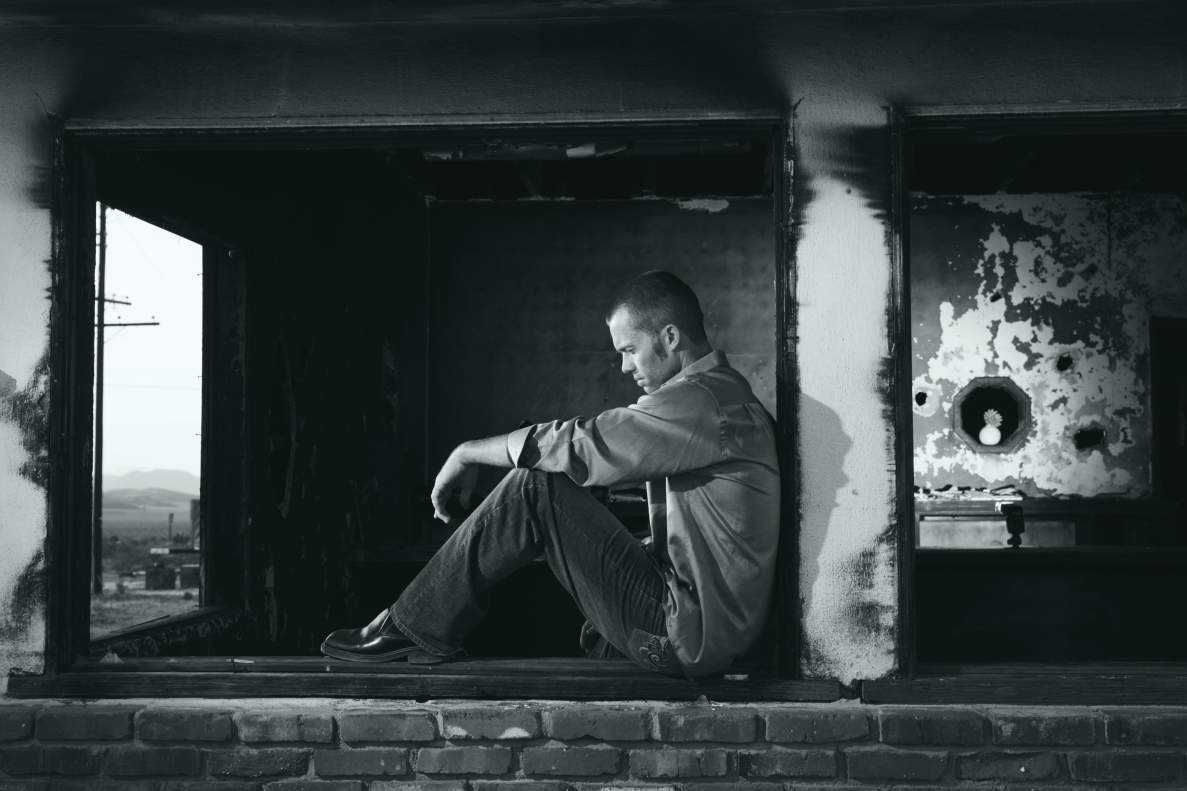
Newberry’s Greatest Challenge (Otherwise Known as The Unhappy Tale of Benjamin Gray) by Daryl Rothman
By the end, few knew Benjamin Gray, so shut off from the world had he become, but those who had known him once would have shaken their heads at his unhappy state of affairs. There is no need to recount his childhood, though the encounter with the child was in fact the fulcrum upon which his story began to turn. Up until this moment, his had been a happy life and it is an admittedly sad irony that the happiest of stories are far too often the least interesting. He was a tenured professor of philosophy at the small college in the small mountain town and lodged during the school year in a campus apartment just a few blocks from the school. On all but the most intemperate of days he walked to work beneath a beautiful, sheltering canopy of American Elms, which were so large and had towered for so long that they now bent and curved under their own weight, swaddling him in serenity and contentment as he strode. He made a decent living and paid his bills. He owned a small cottage on the outskirts of town, where he spent summers and the occasional weekend. The cottage was delightfully ensconced within a dense tract of woods, overlooking a small pond. When summer gave way to fall, falling temperatures cooled the warm air masses, inducing the water vapor within to quickly condense into a beautiful, serene fog. But on clear days you could look over the tree line at the beautiful mountains towering just a few miles away. The occasional black bear or mountain lion would wander down and forage in the woods and drink from the pond, but this was rare indeed and they usually bounded off upon spotting him.
Benjamin was typically cheerful and generous, opening his home and heart to family and friends and even the occasional stranger in need. He loved people; he loved life. What is a man without love, he was fond of saying. He had once loved a woman named Annabel, a beauty fifteen years his junior who worked in the library in the heart of town. She loved him too and they were set to marry, but it was around this time that he encountered the child and everything, including plans of matrimony, changed.
It was against one of his beloved elms that the child was perched on that particular morning in late fall. At first Benjamin could not discern the gender, for the hair was long and unkempt and the cold, fall wind had swept it over the child’s face but when the child brushed the hair aside with a very thin and pale hand, he could see it was a boy. He would remember that thin and pale hand for the rest of his years, not on account of its gauntness or pallor, but for the absence of its twin on the boy’s other arm. The boy appeared to be perhaps ten years of age, but Benjamin could not be certain—he looked at once impossibly old and impossibly young. The boy retrieved a coffee can from the ground beside him; what could not have been more than two or three coins clanked faintly as he did so.
“Please sir,” he said.
On the handful of instances prior to this when Benjamin had encountered a mendicant of any sort, he’d been immediately gracious, sometimes to the consternation of those alongside him. “What are you doing,” his friends would ask, shaking their heads as he handed over loose change or even a stray bill or two. “They’re too lazy too work,” they would say, “You shouldn’t encourage them.” His friends insisted vagrants would only buy alcohol or drugs with any charity he was naïve enough to bestow. Benjamin would take umbrage at their callousness and presumption.
“Until you walk a mile in their shoes,” he’d say, “you don’t know what they’ve been through. Why not err on the side of kindness?” And so yes, he was a kind and generous man, but he paused in this moment upon encountering the boy under the elm, for on not one of the previous instances in question had the supplicant been a child.
“Please sir,” the boy said again, and Benjamin snapped from his stupor and thrust his hands into his pockets. He extracted perhaps a dollar in change and dropped it with a quivering hand into the boy’s coffee can. The boy managed a smile. “Thanks,” he said. The cold wind blew his hair back over his face. A great shame overcame Benjamin and he cursed himself silently and retrieved his wallet from his back trouser pocket. He regarded its contents momentarily—a few twenties, a few fives, and a few ones—before snatching out each. He folded the bills up carefully and placed them into the coffee can.
“Careful with this,” he said. The boy smiled more fully and started to scramble to his feet. Holding the coffee cup in his hand he attempted to brace himself on the ground with his other arm, but slipped and hit the cold ground shoulder first with an audible grunt. Benjamin quickly bent down and helped him up.
“Thanks,” the boy said. “I’ll take this right home.”
“Where do you live?”
The boy gestured to his left with his head. “Denton Heights,” he said. “We have a little apartment.” Denton Heights was a few neighborhoods over, maybe a twenty-minute walk. One of the poorest neighborhoods in the state. Not far, but it might as well have been light years away, so shamefully inculcated within his own comfortable boundaries Benjamin now realized he had always been.
“You and your parents?” he asked the boy.
“Me and my mom and sister,” said the boy. “I don’t have a dad.”
“I see,” Benjamin said. His eyes traveled once more to the boy’s shorter arm.
“Gangrene,” said the boy, with a heartrending nonchalance. “Cut my hand opening a can. Got infected. Ma didn’t have money for medicine, and it got a lot worse. They had to cut it off.”
“How old are you?”
“Nine.”
“You’re not in school? Aren’t you supposed to be in school?”
The boy looked at Benjamin as if he’d like a cigarette.
“Nah,” he said. “Nobody knows; nobody cares. Besides, I have to work. We ain’t got no heat, and winter’s coming.”
A sluggish awareness began to foment inside of Benjamin, then embarrassment at his own ignorance and they congealed with his burgeoning shame into a hideous spiritual sludge. He was at the time forty-seven years of age, but understood in this moment that he had not truly lived a day. How could he consider himself to have lived if he had done so sheltered under a blanket of ignorance, under a protective canopy of elms, so shut off from the misery of his fellow man?
One might have characterized this harsh self-admonition as somewhat unfair—Benjamin Gray had, within the boundaries of his world, been a kind and generous soul. But those boundaries had now been compromised and began to crumble. Benjamin began to change. He developed little quirks, imperceptible to those around him after first, but they quickly effervesced into increasingly obvious habits. Some or the habits in and of themselves and in their earliest manifestations were in fact nothing short of benevolent. For as the walls around him crumbled, as the swaddle of naïveté was unpeeled, he was imbued with an insatiable compulsion to compensate for all that he should have been doing all of these years. His occasional moments of charity up until that point were laughable, mere ripples within his small, remote, disconnected pond. There was so much suffering and injustice all around him and he knew he must do so much more, and set about accordingly. Whenever he saw a panhandler, he gave generously: money, and sometimes food, shelter, or transportation. He increased the variety and sums of his charitable donations. His fiancé grew concerned–not from lack of compassion–but from a place of practical consideration. Benjamin’s prodigious acts of charity were laudable, noble even, but they were to be married, have a home, raise children perhaps– all of these things carried a cost. At this rate, they would soon be requiring of some of the very same generosity which her husband to be was now so obsessed with dispensing.
It was obsession indeed. When Annabel delicately but insistently conveyed her concerns, Benjamin grew agitated, scolding her and expressing disappointment at her selfishness. When she persisted, commending his generous spirit but imploring some measure of balance and perspective–for surely, they must themselves be able to eat, have a home, a car, certain possessions and amenities–his agitation escalated and bordered on rage. How, he demanded of her, could they prance happily through their lives, giddy with obliviousness and denial, the cupboard of their lives overflowing so shamefully, while so many others went without? To live such lives, he insisted, was to imprison one’s soul, shackled eternally by the false paragons that were money, prosperity, and material things. It now became apparent to Annabel that he was intent on unburdening them of all of these things. And so, it was with the heaviest or hearts that she canceled their marriage plans, moved from her apartment, and left town. Benjamin was distraught but figured that her decision had been made in haste and that she would soon return. This was a gross misjudgment on his part, the most compelling example yet of his evaporating sense of perspective. She did not return. And when she did not return Benjamin visited her family, but they said she was not there and indeed he saw no sign of her, and they also said they were obliged to honor her wishes to not share where it was she had gone. Benjamin checked at the library–Annabel had in fact resigned her position there and they too professed ignorance as to her current whereabouts. He checked with some of her friends; if they knew where she was, they weren’t telling. Benjamin returned home.
He was sorrowful, inconsolable for a time, but the loss served not to jar him from his obsession, but rather to deepen it. Had he known his fiancé was so preoccupied with material needs and self-interest, he wouldn’t have sought her hand in the first place. “We are on different paths,” he told himself. This was unquestionably true. Also true was the sad reality that Annabel’s decision had been prompted less by their diminishing bank account than it had by Benjamin’s deteriorating mental state. Whereas he had once been commendably charitable and fun-loving, he was now somehow angry in his all-consuming benevolence and increasingly ill-natured. He was sanctimonious with friends and colleagues, and admonishing and belligerent when they failed to become as devoted to the cause as he.
“I’d say, Gray, you’ve become rather insufferable with this lecturing,” a colleague remonstrated him one afternoon in the faculty lounge. Professor Newberry taught American literature and harbored a particular fondness for Poe, especially those stories involving Detective Auguste C. Dupin, the progenitor for the modern detective story. Woe to the unsuspecting individual who proclaimed an allegiance to Sherlock Holmes–who, Newberry reminded anyone who would listen–didn’t arrive onto the scene until nearly a half-century later. “A mere knock off,” he would say, and he fancied himself something of this as well, deriving great enjoyment from any opportunity to help a student or colleague solve a mystery, even something mundane as locating a lost book or set of keys. Students and faculty alike attempted to stump him. This occurred both informally and formally; in the latter instance, it became tradition for a group of colleagues and/or students or an intrepid individual to conjure a mystery that would at last befuddle the good professor. The Newberry Challenge, it came to be called. No one had succeeded yet, though he reveled in the contest. But he was hardly in a good humor that afternoon with his colleague, the professor of philosophy.
“You may blame the messenger all you wish,” Benjamin told him. “But that does not alter the truth. What should be insufferable is the misery and plight all around you, which you choose not to see.”
“That,” replied Newberry, “is hardly for you to say. You do not know what I see, or what I do. As it so happens, as if it is your business, when I see such misery, I respond as generously as I am able.”
Benjamin snorted. “Impossible,” he said. “Were that true–of yourself, or any one of us– we would not be sitting here now, draped in our comfortable trappings, while countless others are as we speak going hungry or searching desperately for a place to spend the frigid night. What you cannot see, what we all have turned a blind eye to, is that which has existed all around us in plain sight–a purloined letter, if you will.”
Newberry was unmoved by the clearly intentional reference and excused himself from the room. “You’ve gone batty,” he said, on the way out. “No wonder your fiancé ran off.” He felt immediately remorseful upon tendering this last remark, but thus had been the degree of his irritation. He was not the only one. The rest of the faculty had all wearied of Benjamin’s antagonism, even his closest friends on staff, Harvey Miller, Professor of Psychology, and Willard Hodgewinkle, Processor of Military History. Miller, perhaps believing—rightly—his friend to be experiencing some sort of psychological episode, was the most patient, but his tolerance ultimately waned too. This did not make Benjamin unhappy, and had it, it would have been just as well: happiness–his own and others’–warranted recrimination, so long as there were so many unhappy souls in their midst. Happiness was a distraction to his calling, a calling ascribed to him with clarion certitude that cold, fall day when he met the boy by the elm. The only thing distracting him was a gnawing sense of the magnitude of his task. It crept into his consciousness with increasing frequency, this realization that his was a burden of Herculean proportions. He had worked tirelessly to expand his efforts beyond his own small pond, and he’d known there were innumerable more ponds– and rivers– and lakes, but now he understood it was much greater than that. It was an endless ocean, and he was scarcely ankle deep.
He continued on for a while, giving money, time, taking brief sabbaticals from the college to travel to impoverished neighborhoods and towns and assisting at shelters, food banks and soup kitchens. But it was no use—it was never enough. For every person he helped, for every day he devoted, there were infinitely more people in need, exponentially more time and resources required to attend to those needs. And, just like that, he stopped. His friend the psychology professor could have told him this was the nature of such manic conditions as his. To be compelled, precipitously, down a sudden path and to embark upon it with unusual and—almost always—unsustainable fervor. The behavior—in a week, a month, a year—would just as abruptly come to an end, followed by another impulse, or a period of melancholy and malaise, or, in the best-case scenario, a cessation of the unhealthy pattern. Previous infatuations would seem distant and trivial. Yes, his friend Miller could have told him this, but Benjamin would have dismissed it out of hand. He was indeed now lost in a quagmire of depression, but he hardly regarded the cause which had consumed him as frivolous; to the contrary, it was his failure in a mission of such gravity that had propelled him into his current state.
The guilt began to plague him. It haunted him like a legion of ghosts, a forlorn and angry chorus of souls he had failed and left to their misery. He could not blame them, but still, a man must retain some semblance of sanity. He must block it all out, but how? The guilt was pervasive, the spirits omnipresent, the voices wailing endlessly. He contracted his existence as narrowly as he could. Not only did he cease venturing off to outside neighborhoods or towns, but navigated only those routes which were absolutely mandatory within his own: the college, the grocery, little else. He did not wish to see people, even the people he had to see, such as colleagues at the school. He particularly did not want to see poor children against elms. He began driving his car to work, even though it was only a few blocks. He felt a bit better inside the vehicle and kept the windows always closed. His colleagues might have regarded all this as strange, but they had long since stopped being surprised by strange things he did.
He had never been much of a television watcher, but he had watched the news each evening and now he stopped doing this. He received a daily paper at his campus apartment and though he did not cancel the delivery he stopped reading them and soon there was a jumbled stack of unopened papers growing in a corner of his study. He began missing work. A day here or there at first, but it quickly escalated to where he was absent from his post more than present. He was tenured, so could not be penalized, but the school was not pleased, and a concern grew that whatever condition was assailing Benjamin, it posed a threat not only to his ability to be present in the classroom, but to his ability to perform his duties adequately when he was. But Benjamin resolved the matter—for the time-being, anyway—soon enough. He had hoped at first that he could immerse himself in his teaching and thus allay all which troubled him for at least those several hours each day. But the reverse in fact happened: reminders were everywhere. Students and faculty went about their business as if they hadn’t a care in the world. Oh, they sometimes griped of the most inconsequential matters—a poor grade, a winter cold, an argument with the wife. But they did not know true suffering. Yet the topic of suffering and moral obligation arose in conversation in his own classroom and at times in the faculty lounge with colleagues. He could not escape it–and so he had to escape it–and asked for an indefinite sabbatical, which the college was only too happy to grant. He retreated to his home in the woods–it was winter now and ice had formed on the pond and fog hovered above it and around his home. For this he was grateful. He did not think it consciously but had he, his thought would have been that the fog would make things tougher for anyone or anything trying to find him. Still, he took no chances. He bought and affixed additional padlocks for his doors, and extra shudders for his windows. When he went to the grocery he bought copiously, so he would be well-stocked and not have to return for a considerable time. He had contracted as fully as possible, but before long a terrible irony began to loom over him. So utterly had he succeeded in shutting out the world, every external reminder of that which so troubled him, that he was left now with nothing, but his own thoughts and these thoughts washed over him until he felt certain he would drown. They were worse than the external reminders and he realized those reminders had at least comprised distractions from that which tormented him from within.
He drank. He had always enjoyed a drink now and again but that was when he was cheerful and untroubled. Now he drank in a different way. He’d used to enjoy a scotch and soda but now he drank only the scotch and sometimes he gulped it, and it burned his throat and when it did, he was glad because he felt the pain was something he deserved. Still, he knew his drinking was cowardly. Evenings after dinner he would take his bottle of scotch and sometimes a glass and sometimes not and sit outside and watch the fog spreading from the pond. It was winter and he was cold and the cold stung and he was glad for this too. At least the drink and the cold and the pain offered temporary respite from his thoughts. But only temporary. He longed more than anything for the freedom which sleep would provide, but most nights he lay in the darkness and sleep seemed never to come and it was then that the worst thoughts came. On one particular evening after he’d come in from drinking and watching the fog, he lay in the darkness longing for sleep but again it would not come and on this night, he had the worst thought of all. He had long realized he did not possess the answer to that which troubled him, but now a new realization struck him, stung him like the bitter cold. It was the realization that he not only possessed no answers, but also did not know to which questions any such answers might belong. How to be happy? He did not want this answer because since the day with the boy by the elm he’d understood happiness was unacceptable while there was so much unhappiness around him. How to be unhappy, then? This he had mastered, but still he was tormented, for he had still failed to end the suffering around him. He had no answers, and he had no questions. He shuffled through his days drowning in thoughts and drinking and longing for distractions and longing for sleep. The days blurred.
The days blurred and he lost sight of dates and time and the fact that his birthday was upcoming. But the college maintained a calendar of such things for its faculty and always held a party when one of them had a birthday. Regardless of their feelings about Benjamin’s behavior these last few months he was still their colleague, and they would not be so petty as to forego a party for him. And perhaps it might bring him some cheer, shake him from his doldrums. They planned a casual celebration, to be held at the college on Benjamin’s birthday, and sent an invitation to Benjamin’s home on the pond. He received the invitation and regarded it dispassionately. It was tendered as a matter of professional courtesy, he understood; he mailed back his acceptance, a matter of professional courtesy as well.
Doldrums, his colleagues quickly realized upon seeing him at the party, was far too polite a characterization. Benjamin looked awful. Awful and strangely incongruous, asymmetrical somehow. He looked haggard, yet intense; his face was drawn and gaunt and hollow, yet his belly protruded terribly from over-indulgence in food and drink. He had not cut his hair since he’d left. It was thinner now, grayer, but that which remained was long and unkempt. More than one of his colleagues had some variety of the same thought—namely, that Benjamin looked not at all unlike some of those less fortunate souls he had been so consumed with aiding. But they did not wish stare. Hodgewinkle broke the silence.
“Nice to see you, old chap,” he said, patting Benjamin on the shoulder. He gestured toward his friend’s protruding belly. “I see there’s no shortage of cookies down on the pond,” he said. If Hodgewinkle had even subconsciously presumed his friend’s newfound rotundness corresponded with even the slightest degree of jocularity, he was mistaken. Benjamin did not laugh. He had given no thought to his eating, neither during the act of consumption nor at any point. He did not eat for enjoyment, or for any particular reason beyond the fact that he was a living organism and required food. He had lost all sense of proportion and degree, and as for appearance, he gave this no thought as well, for to do so would have constituted an unacceptable vanity.
Benjamin and his guests sat around a table to enjoy soft drinks and coffee and a birthday cake. “Thank you,” he said, when his friend Miller passed him the first slice of cake. He waited politely for everyone to receive theirs before taking a bite. It was good, but he did not permit himself to think much about that. He chewed his food and swallowed, because it was food and that was what you did. He poured himself some coffee but poured too much and it overflowed and spilled onto his hand and the table. It was hot on his hand and hurt a little, but this was alright.
“Here,” said his friend Miller, handing him a few napkins and using his own to help sop up the spill. Benjamin thanked him, got another cup, and poured the coffee again. This time he poured scarcely a drizzle. Miller looked at him strangely, and the room was silent.
Finally, Chancellor Yarborough spoke up, thanking Benjamin for coming and wishing him a happy birthday. His colleagues engaged him in small talk, chattering away as though determined to avoid any protracted silence. Benjamin participated dispassionately, reflexively. They asked him about his house on the pond and the weather (as if he had moved to some far away region), and told him about goings on at the college. A student, for example, in the most brazen challenge yet to Professor Newberry, had stolen and hidden the final exam somewhere within the English Building. Chancellor Yarbrough was mightily displeased, and inclined to punish the student (whose popularity immediately soared to legendary status), but Newberry urged restraint, promising he would meet the challenge, find the test, and administer it before the semester concluded. So confident had he been in his ability to do so that he promised his students if he failed to find the stolen test, he would not redraft a new one and they would be reprieved of a final exam. (The student’s popularity soared exponentially further upon this announcement). They were to report to class the day of the exam, and would receive at their desks either the recovered test, or a written admission of failure for their professor. The student who had pilfered the exam would, naturally, be able to vouch for whether any test placed before them was the original, as opposed to newly drafted. Test day had come; students assumed their places at desks; the final exam was administered. (The student’s popularity dwindled.) Benjamin listened as his colleagues recounted this tale, and he listened as Newberry channeled his best Dupin in describing how he had pieced together the answers to this particular challenge. He spoke of habits and patterns and behaviors and deduction—Benjamin listened, and nodded occasionally, as was the courteous thing to do.
It was now time for gifts. Not everyone had brought one, which was perfectly acceptable–typically only one’s more intimate acquaintances on staff did so, though most at the very least gave a card. There were gifts from Hodgewinkle and Miller. Hodgewinkle gave him a rifle—a reproduction of a model 1861 Springfield, from his prized Civil War collection. It may have seemed to some an odd gift, but Benjamin was unsurprised. Hodgewinkle was a passionate collector of military weaponry. Benjamin did not want a rifle, but he was not upset. He didn’t want anything.
“Thank you,” he told Hodgewinkle.
“Limited edition,” Hodgewinkle said proudly. “I have an original, in my collection. Still shoots, though that would degrade its worth. But you can shoot yours; never know when you might have a run in with one of those wandering bears.” Benjamin forced a smile. “I included the ammo,” Hodgewinkle continued. “You load the cartridge and then the minie ball.Let me show you.” Benjamin waited patiently while Hodgewinkle demonstrated proper technique for loading the weapon.
“Shooting hand does the gripping,” Hodgewinkle said next. “Keep a tight grip; this has more power than you might expect. Your other hand is a rest for the forestock.” He glanced at Benjamin as he might a pupil, to ensure he still owned his attention. “Cheek against the stock, look over the barrel, through the sights. Elbow of your firing hand points sideways. Butt of the rifle rests between your shoulder and ribs. Like this.” Hodgewinkle turned to the side, bringing his feet parallel with the left foot leading, and leveled the weapon in the manner he had described.
“Thank you,” Benjamin told Hodgewinkle again.
Hodgewinkle emptied the weapon and lowered it onto the table. “Always rest it muzzle up,” he said. Benjamin nodded. He thought how he would look funny carrying the rifle out to his car. Now Miller gestured toward the gift he’d brought.
“Open it,” he said. Benjamin did and couldn’t help but be struck by the beauty of the item. It was a pendulum clock, finely hand-crafted, the timepiece suspended from two intersecting wooden arches. It looked to be around ten inches at its apex, with a base perhaps twelve inches by three. “Time is a gift, my friend,” said Miller. “It is my hope you shall spend yours well.” Everyone looked at Benjamin. He ran his hand along the curve of one of the smooth wooden arches. “Walnut and maple,” Miller said. Benjamin nodded appreciatively. He could not say that the gift brought him happiness, for happiness was not to be his, but he was grateful for the gesture.
“Very kind,” he told Miller. He regarded the timepiece, which was for the moment, still.
“You set it in motion when you’re ready,” said Ingrid Burmeister, Professor of Physics, as though on cue. “It’s full of potential energy and you have to set it in motion, and it will begin its arc. Two forces act upon it—gravity, and internal force, and tension, an external force.” She paused. “I can get into more detail, if you wish.”
Benjamin smiled politely. “That is alright,” he said. “Thank you.”
“I shall defer to our esteemed colleague on the psychics of the thing,” said Miller. “But I can speak to its psychology. Many use it for relaxation, meditation. It’s lulling, peaceful. Back and forth, slowly, smoothly. Draws you in. Lose yourself in it; find yourself. Many therapists use it with their patients.” The room was quiet. “Not,” said Miller, “that you need it for that.”
Benjamin opened each of the cards, mustering a smile and proffering the requisite gratitude to the colleague who’d given it. But in the last envelope was a letter, handwritten, from Newberry. Benjamin did not know—and even had forgotten the incident in question-but Newberry had felt more remorseful than he let on following the terse exchange shared between them all those months ago in the faculty lounge. He determined to make it up to his troubled colleague, and had for months been contemplating just how to do so. This would prove more exacting than any Newberry Challenge to date: discerning the deepest desire of an unwell, self-imprisoned man, and bringing it to fruition. He had been relentless in his endeavor, and wholly clandestine. It had not been easy. A smile crept over his lips as he watched Benjamin read his letter.
Professor Gray,
Happy Birthday!
Despite my best efforts, I was unable to secure your gift in time for this afternoon’s festivities. I ask your forgiveness, and ask you to expect its arrival at your home on the pond within the next several days. I humbly suggest that you shall be considerably pleased.
Finest regards,
Newberry~
Benjamin mustered a smile, thanked Newberry, folded the letter, and returned to it its envelope. It was a kind gesture, though odd—he and Newberry were not close, and had never before exchanged gifts. He appreciated the gesture but was mildly perturbed at the notion of a delivery at his home at some undetermined day and hour. He had once been cheerful and generous and quick to open his home but now he did not let anyone in, and desired no visitors. Anxiety began to creep over him. Newberry, meanwhile, was the picture of contentment. He eyed the pendulum clock, given by Miller. “May I?” he inquired, and then, without awaiting the answer, gave the timepiece a nudge with his finger. The second hand ticked forward, one, two, three, beginning its orbit, and the pendulum swung into motion.
Back at the pond, Benjamin placed the rifle and ammunition upon his living room table, along with the birthday cards he’d received. The pendulum clock he placed upon his mantle above the hearth. It was a beautiful ornament, and though he could derive no happiness from it, it was nevertheless deserving of prominent placement in his home. He went to the kitchen and grabbed his scotch and this time he did permit himself some soda too and he poured the drinks into his glass but did not go outside as usual but instead sat in the easy chair across from the mantle. He had accustomed himself to the avoidance of pleasure and so this leisurely moment was not about that–it seemed to him, rather, more an obligatory gesture in light of the impressive and thoughtful gift bestowed upon him by his friend Miller. Yes, he thought: I must sit for a while and have my drink. I must sit and look at the pendulum. My friend Miller was kind and gave me this gift and so at least for a few minutes, this is what I must do.
He watched the pendulum swing.
Back, forth. Back, forth. Rhythmic. But something was wrong. Miller had exalted the object as an instrument of serenity but watching it now, Benjamin felt nothing of the sort. It wouldn’t stop moving. Back, forth. Back, forth. Nothing was gained by this, he thought. He wished it would set upon a course and move forward with it, or just stop altogether, but back and forth it went. He arose with a grunt from the easy chair, grabbed his drink and headed for his bedroom. He was tired. Perhaps in the morning, he thought, the thing will have stopped.
When the late-rising winter sun finally breached the horizon and filtered through the blinds of his east-facing bedroom window, he arose and went to the kitchen for his breakfast. He had slept well, and dreamt of nothing, and this was the best he hoped for. He went to study, selected a book, and sat at his desk. At one time he had read for knowledge and enjoyment but now he read to pass time. When he and Annabel had fallen in love they used to talk of time and how they wished to spend the remainder of it together. They spoke of wanting all the time in the world together and how time passed too quickly. Now he thought that he would not much mind if it did.
And on this day, he was fortunate, for he lost himself in his reading, breaking only for lunch and a visit to the lavatory, and the day blinked past until fog and darkness settled in. It was cold and he went to his living room to make a fire. And he saw it. The pendulum clock. He had somehow forgotten it completely but there it was, in its prominently placed position on his mantle, the timepiece rocking to and fro, the seconds on the clock ticking away. Back and forth it went. Incessant. Undecided. It was a beautiful object, but had he understood this maddening element, he would see that it never be set in motion. Newberry had taken care of that, though. Newberry. What was this late-arriving gift that he had dispatched to appear at some undetermined moment upon Benjamin’s doorstep? This question, along with the pendulum’s ceaseless vacillation, conspired now to torment him. He knew consciously that the timepiece on the pendulum ticked away the seconds just like any other, but somehow, perhaps owing to its maddening, perpetual lurching, it seemed to be doing so more rapidly, frantically. Did it presage the arrival of Newberry’s unknown messenger and gift, at its indeterminate time?
He rushed to the clock suddenly and seized it from its perch upon the mantle. Lifting it high above his head, it required all of his will to resist his temptation to hurl it downward with all his might, where it would surely fragment into untold pieces, and at last come to a stop. But resist he did, in a desperate sense of obeisance to the belief that failure to do so would constitute an utter lack of gratitude on his part—with so many in the word enduring true suffering, how could he react so pettily on account of an inanimate object?
But was it inanimate? He wondered. Sure, it was not constructed of flesh and bones; it was possessed neither feeling nor thought; but was it possible it had, upon being nudged into motion by Newberry, somehow given rise to a force all its own? If it had, it was a malevolent one, to be sure. Benjamin did not ascribe this to Newberry or Miller or anyone at all, but to the thing itself, that dastardly thing which seemed to look back at him now mockingly. Back, forth. Back, forth. Tick. Tick. Tick. He pinched the swinging timepiece between his index finger and thumb presently, and a triumphant, “Ah!” exclaimed from his lips, for he had stopped the unnerving motion at last. But he had only created another conundrum—he eased his fingers off of the timepiece slowly, delicately, as though endeavoring to ease a sleeping infant undisturbed into bed, but sure enough the moment he released his grip the pendulum resumed its motion, as though even more determined. “Ah!” he said again but this time in a distressed tone, and he returned the pendulum to its spot on the mantle.
He eyed the fireplace. A bundle of logs lay neatly arranged in the iron rack, awaiting the match which hadn’t been struck in many weeks. Benjamin enjoyed a cozy fire, but he had not taken sabbatical and returned to his home on the pond to indulge such luxuries and so had only relented and lit the fire on the coldest of evenings. But this was different; this was a matter of his sanity. The pendulum wouldn’t stop. The timepiece ticked onward. Somewhere, perhaps now, in the cold, dark stealth of night a wayward messenger crept closer, bearing God knows what form of surprise. And what of this? Had he conferred upon Newberry an unfounded, even naïve degree of trust? He had, after all, been short with Newberry that day in the lounge. Had the good professor bided his time, clever man that he was, and obscured his vengeful ruse under the guise of benevolence? Yes, that must be so. They were not friends—there was no call for Newberry to offer a gift, much less one freighted with such mystery. He had plotted the entire affair, perhaps even in concert with the entire faculty—yes, even Miller. And why not? Benjamin had accosted Miller on occasion, just as he had done with Newberry. He remained resolute in his justification for doing so, but what was to prevent Miller from aligning with Newberry in this duplicity?
He grabbed the box of long stick matches from the mantle. He was not cold, but his hand trembled as he slid the box open and extracted a match and it slipped from his grasp and dropped to the ground. He bent and scooped it up and tightened his grip but this time it was too tight, and the match fractured mid-strike. A half-hearted ember glowed faintly but quickly faded. He reached back into the box and withdrew two matches this time; focusing intently, he struck the match and flame erupted at the end of one match, then quickly ignited its twin. He knelt down and gently extended the flame into the center of the bundle of logs, where it quickly ignited the trimmed, oil-soaked corn cob he used as a fire starter. The flame seared quickly into the logs which were soon engulfed, and Benjamin stepped back, and the fire crackled like popcorn. Benjamin shut his eyes, felt the warmth, and focused all of his concentration upon the loud crackling from whence it came. For a few moments anyway he lost himself in it, the sizzle of the burning logs, the occasional loud pop when the trace remnants of moisture within the wood turned to steam and burst forth. He lost himself in it and thought of nothing else but this sound; he did not think of nefarious plots or encroaching, unwanted visitors. There was only the crackle and warmth of the flames, nothing else.
And then he heard it. Impossible, the thought, panic welling in his breast, impossible! The ticking, that awful, ceaseless, fateful ticking. How could something so typically imperceptible be intruding so audibly past the cacophonous din of the roaring flames? But there it was, unmistakable, interminable, malevolent. The pendulum.
There it sat, relentless in its trajectory, the ticking of the timepiece seeming faster now, more frenetic. Impossible, he knew, and yet perhaps not–who could say to what nefarious ends those who had conspired against him might dare go? They each harbored grievance toward him, and thus possessed motive. They possessed expertise: Miller the master of psychology, extolling the benefits of the gift, his words perfumed with airy descriptions of serenity; Burmeister with her noted physics acumen—she easily might have rigged the damnable object; and Newberry, yes, Newberry, that clever dog, possessing no shortage of cunning and malicious intention. The fire grew louder now, taller, and cast dancing shadows upon the walls. They rose and fell like splattering ink.
And still the pendulum swung.
With a great cry he seized it from its perch and cast it into the flames, which recoiled at first but then lashed out as if to prevent him from retrieving it should he have a change of heart. And almost immediately, he did. Not from guilt or doubt of his suspicions, for by now he had grown certain of the plot against him. No, his anxiety was rooted in this certainty, and a new and terrible fear arose: what if he had, through his impetuous decision to destroy the cursed object, cemented, rather than forestalled that terrible outcome which loomed ever closer? This grievous arbiter of time which with every maddening tick drew misfortune nearer his doorstep but at least while still ticking augured a flicker of hope that he may conjure an antidote to halt its poisonous march. Were it to be destroyed, consumed fully in the ravenous flames, his time would be out, like an upended hourglass. He was an educated, sensible man but in this moment was fueled by sheer, visceral instinct; no matter that the fire iron stood inches away—he crouched down and with a yell thrust his arm into the flames. The fire seared instantly into his flesh, eliciting another yell, and causing him to leap back, cursing. He cursed the fire; he cursed himself. The fire crackled, crunched, consuming its meal remorselessly, happily. Time, Benjamin understood through the fog of pain, was up.
He darted to the living room table. The game was lost, he knew, but perhaps there was at least time to conclude it on his own terms. The unloaded rifle sat, muzzle up, as Hodgewinkle had instructed. Benjamin plucked a paper-wrapped cartridge from the ammunition box, and hastily bit the end of the paper, exposing the powder inside. He tilted the gun upwards with his left hand–which, still raw and burning, stung from the contact–and poured the powder in with his right. He plucked a minie ball from the little box, slid it in behind the powder, then seated the ball on to the powder charge at the base of the barrel, using the ramrod, as Hodgewinkle had demonstrated. Replacing the ramrod, he lifted the rifle up and cocked back the hammer, but groaned immediately upon realizing his conundrum. There was simply no way to level the weapon at himself while being able to reach the trigger. Not even close. His hand throbbed; his mind raced. Surely there was something he could do, some way to rig the thing, build a contraption to help him fire, contort himself in some unorthodox manner which would permit him to end this madness.
There was a knock at the door.
It was too late. He was here, that sinister envoy whose arrival had become fait accompli with a seemingly innocuous nudge of Newberry’s finger. He was here, bearing Newberry’s “gift,” the coup de gras of their master plan. Benjamin raised the 1861 Springfield. One of their gifts, he thought, begat another.
There was another knock, more urgent this time. For a fleeting moment Benjamin considered that this was merely a messenger at his door, perhaps wholly incognizant of his role in this pernicious affair. He could not in good conscience accost an innocent. His finger quivered against the trigger. He was cold, so very cold, but sweat dripped from his brow and his hands were damp too. More knocking, louder yet, demanding. Innocent? No. Only those who suffered, truly suffered, were innocent. Whoever now stood mere yards away on the other side of his door, pounding, pounding, at such a late hour, had obviously fallen in with Newberry and the rest, and was as complicit as each of them. But still, murder? Or was it murder if he whom he would strike down was readying to visit the same fate upon him? His heart pounded, dispatching frantic jolts of uncertainty throughout his body, through his limbs, to his fingertips. What if–
There was a sudden explosion and Benjamin flew backwards, believing in that sliver of time which feels somehow interminable that it was he who had been struck. His back slammed into the wall at the far side of the room; the box of cartridges and minie balls fell from the table and scattered. A section of his front door, perhaps four feet from the ground, had blown apart, and he was certain for a moment that he who had come calling had beaten him to the shot, while he’d lost precious time equivocating. The Springfield had fallen from his hands as he’d lurched back but as he eyed it he spied a curl of smoke ascending from the muzzle.
It was he who had fired. He brushed a hand quickly over his body, but by then he knew it had been he and he crept forward toward the punctured door, which in addition to the splintered aperture had also been dislodged from its hinges. It dangled awkwardly in the frame, as though threaded on. Benjamin crept closer. What if he’d only winged the intruder, or missed entirely? He paused now, crouched down and quietly retrieved the Springfield from the floor.The Springfield had fallen from his hands as he’d lurched back but now he saw a thick plume of smoke ascending from the muzzle.
“Be gone!” he cried, reaching gingerly for the doorknob with his left hand. The door clunked as he pulled it back and it dangled even more precariously, like a loose tooth.
He saw her immediately, though his eyes had been trained higher, where a man might be standing, leveling a weapon in ambush. He saw her because even though she was prone her dress was white as the moon and shone beautifully against the dark of night. A blossom of red spread over her chest, perhaps four feet up her body and as the Springfield dropped once more to the ground and he rushed to her side, the right question–along with the attendant answer–at long last came to him. It came to him as he looked into her wide, innocent, lifeless eyes and pressed his fingers against her pulseless wrist: the question, of course–of course! –was how could a man find peace? The answer, just as naturally, but having eluded him until this precise moment was, only when he had descended to the farthest reaches of misery. Anything else, while there existed such pain and suffering all around, was unconscionable, and plagued a man accordingly.
His descent nearly complete and peace at last within his grip, he began to float away, never to return. There was something clutched in his beloved’s hand, an envelope, white, splashed with spreading ribbons of bright red. He watched himself tug the envelope from her cold hand and remove the letter inside, which had also absorbed splotches of its new crimson hue. It was from Newberry—somewhere within the recesses of his fast-dying soul he found strange validation in that.
Professor Gray,
By now you are of course possessing of my gift, and as such I trust you shall indeed forgive me its tardiness. I had endeavored to deliver it on your birthday; alas, finding your fair maiden proved no easy undertaking. It required every ounce of my ingenuity, and no small measure of dogged sleuthery. Dupin, I dare say, would be proud. Let there be no question, this was my greatest challenge yet!
I hope that what my gift lacks in timeliness is more than compensated for by the gift itself. Your dearest Annabel was apprehensive, but confessed she still loved you as ever before. And, my friend, what is a man without love?
Happy birthday, old fellow! Wishing you joy!
Most sincerely,
Newberry~
* * * * THE END * * * *
Copyright Daryl Rothman 2025
Author website: https://www.darylrothman.com/
Image Source: buy_me_some_coffee from Pixabay


Such a tragic and sad story. The descent of a man into a dungeon of guilt and paranoia and misophonia and a lot of other things. Most people have felt some of the emotions of the benighted professor, but he felt the brunt of them all and all at once. Written in an erudite hand, it was after all, rather a bummer of a story.